View methods side by side.
Choose up to four methods. Add them using the search and share the comparison by copying its link.
| Criterion |  Knowledge Modeling PARA Method | 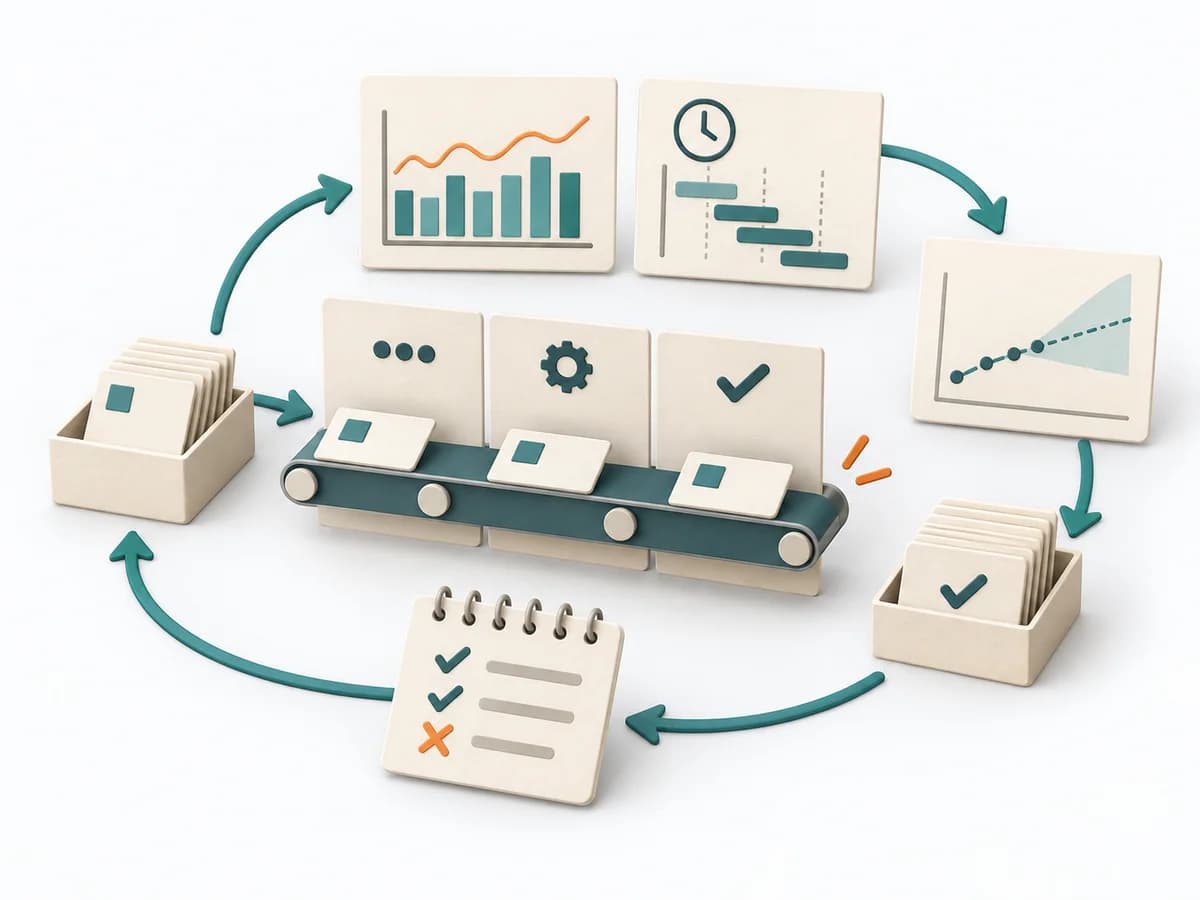 Agile NoEstimates | 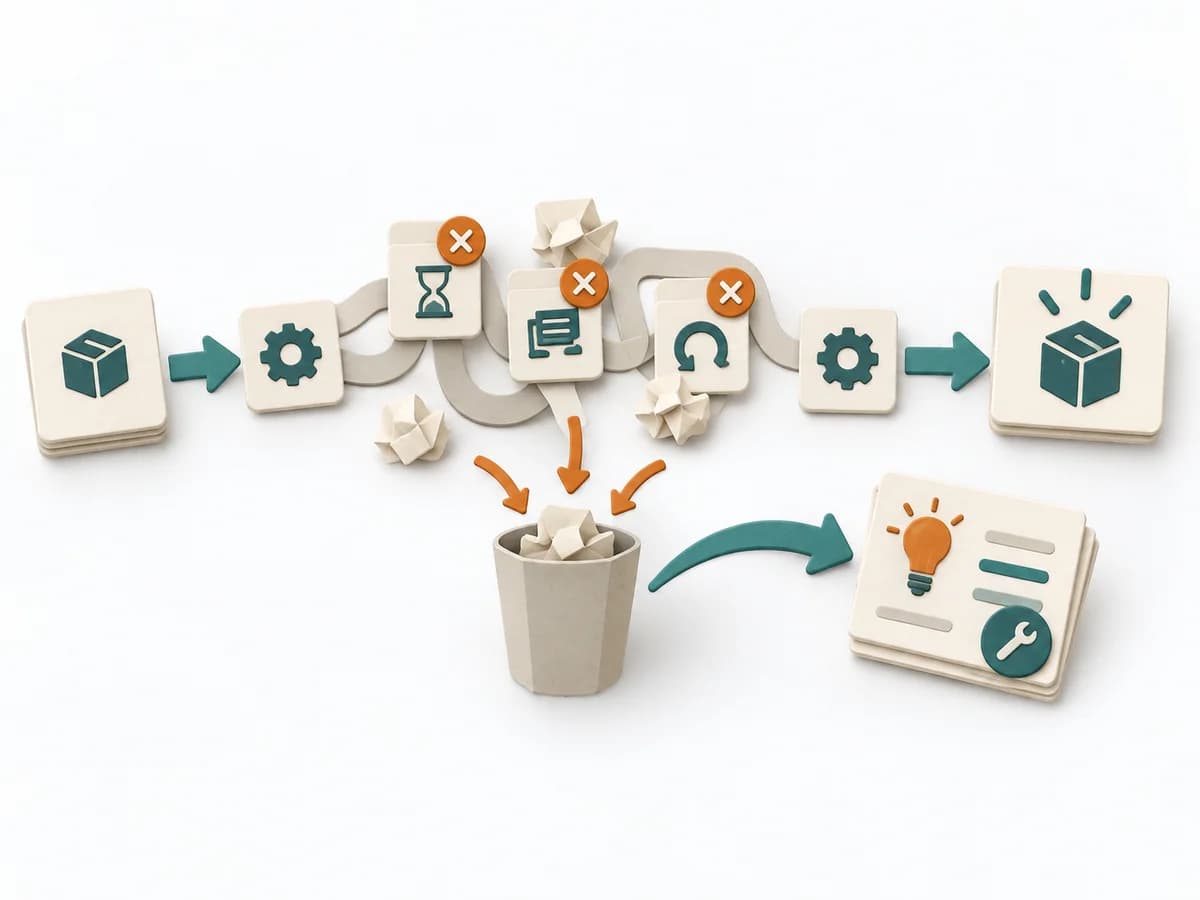 Operations Waste Analysis | 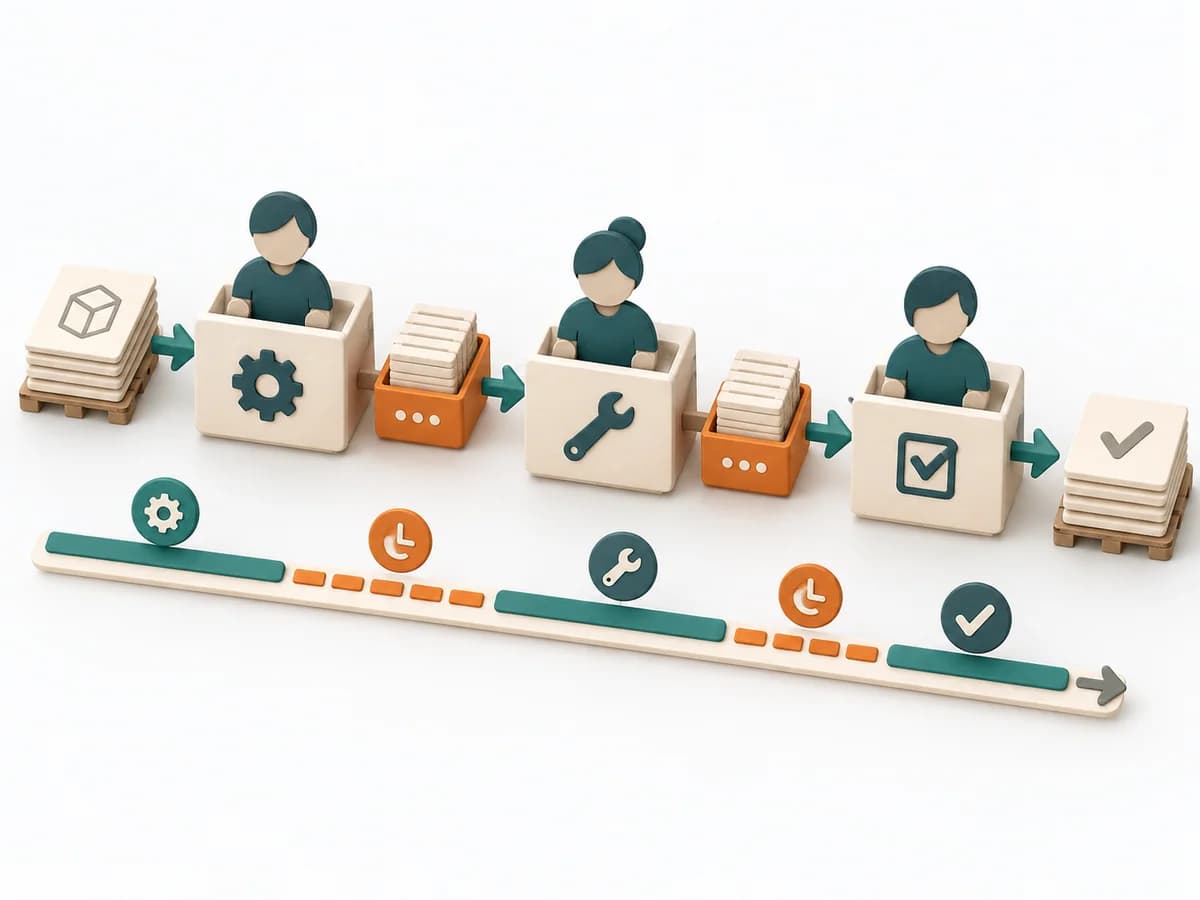 Delivery Value Stream Mapping |
|---|---|---|---|---|
Purposedifferent | The PARA Method organizes knowledge into Projects, Areas, Resources, and Archives. It creates order when digital notes, files, and tasks no longer cleanly fit current work. | When estimating slows a team down more than it helps, it shifts the focus to flow, small slices, and real lead time. It sorts work by value, risk, and delivery ability. The result is captured as Throughput Data, Flow Forecast, and Slicing Rules. | For a process that keeps people busy but creates little value, the method exposes waste. It directs attention to unnecessary movement, waiting times, rework, and overdelivery. | When delivery work dissolves into wait times, handoffs, and hidden effort, Value Stream Mapping makes the actual flow visible. The method exposes bottlenecks, idle time, and feedback loops so lead time and improvement levers become tangible. |
Complexitydifferent | Medium | Medium | Low | Medium |
Timedifferent | 1-3 h Setup, laufend | laufend | 45-120 min | 1-3 h |
Participantsdifferent | 1 | 2-12 | 2-8 | 4-10 |
Formatdifferent | Async | Workshop + async | Workshop | Workshop |
Outputdifferent | PARA Structure, Project Notes, Knowledge Archive | Throughput Data, Flow Forecast, Slicing Rules | Waste Map, Prioritized Waste, Improvement Backlog | Current-state map, Future-state map, Bottleneck list |
Tagsno overlap | KnowledgeProductivityOrganization | EstimationForecastingFlow | WasteLeanProcess improvement | LeanFlowWasteDelivery |