View methods side by side.
Choose up to four methods. Add them using the search and share the comparison by copying its link.
| Criterion |  Knowledge Modeling PARA Method |  Operations Kepner-Tregoe | 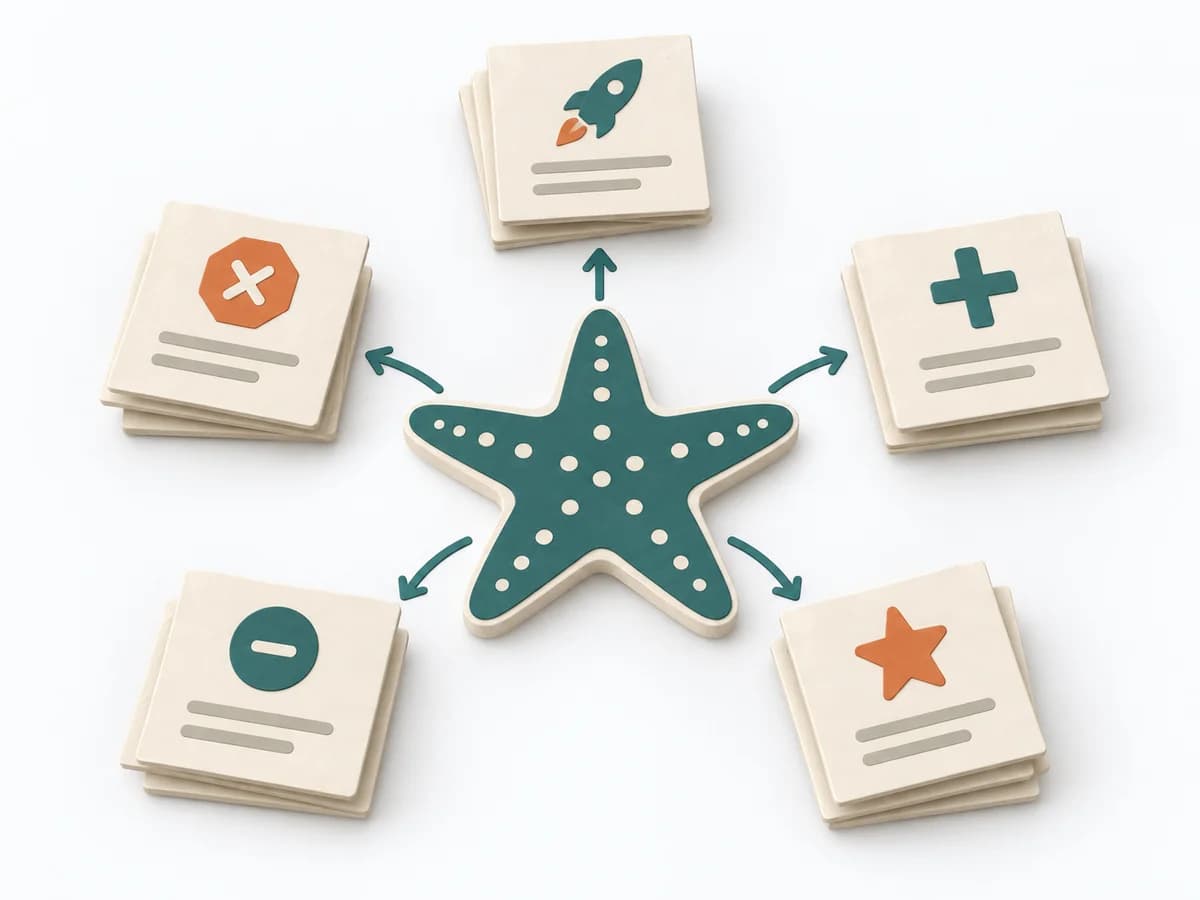 Agile Starfish Retrospective | 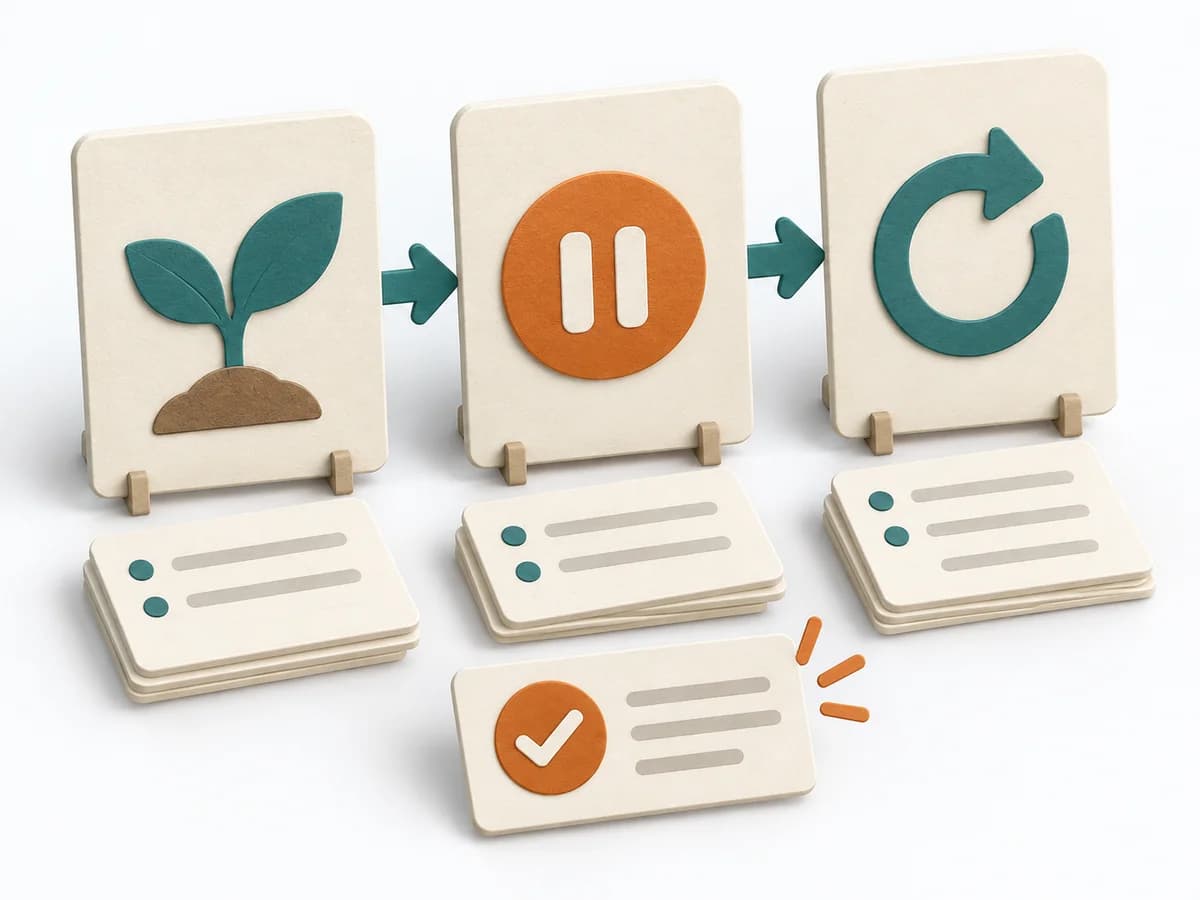 Agile Start Stop Continue |
|---|---|---|---|---|
Purposedifferent | The PARA Method organizes knowledge into Projects, Areas, Resources, and Archives. It creates order when digital notes, files, and tasks no longer cleanly fit current work. | For a disturbance that's hard to pin down, the method cleanly separates problem, cause, and decision. It reduces mixing when symptoms allow several interpretations. | When improvement options need to be sorted more finely than just start and stop, it brings observations into clear kinds of action. This makes visible what should be done more, less, newly, or continued. | When a team wants to deliberately adjust its working behavior, it makes habits visible and assessable. It focuses on concrete changes instead of diffuse mood. |
Complexitydifferent | Medium | High | Low | Low |
Timedifferent | 1-3 h Setup, laufend | 2-8 h | 45-90 min | 30-60 min |
Participantsdifferent | 1 | 2-8 | 4-12 | 3-12 |
Formatdifferent | Async | Workshop + async | Workshop | Workshop |
Outputdifferent | PARA Structure, Project Notes, Knowledge Archive | Problem Analysis, Decision Analysis, Risk Plan | Starfish Board, Practice Changes, Experiments | Start Stop Continue Board, Improvement Actions |
Tagsno overlap | KnowledgeProductivityOrganization | Problem solvingRoot causeDecisionOperations | RetrospectiveImprovementExperimentsTeam | RetrospectiveImprovementTeamReflection |