View methods side by side.
Choose up to four methods. Add them using the search and share the comparison by copying its link.
| Criterion |  Knowledge Modeling PARA Method |  Operations Ivy Lee Method | 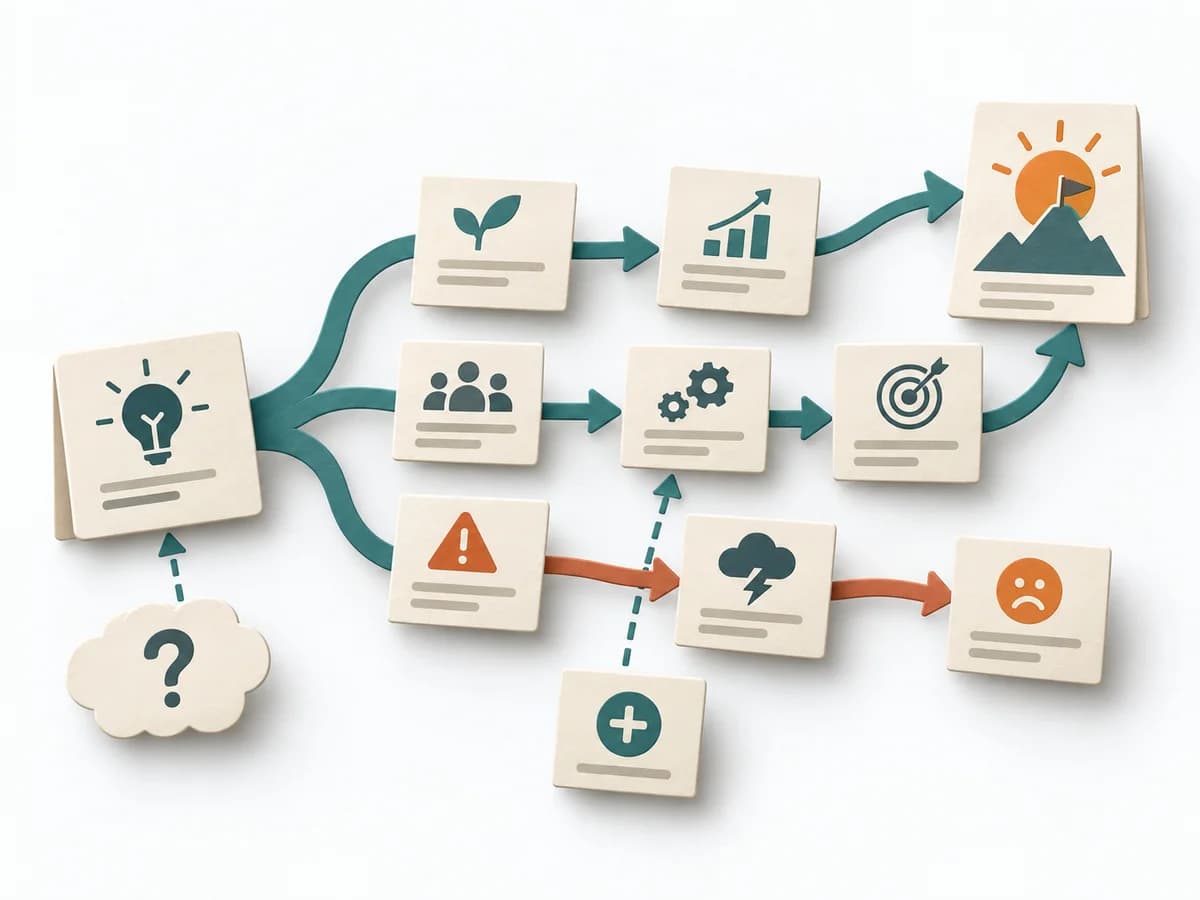 Systems Thinking Future Reality Tree | 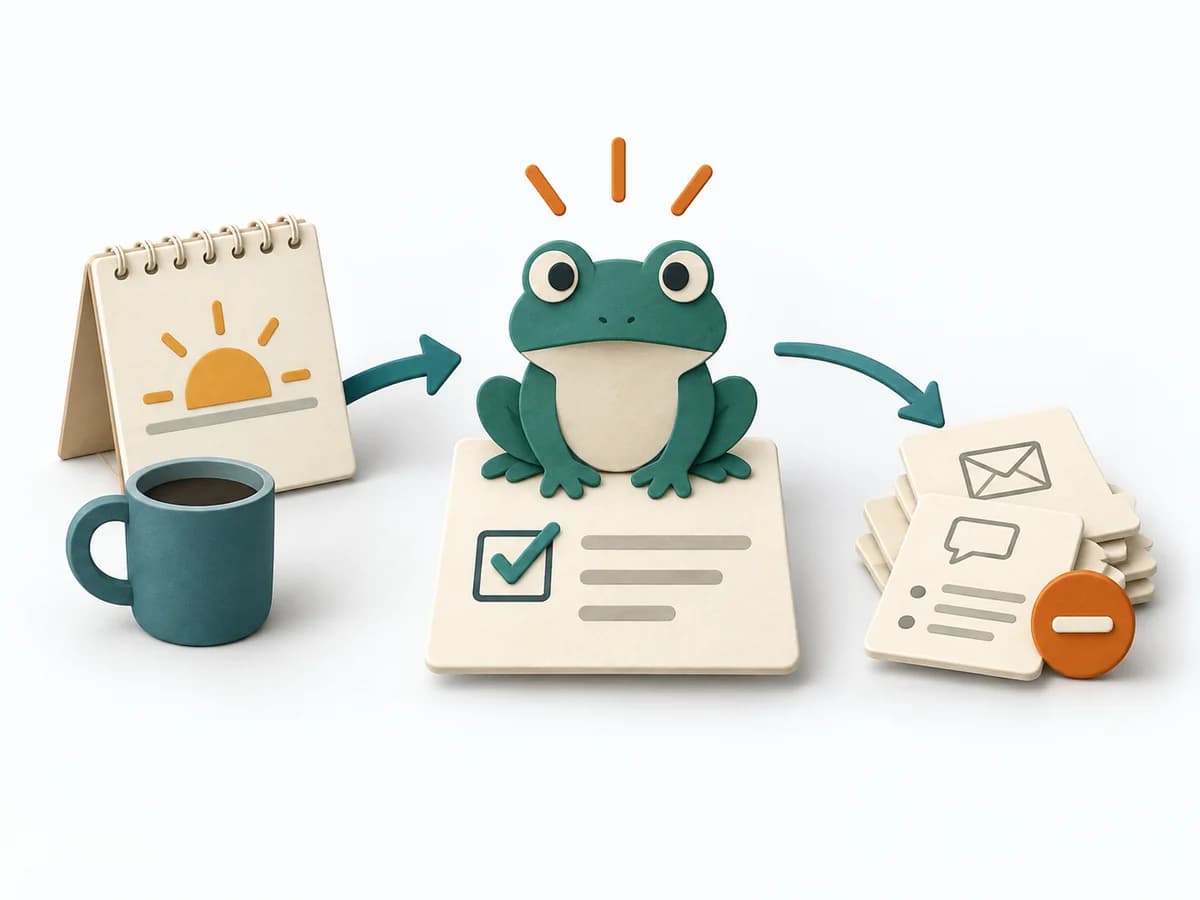 Operations Eat the Frog |
|---|---|---|---|---|
Purposedifferent | The PARA Method organizes knowledge into Projects, Areas, Resources, and Archives. It creates order when digital notes, files, and tasks no longer cleanly fit current work. | With a restless workday full of too many open items, the method creates radical simplicity. It directs attention to a short sequence instead of a broad, still-open field. | A Future Reality Tree shows how desired actions are meant to lead to a better system state. The method checks whether a path of change holds together logically before time flows into implementation. | The method protects energy and attention for the task that creates the largest progress and is often postponed. |
Complexitydifferent | Medium | Low | High | Low |
Timedifferent | 1-3 h Setup, laufend | 5-10 min daily | 2-4 h | 15-90 min daily |
Participantsdifferent | 1 | 1 | 3-8 | 1 |
Formatdifferent | Async | Async | Workshop | Async |
Outputdifferent | PARA Structure, Project Notes, Knowledge Archive | Daily Priority List, Completion Notes | Future Reality Tree, Negative Branches, Assumption List, Improved Injections | Priority Task, Completion Note, Daily Focus |
Tagsno overlap | KnowledgeProductivityOrganization | PrioritizationProductivityExecution | Theory of ConstraintsSystems thinkingChange | PrioritizationProductivityFocusExecution |