View methods side by side.
Choose up to four methods. Add them using the search and share the comparison by copying its link.
| Criterion |  Knowledge Modeling PARA Method |  Operations Gemba Walk | 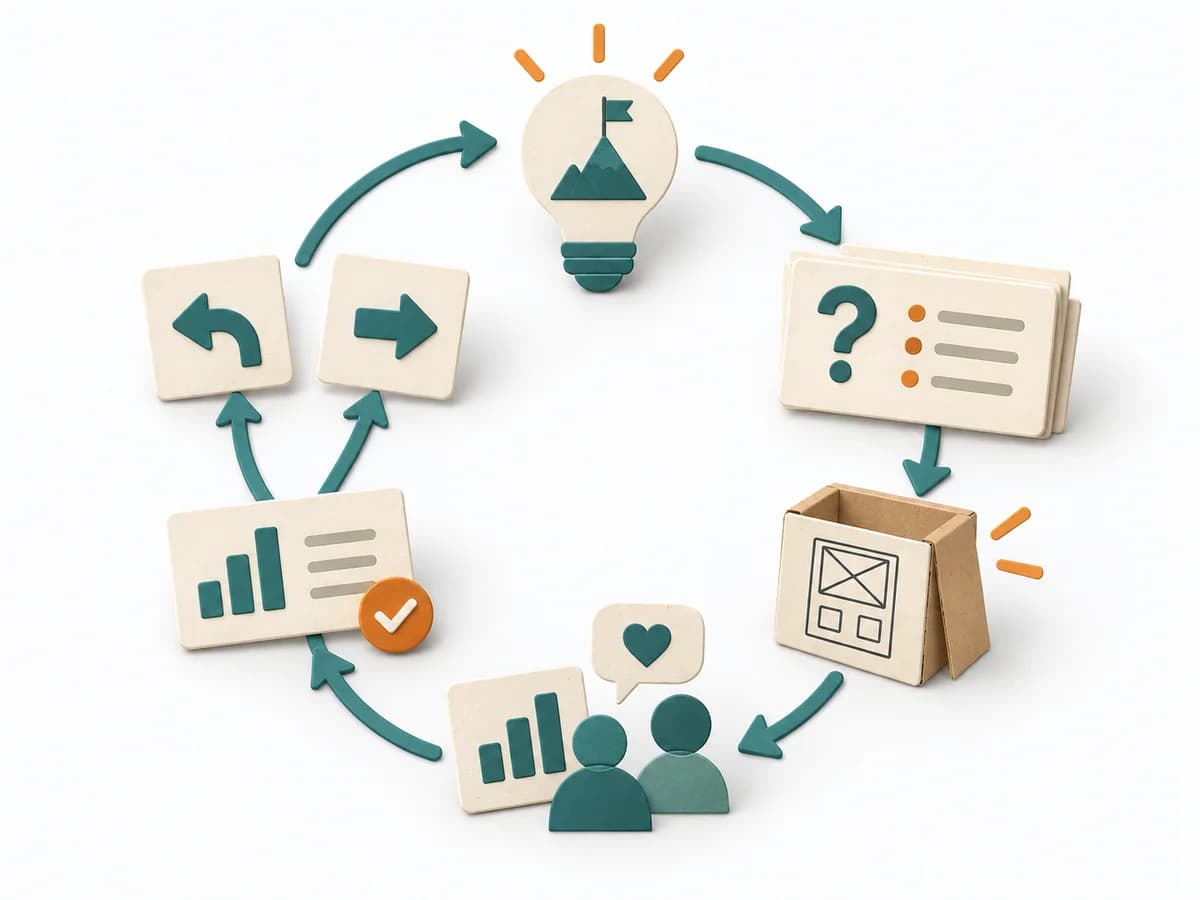 Innovation Lean Startup |  Knowledge Modeling Domain Storytelling |
|---|---|---|---|---|
Purposedifferent | The PARA Method organizes knowledge into Projects, Areas, Resources, and Archives. It creates order when digital notes, files, and tasks no longer cleanly fit current work. | When there is uncertainty about the real course of a process, the method brings observation to the place where work happens. It combines perception, follow-up questions, and process knowledge so decisions rest on actual workflows instead of assumptions. | For uncertain business assumptions, the method forces the idea into contact with real market reactions early. It separates wishful picture, assumption, and observable behavior, so that learning becomes faster than planning. This translates uncertainty into measurable insight. | Domain Storytelling translates domain knowledge into a shared narrative of actors, objects, and workflows. It is especially useful when language, rules, and process understanding must be tightly connected. |
Complexitydifferent | Medium | Low | Medium | Low |
Timedifferent | 1-3 h Setup, laufend | 30-120 min | Wochen bis Monate je Lernzyklus | 1-2 h |
Participantsdifferent | 1 | 2-6 | 2-8 | 2-8 |
Formatdifferent | Async | Workshop | Workshop + async | Workshop |
Outputdifferent | PARA Structure, Project Notes, Knowledge Archive | Observation Notes, Improvement Ideas | Hypothesis list, MVPs, Learning reports, Pivot or persevere decision | Domain Story, Glossary Notes, Process Narrative |
Tagsno overlap | KnowledgeProductivityOrganization | LeanObservationProcessOperations | LeanStartupValidationMVP | KnowledgeDomain-Driven DesignProcess |