View methods side by side.
Choose up to four methods. Add them using the search and share the comparison by copying its link.
| Criterion | 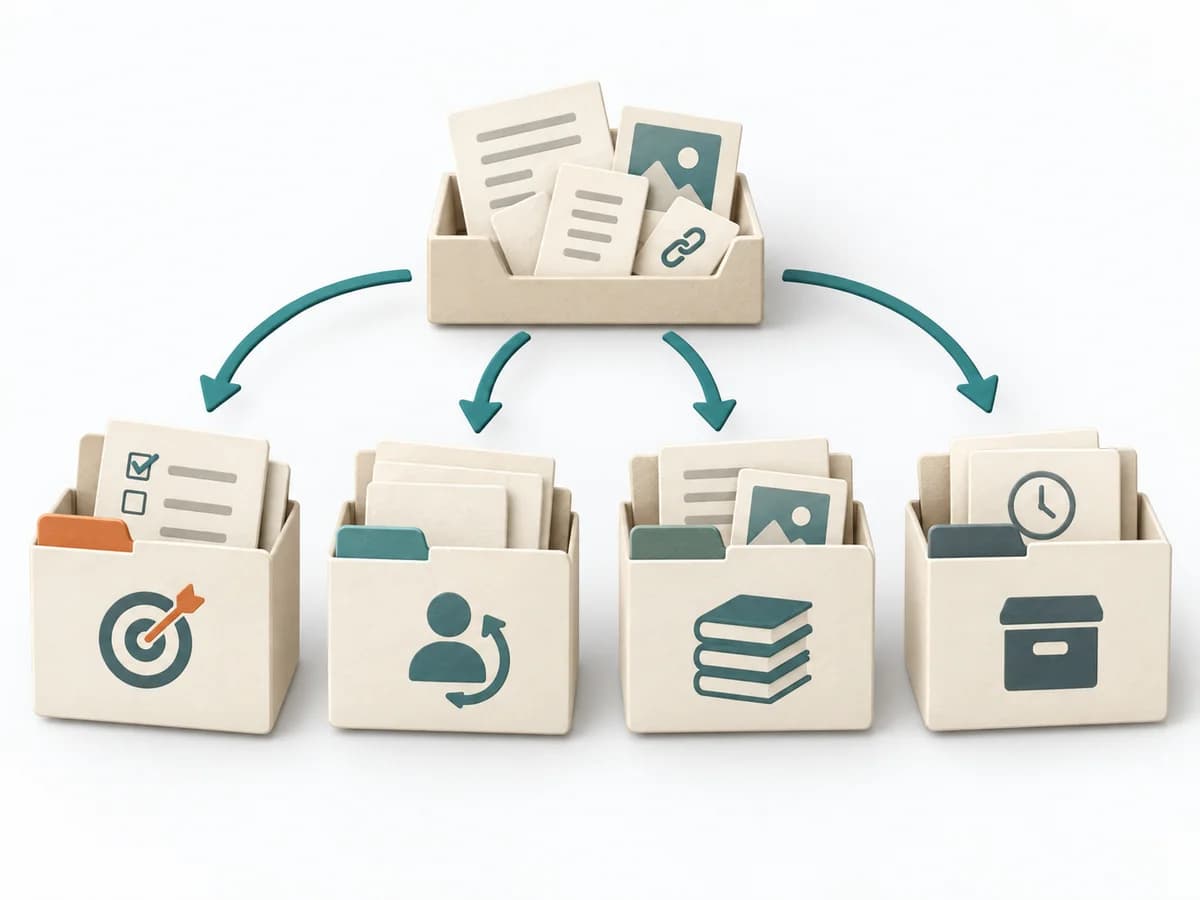 Knowledge Modeling PARA Method |  Growth Funnel Analysis | 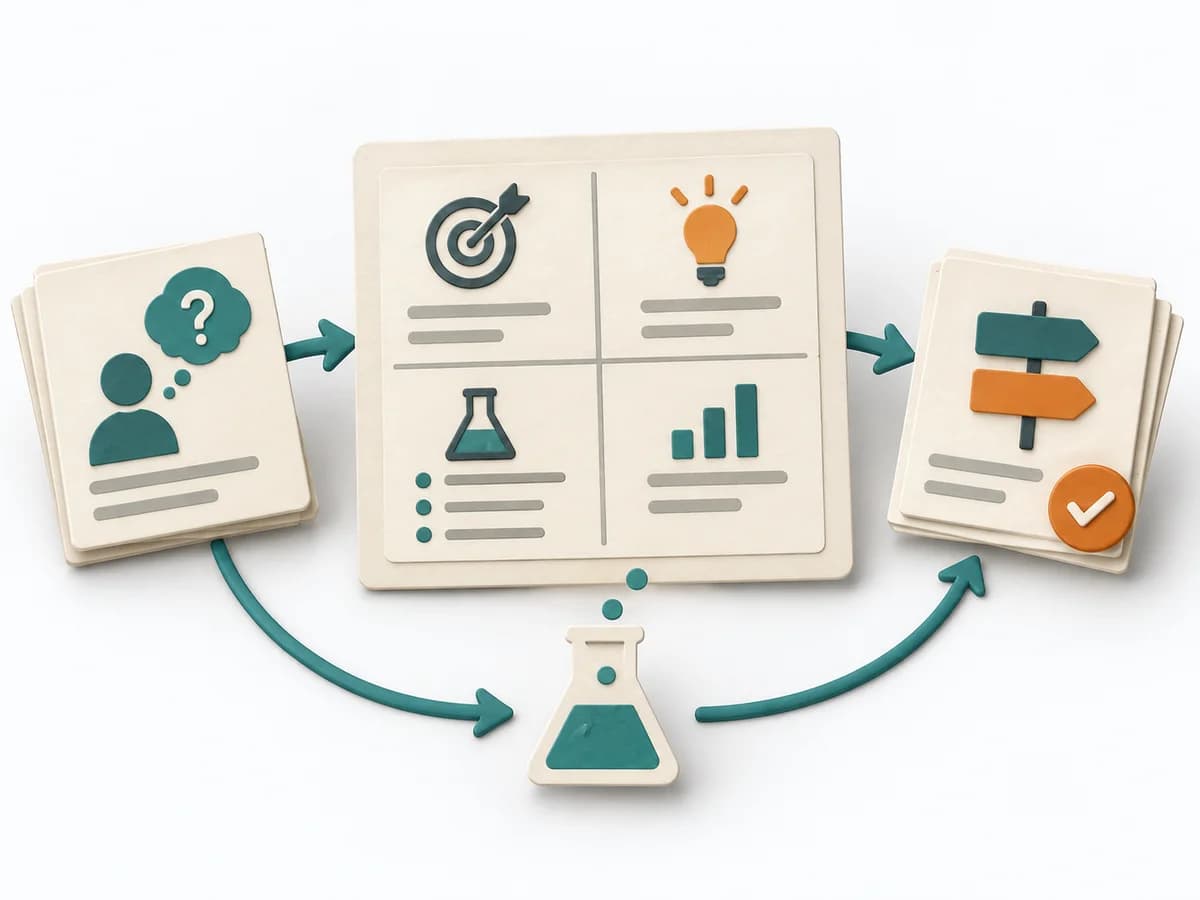 Product Discovery Experiment Canvas | 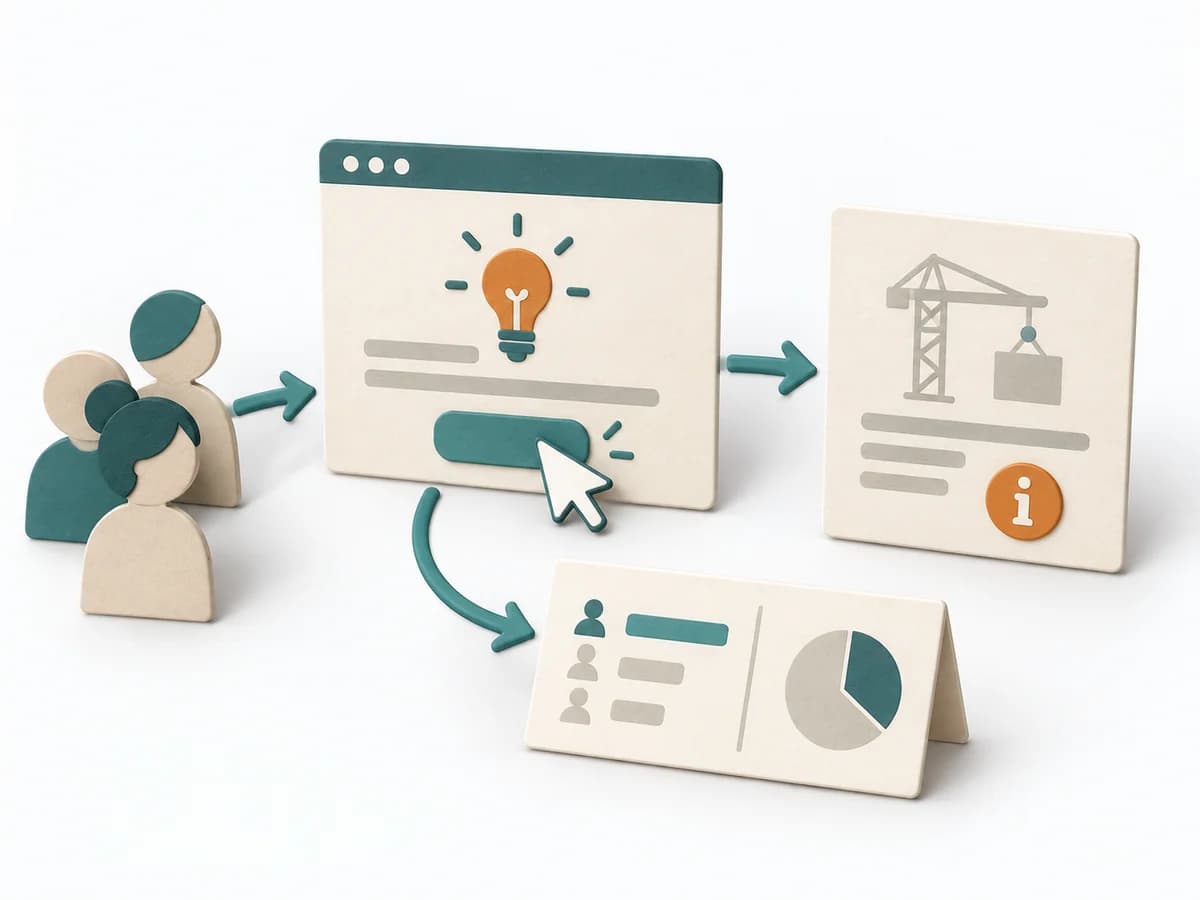 Product Discovery Fake Door Test |
|---|---|---|---|---|
Purposedifferent | The PARA Method organizes knowledge into Projects, Areas, Resources, and Archives. It creates order when digital notes, files, and tasks no longer cleanly fit current work. | When many visitors or users drop off along the way, the reason behind the number often stays hidden. Funnel Analysis exposes these transitions and makes visible exactly where the path collapses. | When experiments become unreadable after the fact, it arranges hypothesis, signal, and learning goal on a single canvas. It separates problem, assumption, solution, and evidence. The result is captured as a Completed Experiment Canvas and a Success Metric. | When demand is still unclear, it measures interest in a feature before it is built. It separates real behavior from polite agreement and deliberately keeps build effort small. |
Complexitydifferent | Medium | Medium | Low | Medium |
Timedifferent | 1-3 h Setup, laufend | 1-3 h | 30-60 min | 1-5 Tage |
Participantsdifferent | 1 | 1-5 | 1-5 | Nutzertraffic |
Formatdifferent | Async | Async | Workshop + async | Async |
Outputdifferent | PARA Structure, Project Notes, Knowledge Archive | Funnel report, Drop-off analysis, Optimization hypotheses | Completed Experiment Canvas, Success Metric | Click Data, Interest Signal, Learning Decision |
Tagsno overlap | KnowledgeProductivityOrganization | AnalyticsConversionGrowth | ExperimentsValidationDiscoveryHypothesis | ValidationExperimentsDemandDiscovery |