View methods side by side.
Choose up to four methods. Add them using the search and share the comparison by copying its link.
| Criterion | 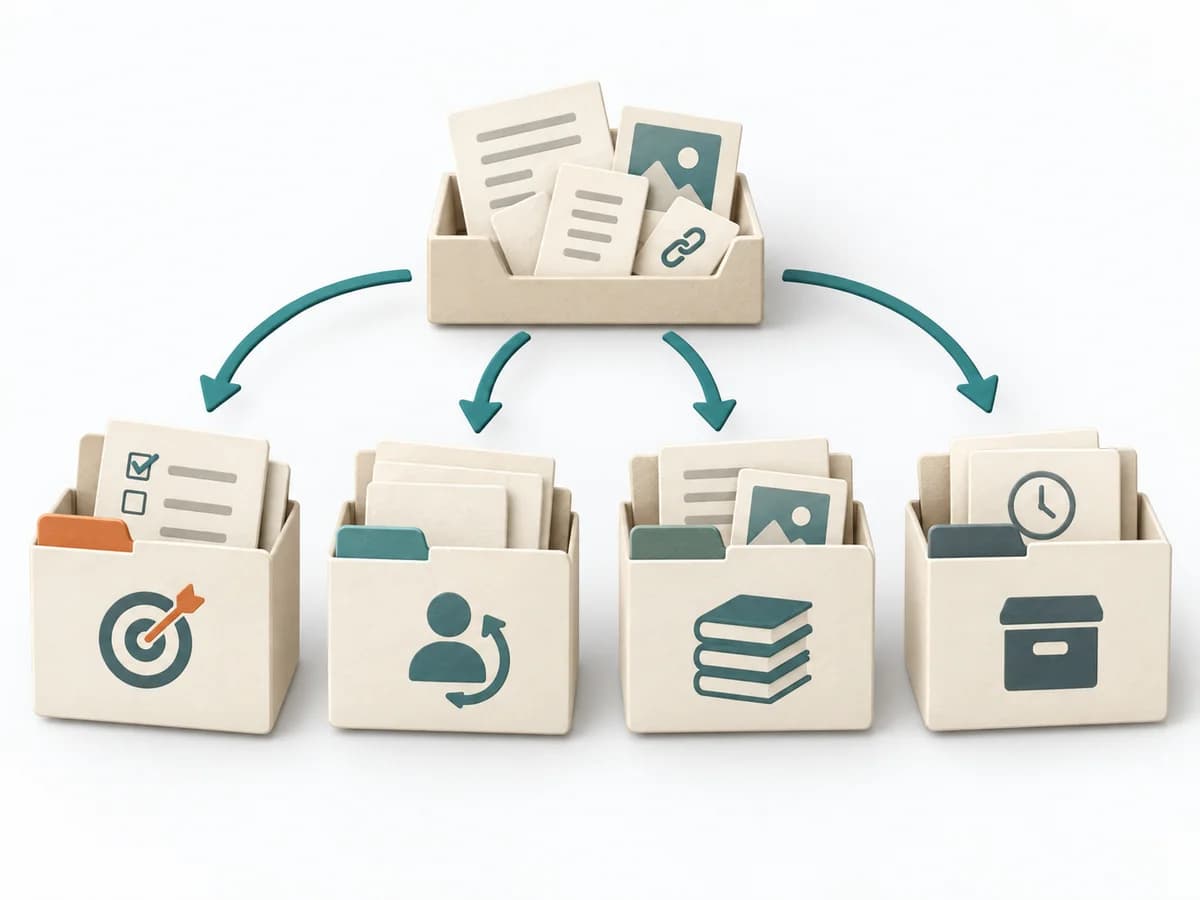 Knowledge Modeling PARA Method | 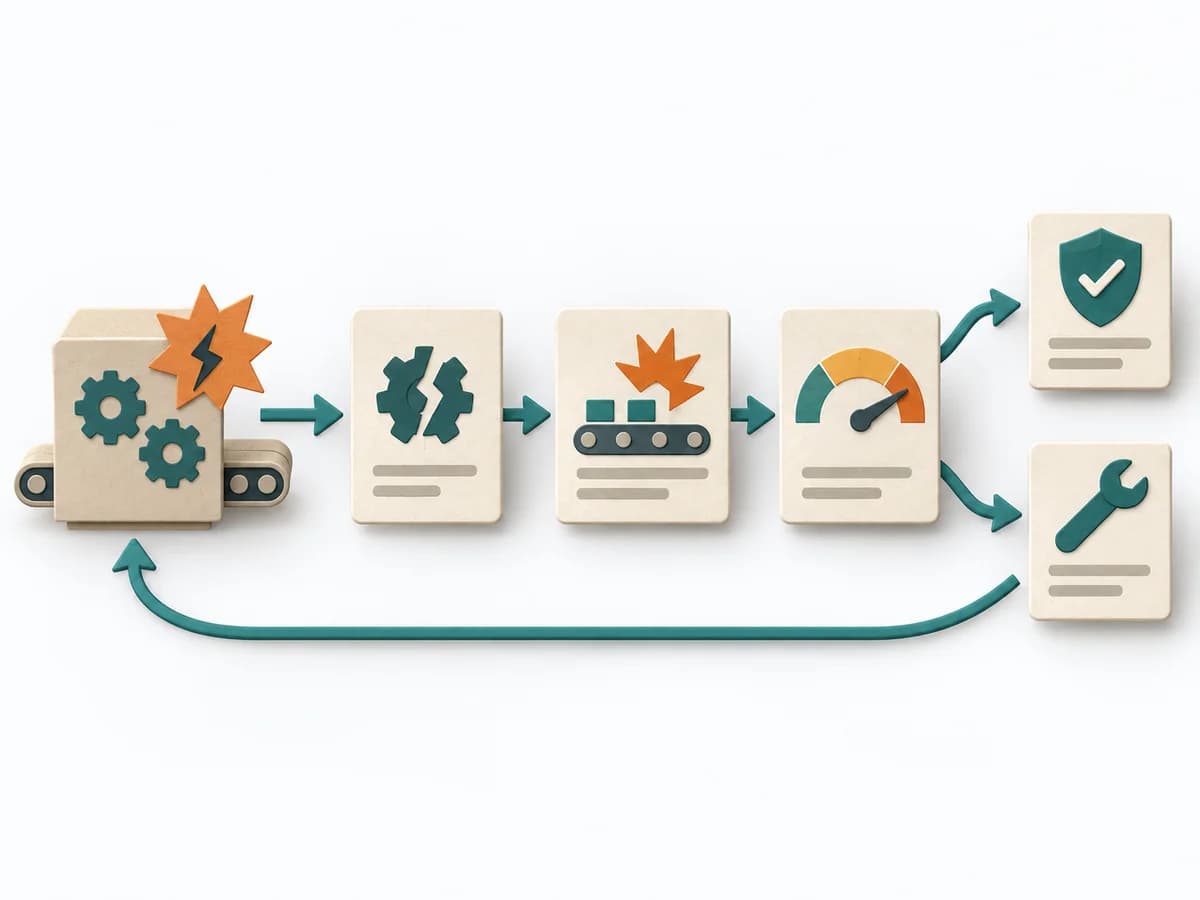 Operations Failure Mode and Effects Analysis | 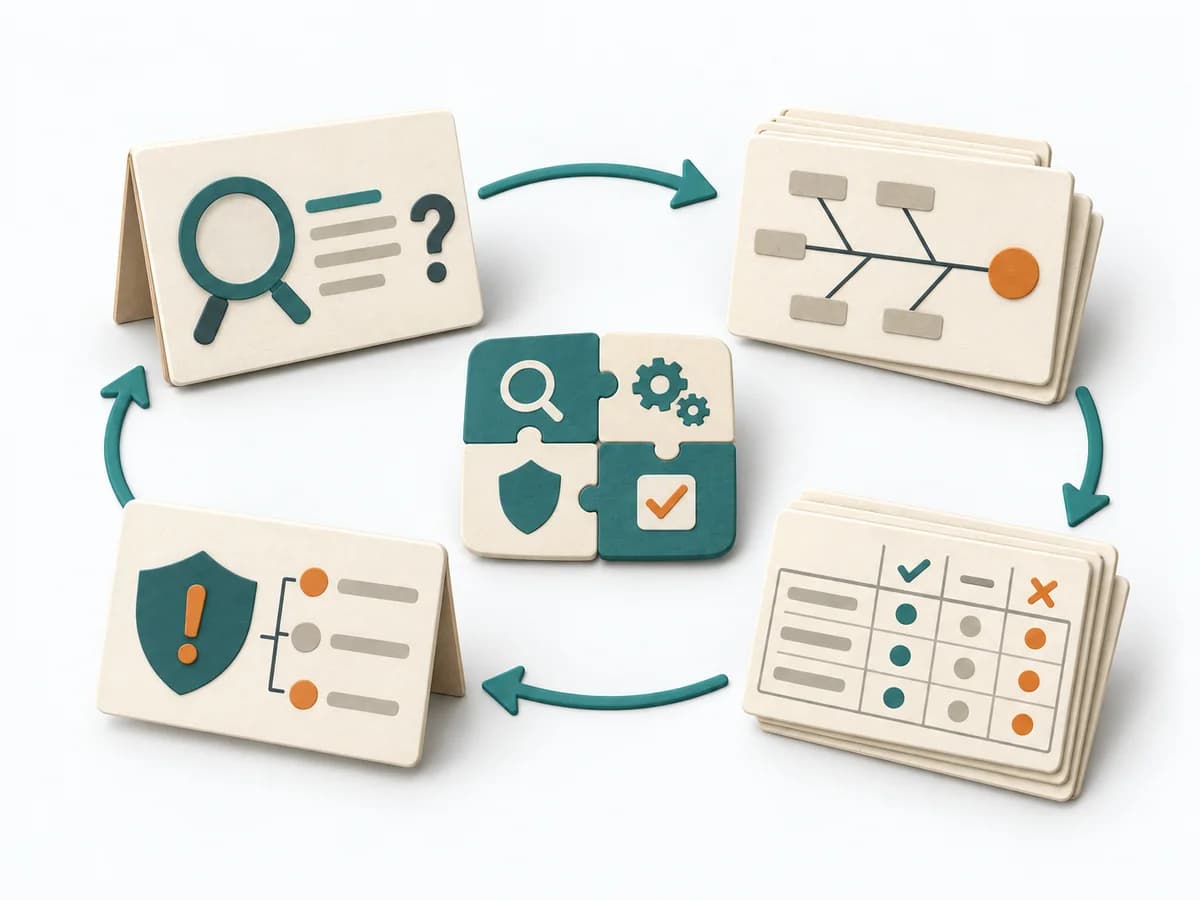 Operations Kepner-Tregoe |  Operations 5 Whys |
|---|---|---|---|---|
Purposedifferent | The PARA Method organizes knowledge into Projects, Areas, Resources, and Archives. It creates order when digital notes, files, and tasks no longer cleanly fit current work. | For a process, product, or service with noticeable failure risks, the method assesses possible failure modes in advance. It directs attention to combinations of occurrence, effect, and detectability. | For a disturbance that's hard to pin down, the method cleanly separates problem, cause, and decision. It reduces mixing when symptoms allow several interpretations. | For a single, hard-to-explain deviation, the method exposes the causal chain behind the visible symptom. It keeps the cause open until a controllable condition emerges instead of a mere description. |
Complexitydifferent | Medium | High | High | Low |
Timedifferent | 1-3 h Setup, laufend | 2-6 h | 2-8 h | 15-30 min |
Participantsdifferent | 1 | 3-10 | 2-8 | 2-6 |
Formatdifferent | Async | Workshop | Workshop + async | Workshop |
Outputdifferent | PARA Structure, Project Notes, Knowledge Archive | FMEA Table, Risk Priority, Mitigation Actions | Problem Analysis, Decision Analysis, Risk Plan | Root cause notes, Countermeasures |
Tagsno overlap | KnowledgeProductivityOrganization | RiskQualityOperationsRoot cause | Problem solvingRoot causeDecisionOperations | Root causeIncidentLeanProblem solving |