View methods side by side.
Choose up to four methods. Add them using the search and share the comparison by copying its link.
| Criterion |  Knowledge Modeling PARA Method |  Facilitation Expectation Mapping | 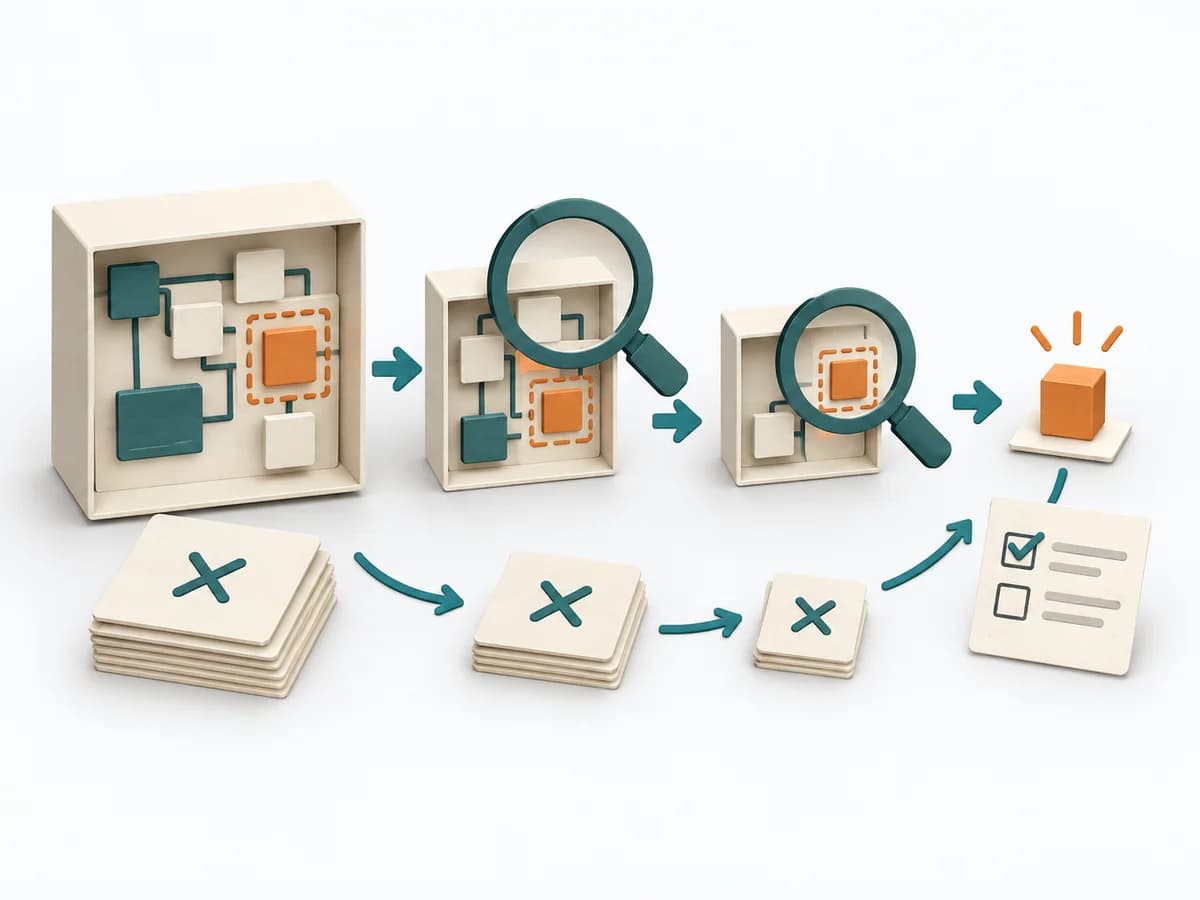 Engineering Fault Isolation | 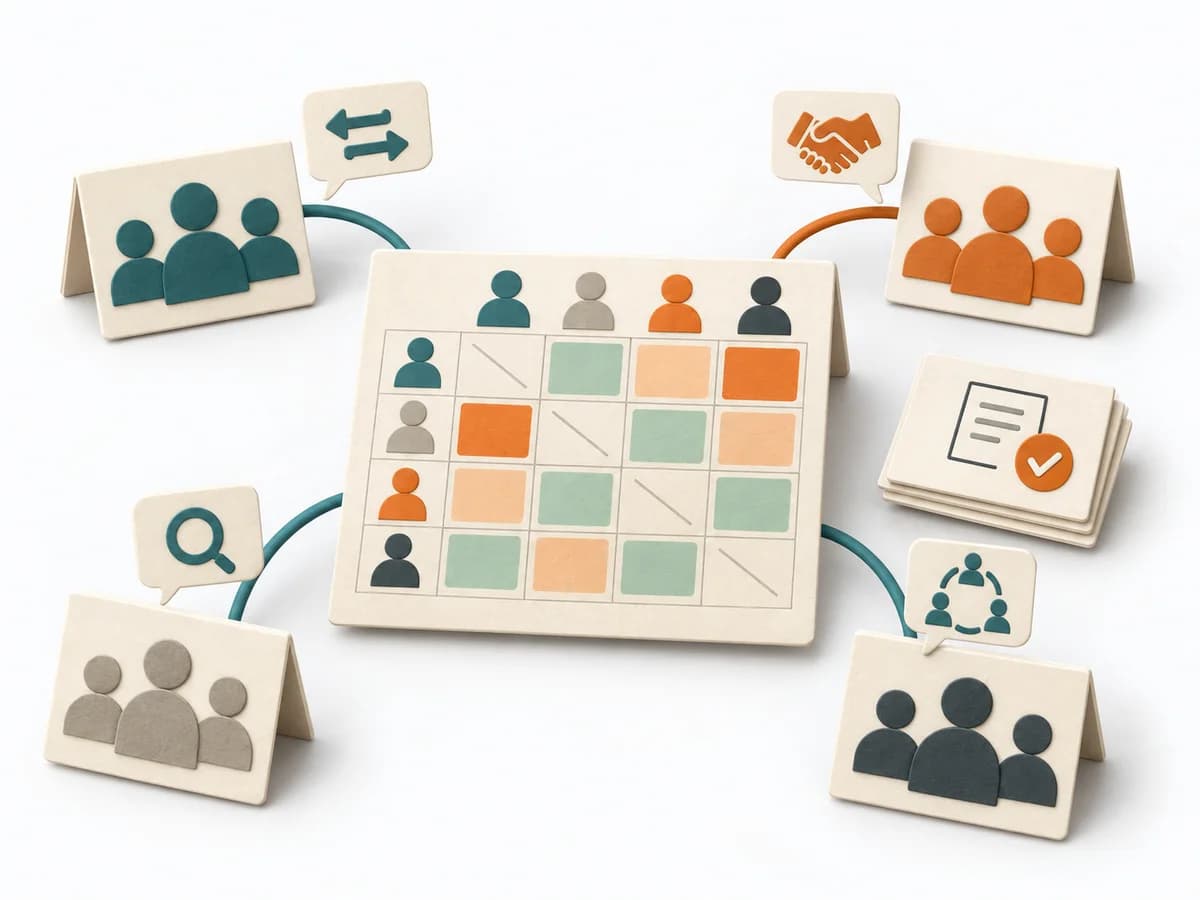 Team Design Team Topologies Interaction Modes |
|---|---|---|---|---|
Purposedifferent | The PARA Method organizes knowledge into Projects, Areas, Resources, and Archives. It creates order when digital notes, files, and tasks no longer cleanly fit current work. | When roles, interfaces, or projects fail because of differing expectations, Expectation Mapping surfaces these differences. It shows what each side takes for granted and where the pictures diverge. | In technical failures, the visible symptom often gets mixed up with the actual cause. Fault Isolation narrows the fault space and progressively reduces which part of the system is truly affected. | When several teams collaborate repeatedly, it describes the right interaction mode for each interface between them. It clarifies responsibility, interaction, and load between teams. The result is captured as an interaction heat map and pairwise agreements. |
Complexitydifferent | Medium | Low | Medium | Medium |
Timedifferent | 1-3 h Setup, laufend | 45-90 min | 30-180 min | Half day |
Participantsdifferent | 1 | 3-12 | 1-6 | Team-Leads plus Architecture |
Formatdifferent | Async | Workshop | Workshop + async | Workshop |
Outputdifferent | PARA Structure, Project Notes, Knowledge Archive | Expectation Map, Alignment Notes, Agreements | Fault Isolation Map, Test Log, Excluded Hypotheses, Narrowed Fault Area | Interaction Heat Map, Agreements per Pair |
Tagsno overlap | KnowledgeProductivityOrganization | AlignmentStakeholdersTeam | TroubleshootingDiagnosisEngineering | TeamAlignmentCollaborationOrganization |