View methods side by side.
Choose up to four methods. Add them using the search and share the comparison by copying its link.
| Criterion |  Knowledge Modeling PARA Method | 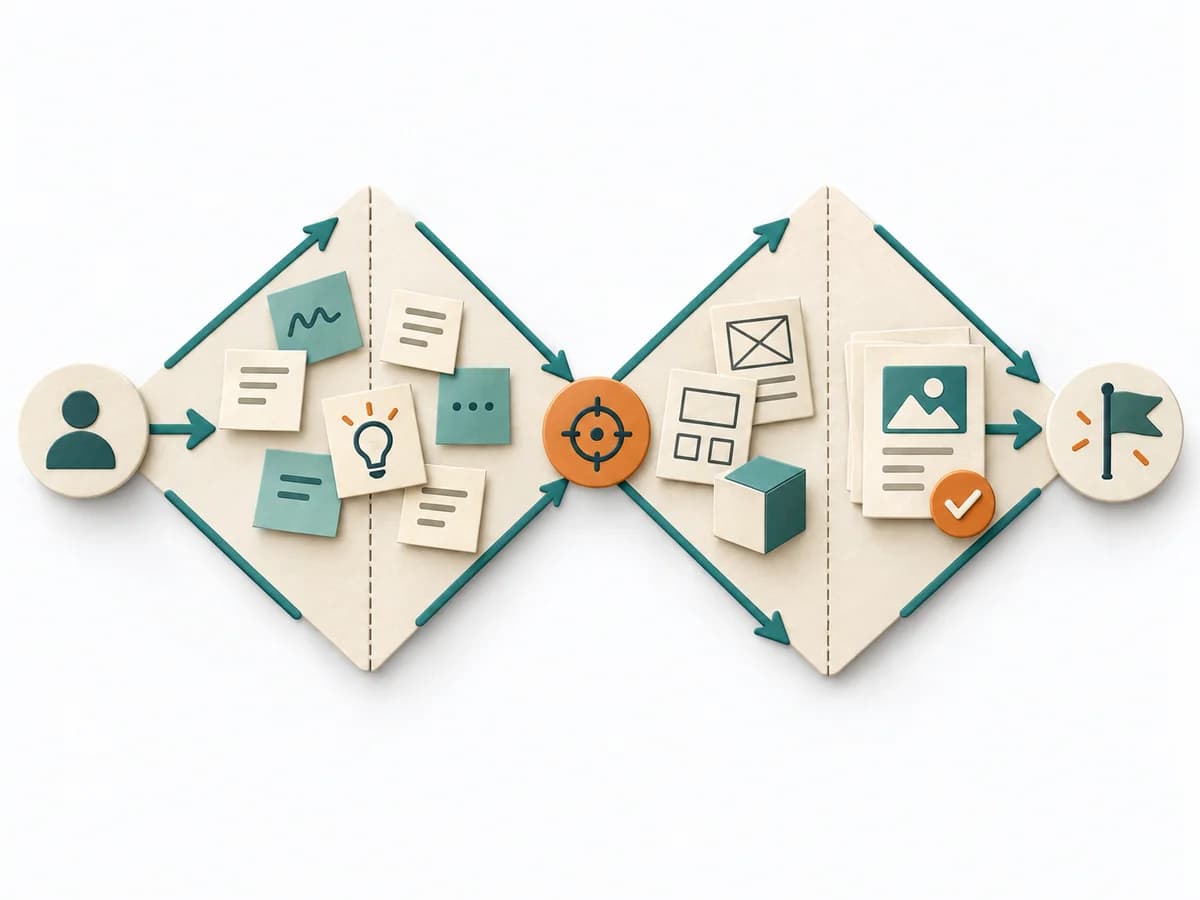 Innovation Double Diamond |  Knowledge Modeling Domain Storytelling | 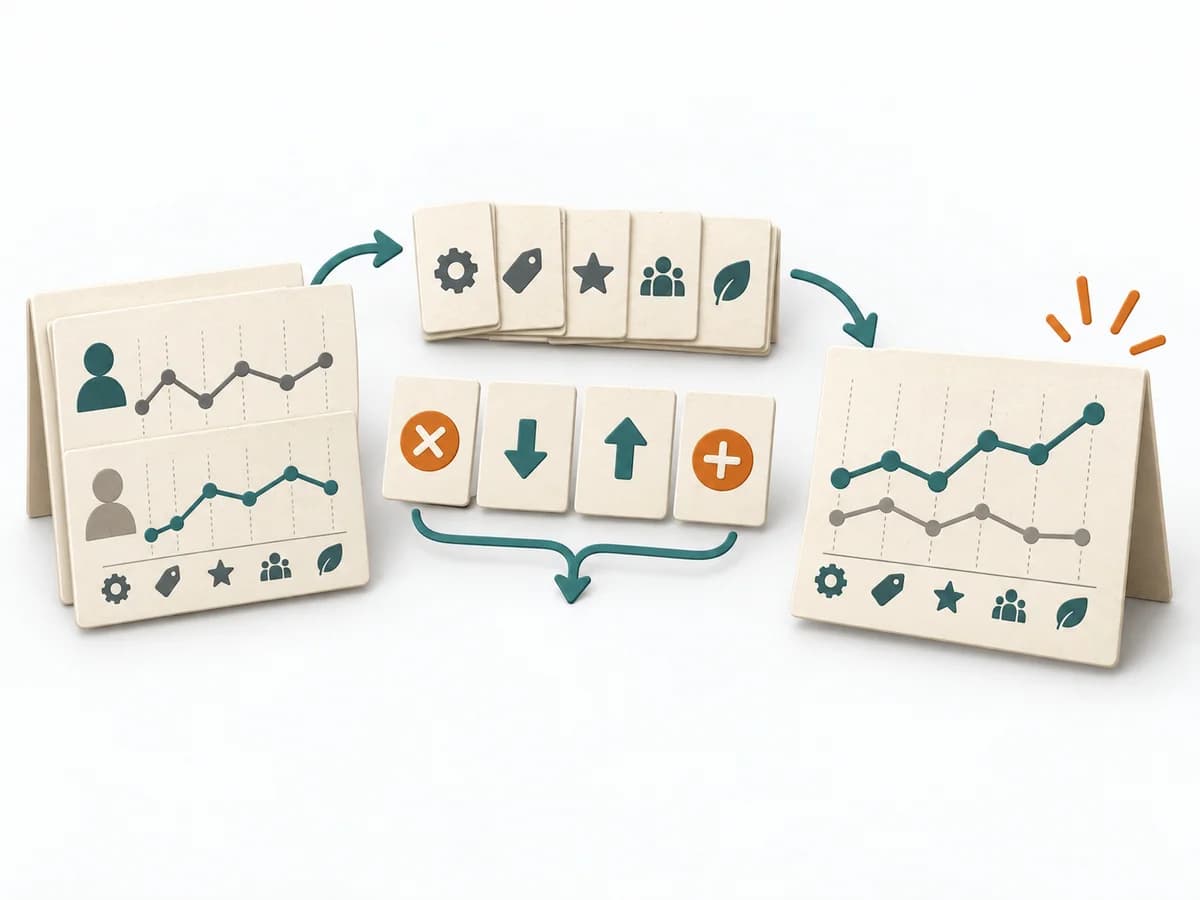 Business Strategy Blue Ocean Strategy Canvas |
|---|---|---|---|---|
Purposedifferent | The PARA Method organizes knowledge into Projects, Areas, Resources, and Archives. It creates order when digital notes, files, and tasks no longer cleanly fit current work. | For complex problems with a fuzzy situation, the method cleanly separates search space and decision. It first creates breadth in understanding and then focus in elaboration. This brings open questions, problem definition, and solution path into a traceable movement. | Domain Storytelling translates domain knowledge into a shared narrative of actors, objects, and workflows. It is especially useful when language, rules, and process understanding must be tightly connected. | The Blue Ocean Strategy Canvas shows how an offering is positioned relative to the market. Differentiation thereby becomes tangible in value factors instead of merely being claimed. |
Complexitydifferent | Medium | Medium | Low | Medium |
Timedifferent | 1-3 h Setup, laufend | Wochen bis Monate | 1-2 h | 2-4 h |
Participantsdifferent | 1 | 3-12 | 2-8 | 3-10 |
Formatdifferent | Async | Workshop + async | Workshop | Workshop |
Outputdifferent | PARA Structure, Project Notes, Knowledge Archive | Problem Statement, Solution Options, Prototypes, Deliverables per Phase | Domain Story, Glossary Notes, Process Narrative | Strategy Canvas, Value Curve, ERRC Actions |
Tagsno overlap | KnowledgeProductivityOrganization | ProcessDivergenceInnovation | KnowledgeDomain-Driven DesignProcess | StrategyPositioningInnovationValue |