View methods side by side.
Choose up to four methods. Add them using the search and share the comparison by copying its link.
| Criterion |  Knowledge Modeling PARA Method | 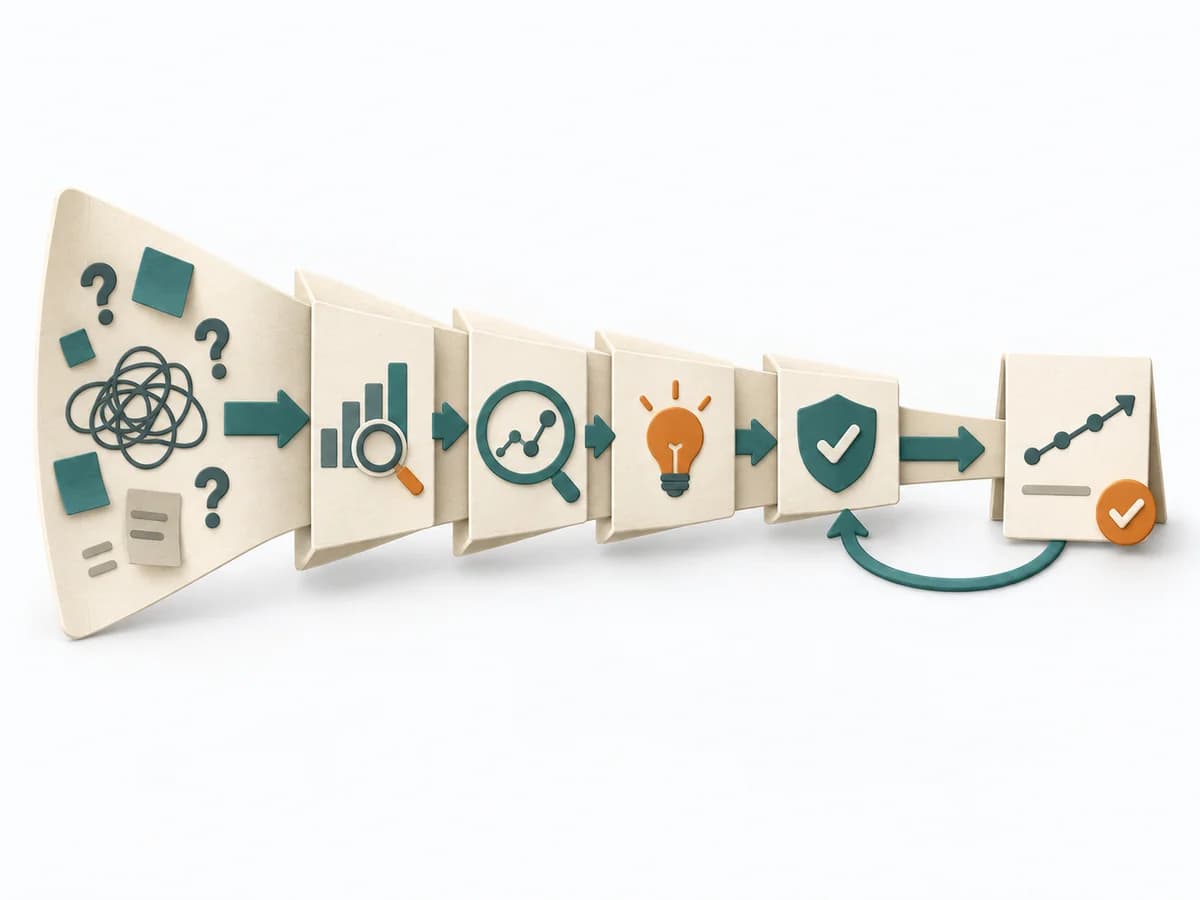 Operations DMAIC | 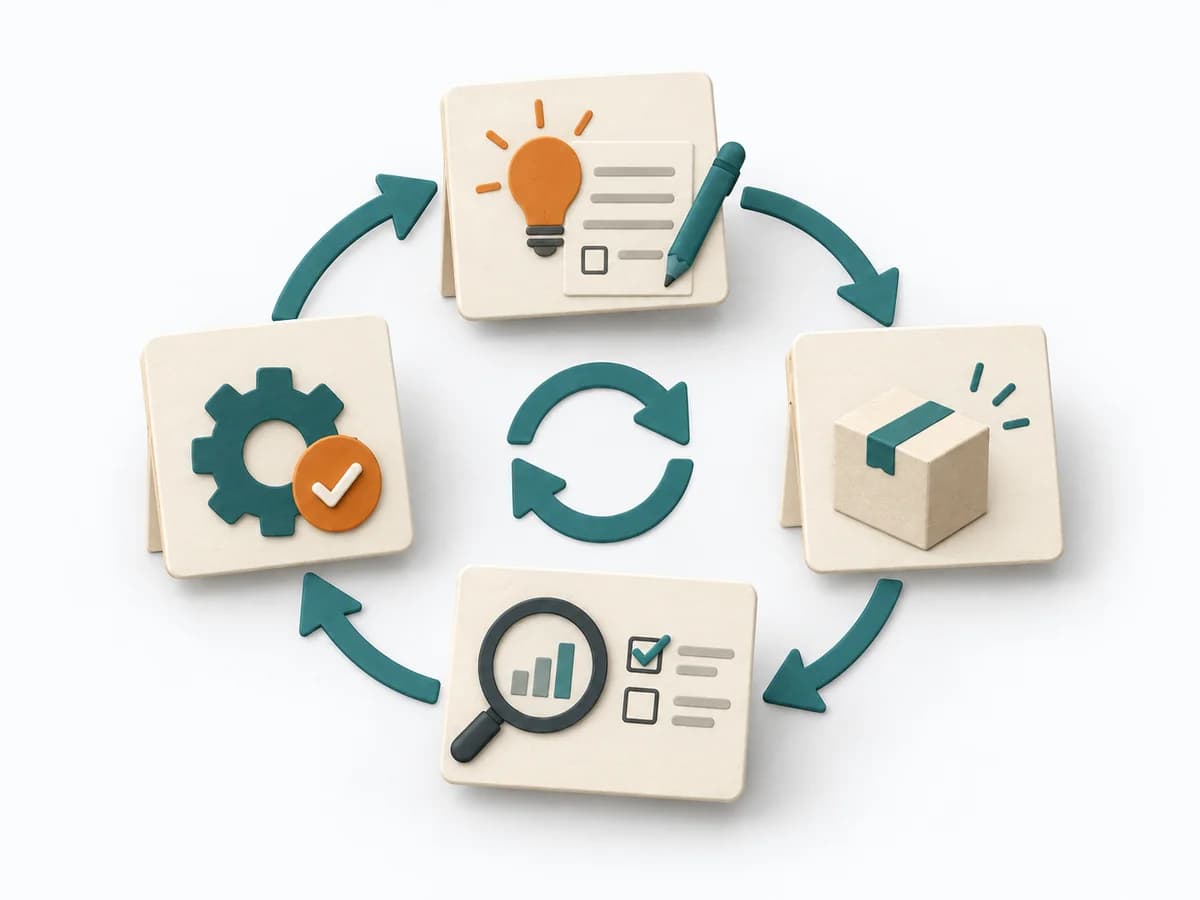 Operations PDCA Cycle | 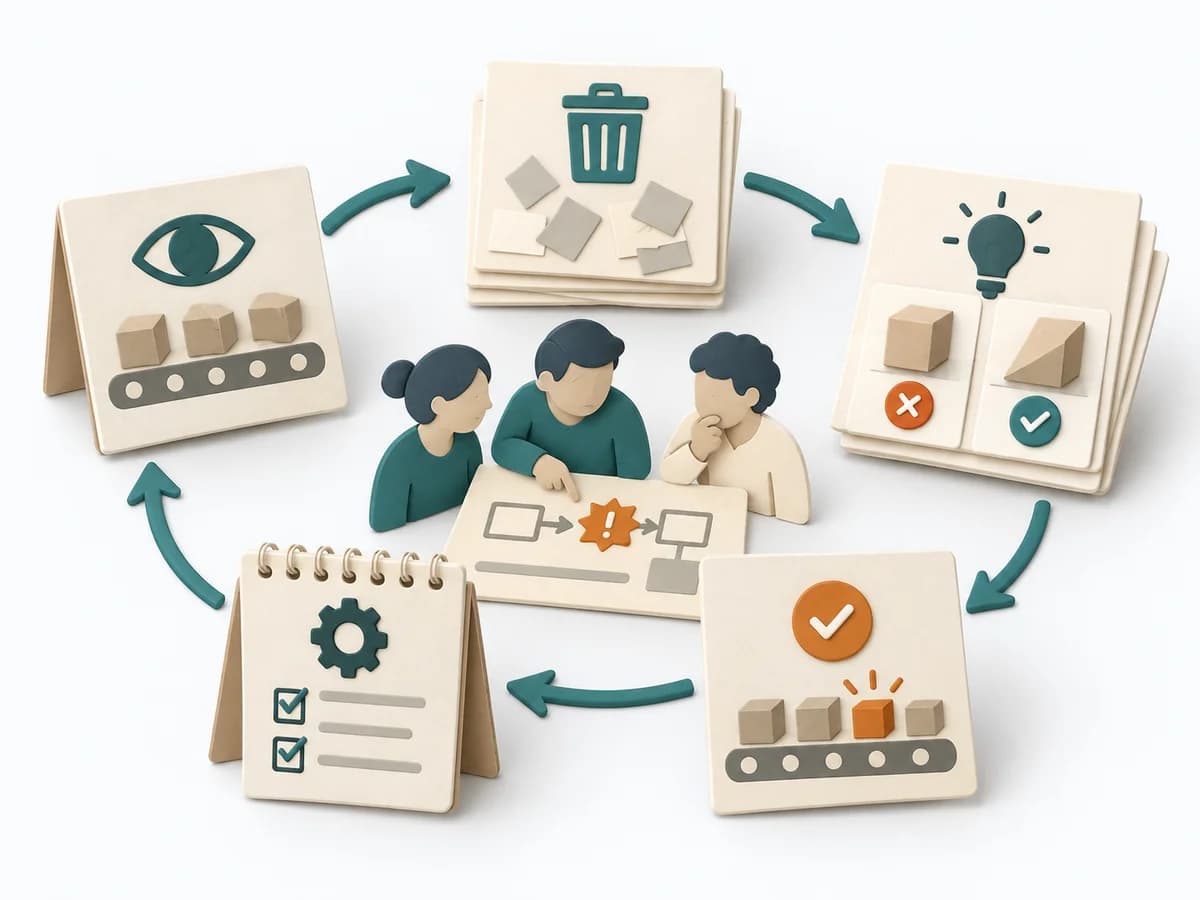 Operations Kaizen Event |
|---|---|---|---|---|
Purposedifferent | The PARA Method organizes knowledge into Projects, Areas, Resources, and Archives. It creates order when digital notes, files, and tasks no longer cleanly fit current work. | For a process problem with fluctuating performance, the method brings analysis and improvement into a disciplined sequence. It creates a framework in which numbers, causes, and control come together. | For an improvement that still has to prove itself in everyday work, the method runs it through small learning loops. It connects planning, checking, and standardization into a repeatable learning mode. | For a tightly scoped process segment with noticeable waste, the method bundles shared energy for change. It suits situations that call for fast learning loops and visible adjustments. |
Complexitydifferent | Medium | High | Low | Medium |
Timedifferent | 1-3 h Setup, laufend | 2-12 Wochen | 1 h bis mehrere Wochen | 0.5-5 Tage |
Participantsdifferent | 1 | 3-10 | 1-8 | 4-10 |
Formatdifferent | Async | Workshop + async | Workshop + async | Workshop |
Outputdifferent | PARA Structure, Project Notes, Knowledge Archive | Project Charter, Measurement Plan, Cause Analysis, Control Plan | PDCA Log, Experiment Plan, Learning Outcome, Standard Change | Kaizen Charter, Waste List, Improvement Experiments, Standard Work Update |
Tagsno overlap | KnowledgeProductivityOrganization | Continuous improvementQualityProcess improvement | Continuous improvementLeanExperiments | LeanContinuous improvementOperations |