View methods side by side.
Choose up to four methods. Add them using the search and share the comparison by copying its link.
| Criterion |  Knowledge Modeling PARA Method |  Innovation Design Charrette |  Domain Modeling EventStorming | 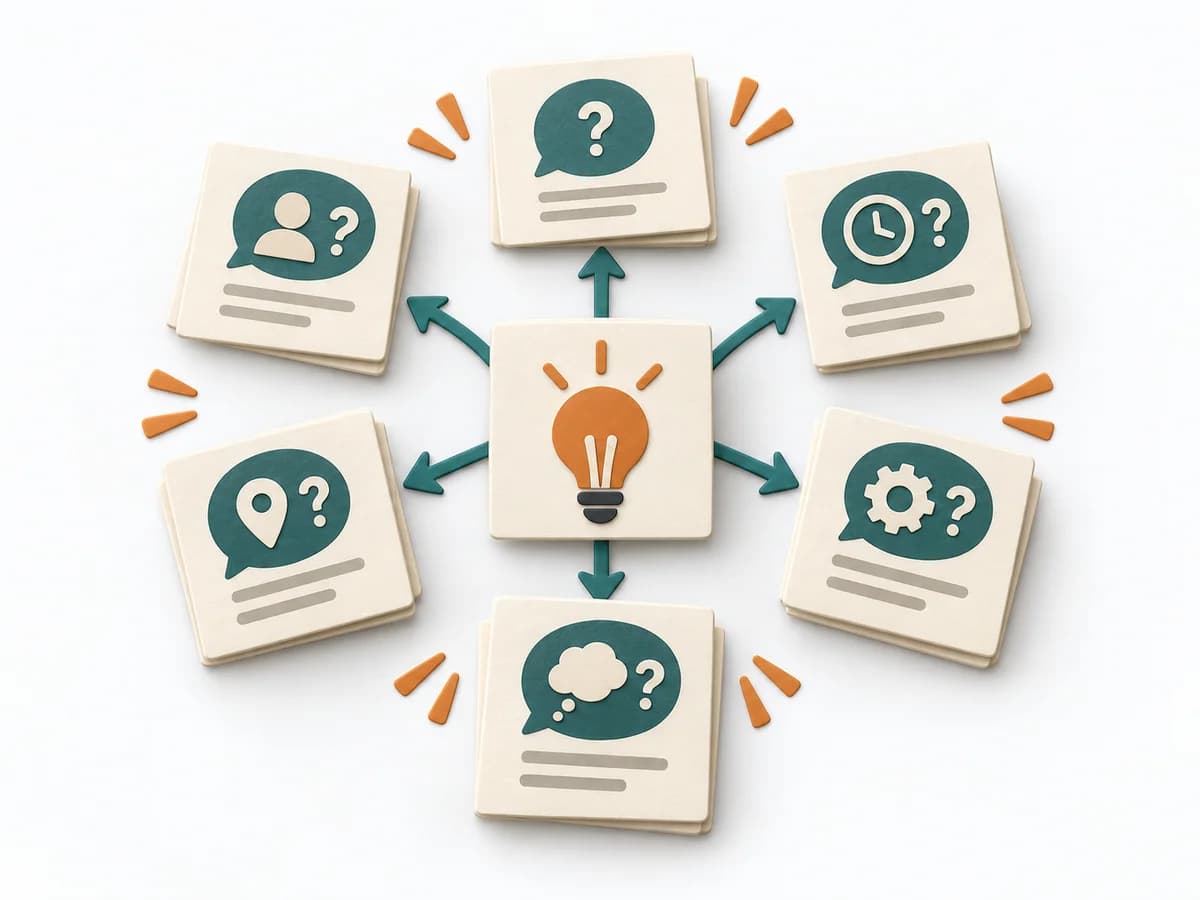 Innovation Starbursting |
|---|---|---|---|---|
Purposedifferent | The PARA Method organizes knowledge into Projects, Areas, Resources, and Archives. It creates order when digital notes, files, and tasks no longer cleanly fit current work. | In a tightly timed design process with many participants, the method pools several lines of thinking in a short time. It brings parallel design energy without letting the discussion tip into endless coordination. This quickly produces solid directions for architecture or space. | When a domain consists of many events, rules, and states, it creates a shared modeling space for the team. It bundles language, flows, and boundaries before domain knowledge fragments into siloed views. | Helps clarify ideas, open questions, and testable next steps in concrete terms. It opens the thinking space, collects ideas, and leads to testable options. The result is captured as a star-shaped question map, question list, and assumption list. |
Complexitydifferent | Medium | Medium | Medium | Low |
Timedifferent | 1-3 h Setup, laufend | Halber Tag bis mehrere Tage | 2-8 h | 30-60 min |
Participantsdifferent | 1 | 10-50 | 5-12 | 3-10 |
Formatdifferent | Async | Workshop | Workshop | Workshop + async |
Outputdifferent | PARA Structure, Project Notes, Knowledge Archive | Sketches and Concepts, Consolidated Solution Sketch, Prioritized Direction | Event Timeline, Ubiquitous Language, Boundaries, Open Questions | Star-Shaped Question Map, Question List, Assumption List |
Tagsno overlap | KnowledgeProductivityOrganization | BrainstormingWorkshopCollaborationIdeation | Domain-Driven DesignEventsDiscoveryWorkshop | BrainstormingIdeationWorkshopDiscovery |