View methods side by side.
Choose up to four methods. Add them using the search and share the comparison by copying its link.
| Criterion |  Knowledge Modeling PARA Method | 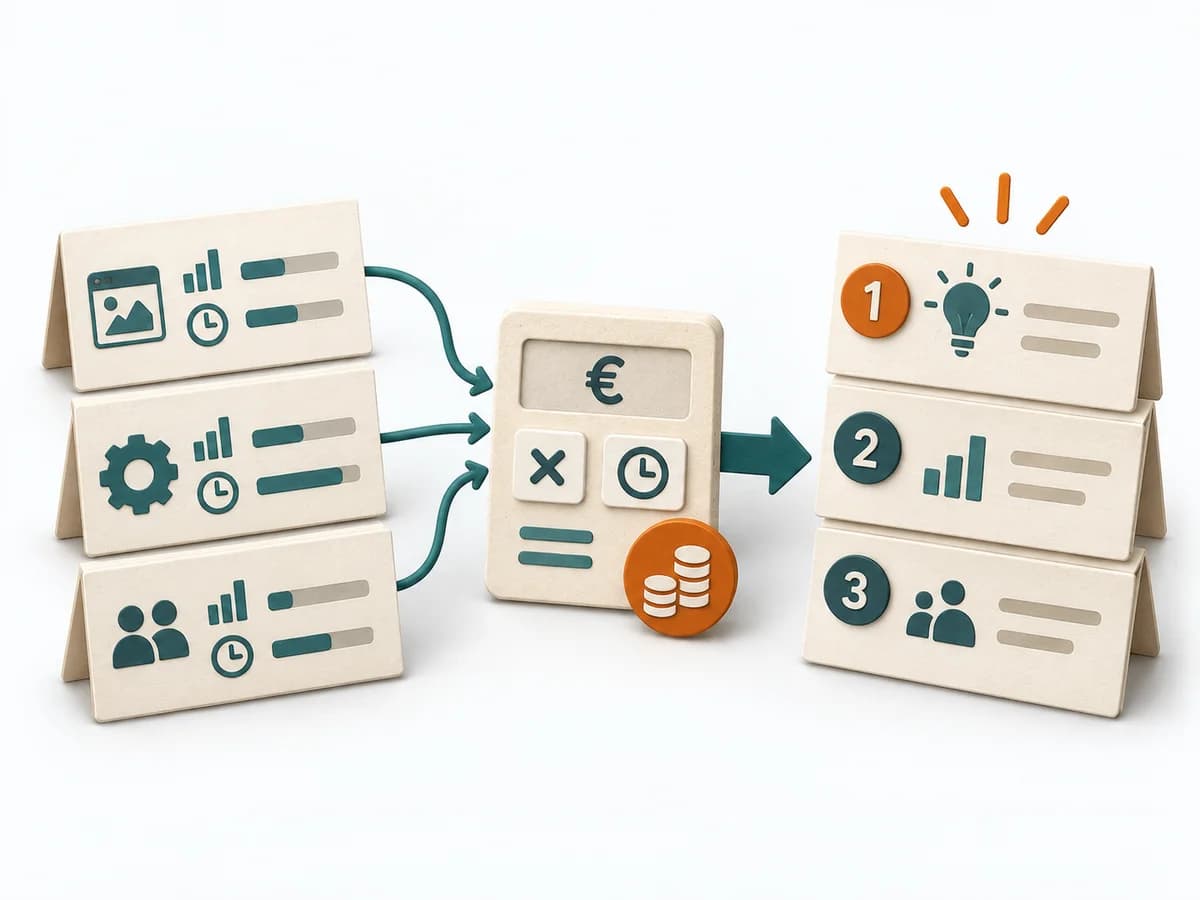 Delivery Cost of Delay |  Facilitation Nominal Group Technique |  Facilitation Decision Jam |
|---|---|---|---|---|
Purposedifferent | The PARA Method organizes knowledge into Projects, Areas, Resources, and Archives. It creates order when digital notes, files, and tasks no longer cleanly fit current work. | Helps clarify scope, order, and delivery flow in concrete terms. It makes work, constraints, and sequence manageable. The result is captured as a Cost of Delay table and prioritization sequence. | When loud voices could dominate a round, Nominal Group Technique protects individual thinking time from group effects. It collects ideas separately first and only then enables shared weighting. | When a decision is stuck, Decision Jam loosens the knot through structured separation of problem, idea, and selection. The format creates movement without jumping prematurely at the first seemingly elegant answer. |
Complexitydifferent | Medium | High | Medium | Low |
Timedifferent | 1-3 h Setup, laufend | 90-180 min | 60-120 min | 60-90 min |
Participantsdifferent | 1 | 3-8 | 5-12 | 4-10 |
Formatdifferent | Async | Workshop | Workshop | Workshop |
Outputdifferent | PARA Structure, Project Notes, Knowledge Archive | CoD Table, Prioritization Sequence | Ranked Ideas, Clarified Options, Group Priority | Problem Cluster, Prioritized Challenge, Experiment |
Tagsno overlap | KnowledgeProductivityOrganization | PrioritizationDeliveryEconomicsDecision | FacilitationPrioritizationVotingInclusion | FacilitationDecisionProblem solvingWorkshop |