View methods side by side.
Choose up to four methods. Add them using the search and share the comparison by copying its link.
| Criterion |  Knowledge Modeling PARA Method |  Domain Modeling Context Map | 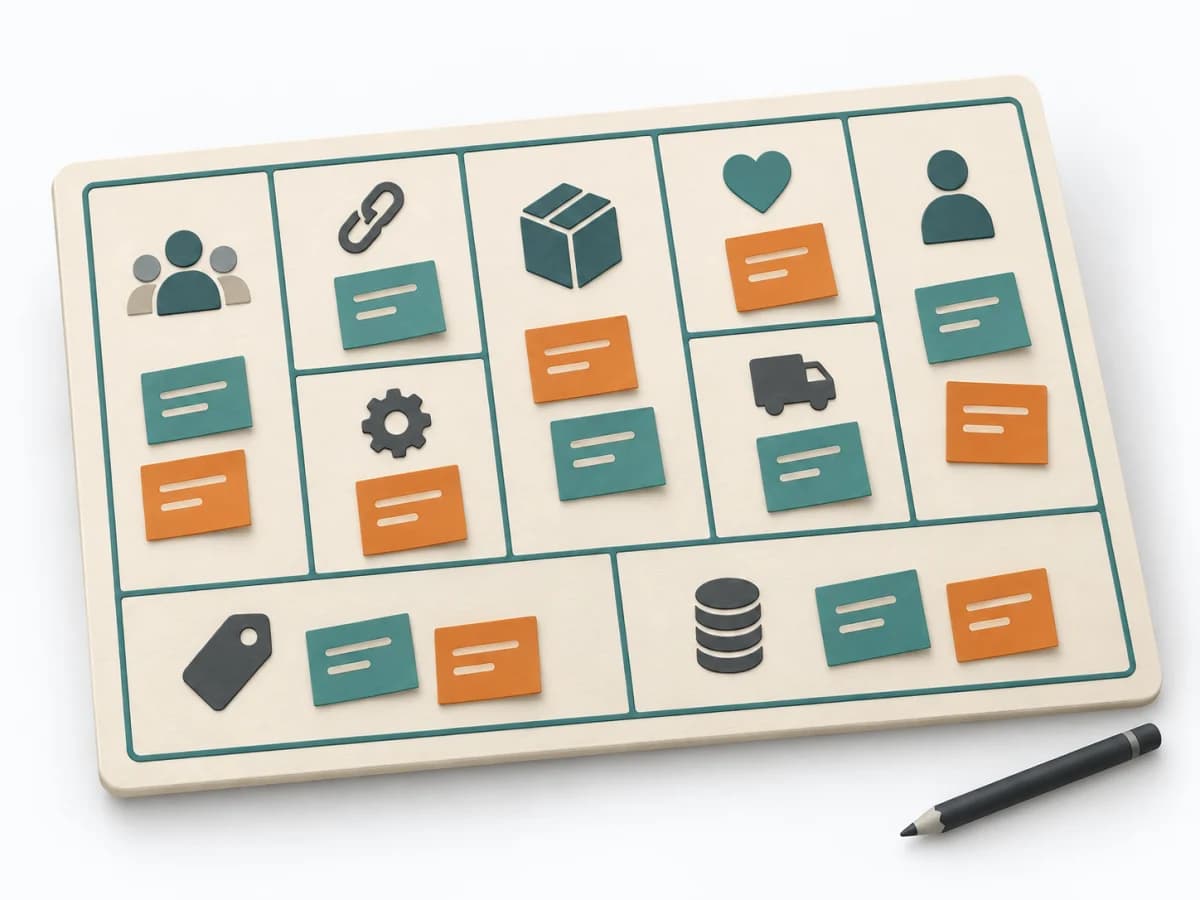 Business Strategy Business Model Canvas | 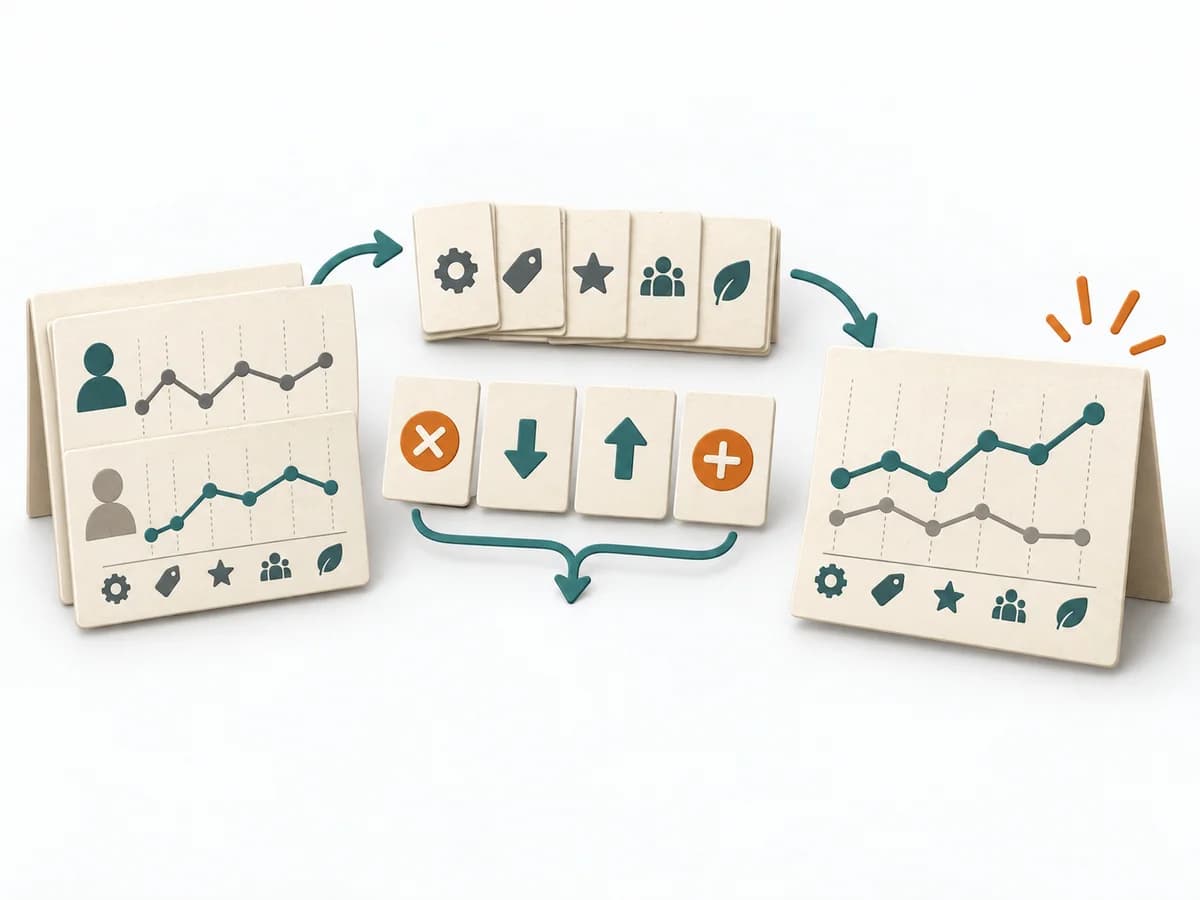 Business Strategy Blue Ocean Strategy Canvas |
|---|---|---|---|---|
Purposedifferent | The PARA Method organizes knowledge into Projects, Areas, Resources, and Archives. It creates order when digital notes, files, and tasks no longer cleanly fit current work. | When several contexts need to talk to each other, it makes their relationships and dependencies legible. It helps sort integration pressure and responsibilities across system boundaries. | The Business Model Canvas condenses a business model to its key building blocks and assumptions. It makes variants quickly comparable and reveals gaps before validation or implementation begins. | The Blue Ocean Strategy Canvas shows how an offering is positioned relative to the market. Differentiation thereby becomes tangible in value factors instead of merely being claimed. |
Complexitysame | Medium | Medium | Medium | Medium |
Timedifferent | 1-3 h Setup, laufend | 1-3 h | 1-2 h | 2-4 h |
Participantsdifferent | 1 | 2-8 | 2-8 | 3-10 |
Formatdifferent | Async | Workshop + async | Workshop + async | Workshop |
Outputdifferent | PARA Structure, Project Notes, Knowledge Archive | Context Map, Integration Patterns, Boundary Notes | Business Model Canvas, Assumption List, Business Hypotheses | Strategy Canvas, Value Curve, ERRC Actions |
Tagsno overlap | KnowledgeProductivityOrganization | Domain-Driven DesignBoundariesStrategy | Business modelStrategyValueInnovation | StrategyPositioningInnovationValue |