View methods side by side.
Choose up to four methods. Add them using the search and share the comparison by copying its link.
| Criterion |  Knowledge Modeling PARA Method |  Decision Making Constraint Analysis |  Operations Family Tree Analysis | 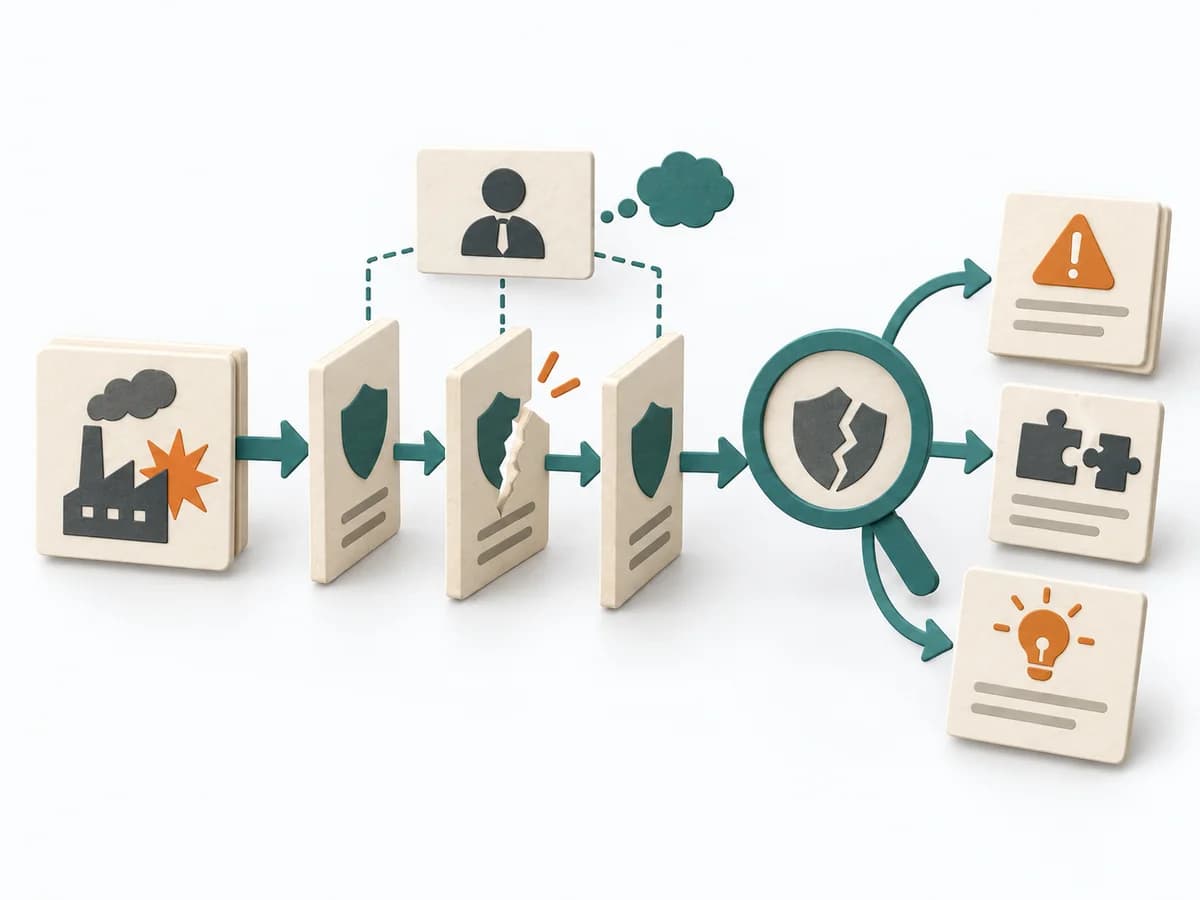 Operations MORT Analysis |
|---|---|---|---|---|
Purposedifferent | The PARA Method organizes knowledge into Projects, Areas, Resources, and Archives. It creates order when digital notes, files, and tasks no longer cleanly fit current work. | When an initiative stalls, the limit often lies not in the idea but in hard or soft boundary conditions. Constraint Analysis separates these limits and shows which of them can actually be shaped. | For a series of incidents with a similar pattern, the method arranges individual events as branches of a common origin. It makes visible which conditions keep recurring. | For a safety-relevant event or a system with high protection requirements, the method examines where controls failed. It exposes both technical and organizational gaps. |
Complexitydifferent | Medium | Low | Medium | High |
Timedifferent | 1-3 h Setup, laufend | 30-90 min | 2-4 h | Mehrere Tage bis Wochen |
Participantsdifferent | 1 | 2-8 | 2-6 | 2-6 |
Formatdifferent | Async | Workshop + async | Workshop + async | Workshop + async |
Outputdifferent | PARA Structure, Project Notes, Knowledge Archive | Constraint List, Hard/Soft Classification, Option Impact Notes, Decision Boundaries | Family Tree Diagram, Pattern Notes, Systemic Measures | MORT Worksheets, Findings per Branch, Corrective Actions, Systemic Recommendations |
Tagsno overlap | KnowledgeProductivityOrganization | ConstraintsDecisionPlanningOptions | Root causePatternsIncidentSystemic | Root causeSafetySystemicIncident |