View methods side by side.
Choose up to four methods. Add them using the search and share the comparison by copying its link.
| Criterion |  Knowledge Modeling PARA Method |  Knowledge Modeling Concept Mapping | 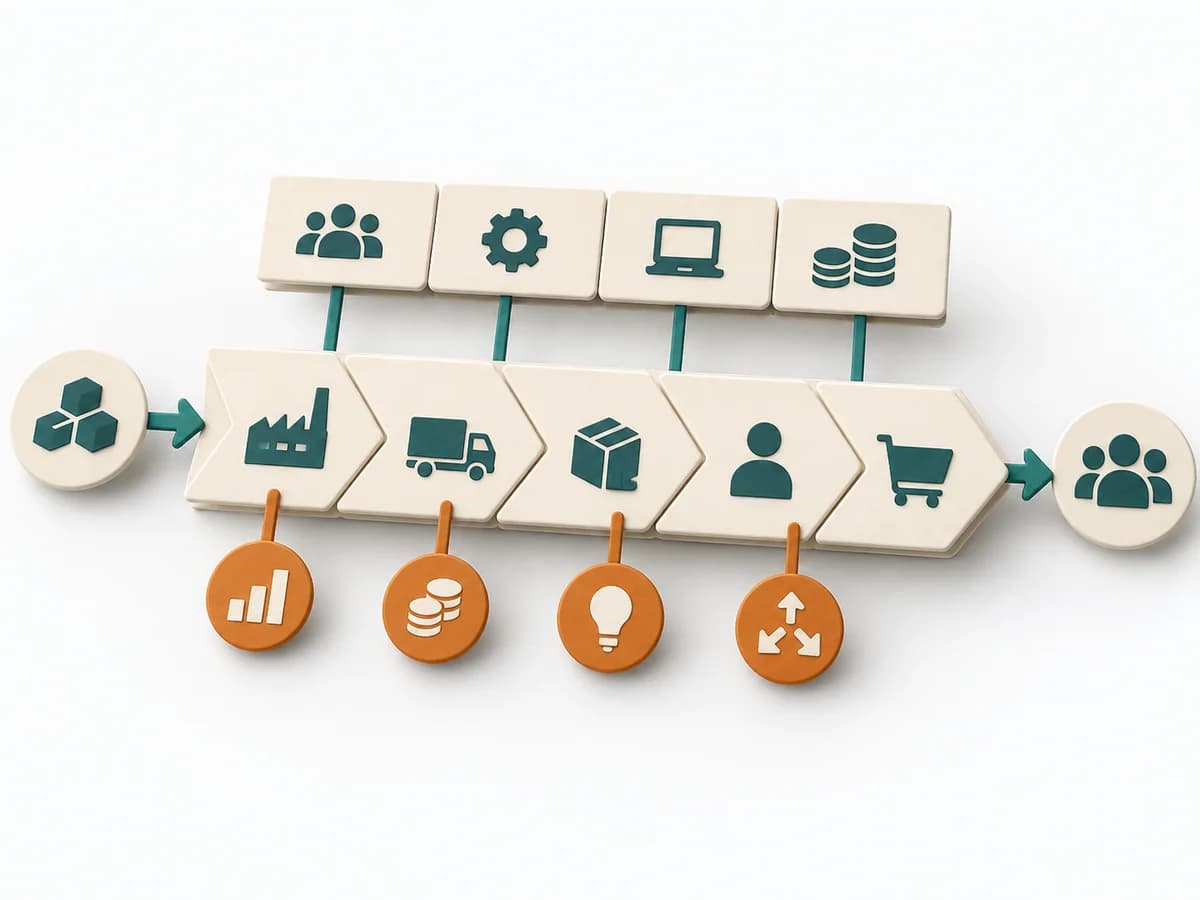 Business Strategy Value Chain Analysis |  Business Strategy GAP Analysis |
|---|---|---|---|---|
Purposedifferent | The PARA Method organizes knowledge into Projects, Areas, Resources, and Archives. It creates order when digital notes, files, and tasks no longer cleanly fit current work. | Concept Mapping arranges terms and relationships in a network that makes subject-matter connections tangible. It fits when a topic needs to be understood structurally rather than linearly. | Value Chain Analysis shows where value is created, costs accrue, and differentiation becomes possible along the process. It compares strengths, risks, market logic, and courses of action. The result is captured as a value-chain map and lever list. | GAP Analysis compares the current state with a target picture and makes the distance manageable. It becomes useful when, ahead of new initiatives, it must become clear which capabilities, processes, or resources are missing. |
Complexitydifferent | Medium | Medium | High | Medium |
Timedifferent | 1-3 h Setup, laufend | 1-2 h | Half day | 1-3 h |
Participantsdifferent | 1 | 1-8 | 3-8 | 2-8 |
Formatdifferent | Async | Workshop + async | Workshop | Workshop + async |
Outputdifferent | PARA Structure, Project Notes, Knowledge Archive | Concept Map, Relationship Labels, Knowledge Gaps | Value Chain Map, Lever List | Gap Matrix, Action Plan, Risk Notes |
Tagsno overlap | KnowledgeProductivityOrganization | KnowledgeConceptsMappingSensemaking | StrategyBusiness modelDiagnosisAnalysis | StrategyAnalysisPlanning |