View methods side by side.
Choose up to four methods. Add them using the search and share the comparison by copying its link.
| Criterion |  Knowledge Modeling PARA Method |  Knowledge Modeling Concept Mapping | 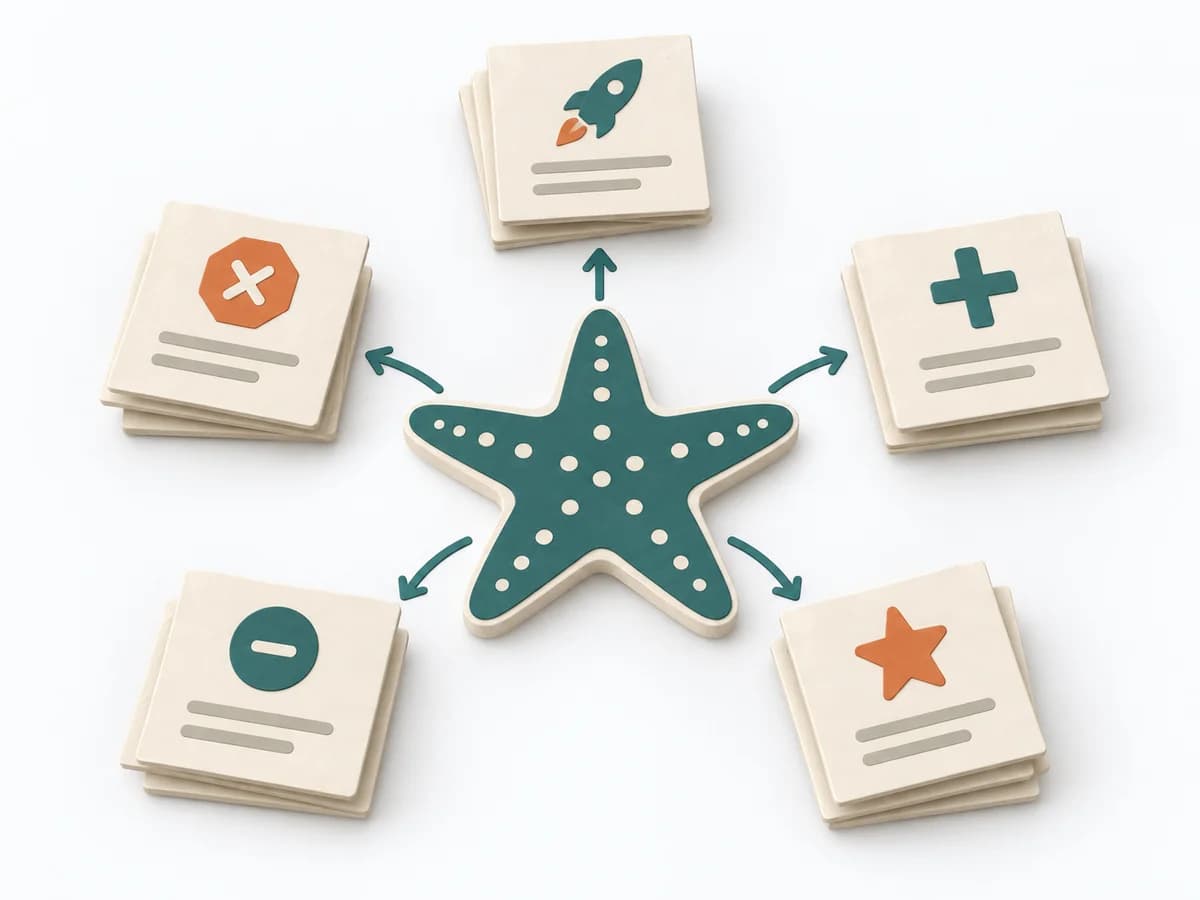 Agile Starfish Retrospective | 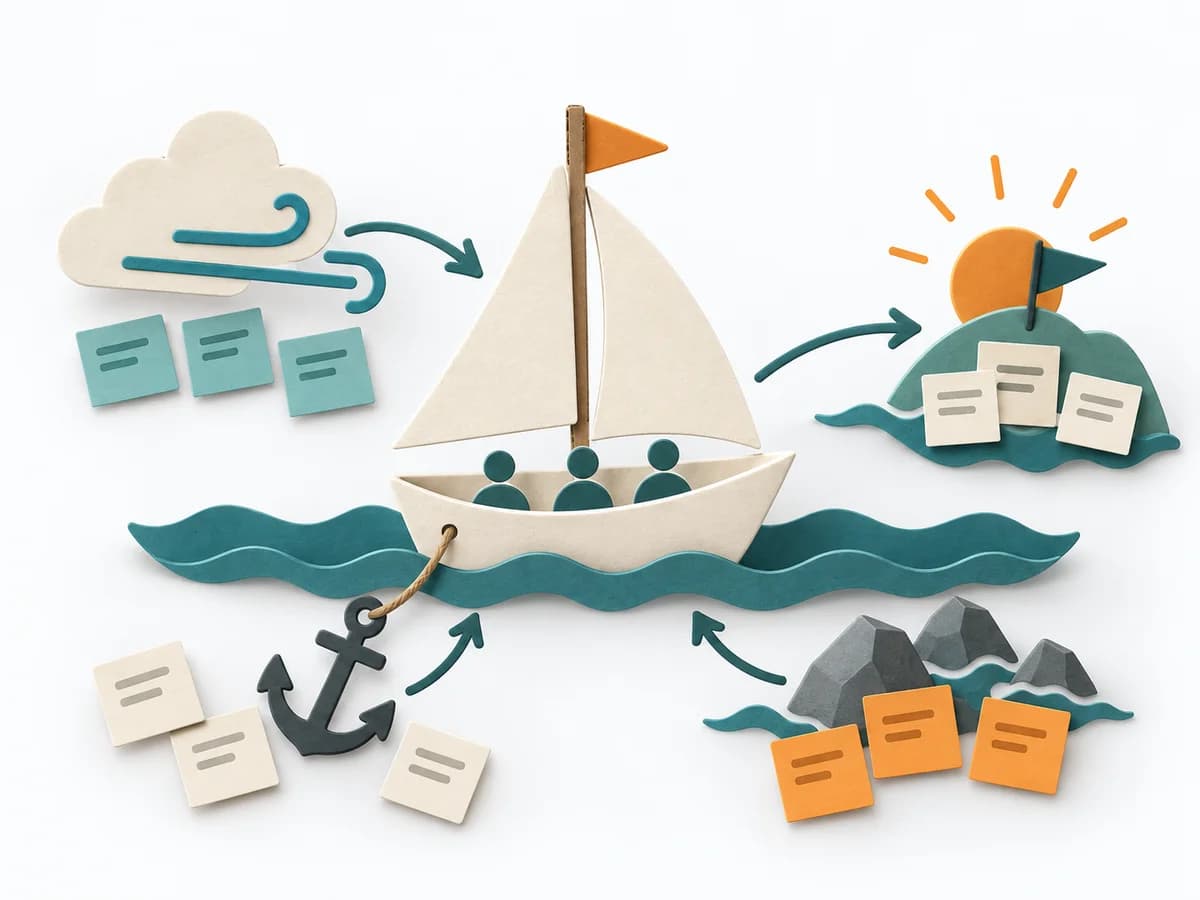 Agile Sailboat Retrospective |
|---|---|---|---|---|
Purposedifferent | The PARA Method organizes knowledge into Projects, Areas, Resources, and Archives. It creates order when digital notes, files, and tasks no longer cleanly fit current work. | Concept Mapping arranges terms and relationships in a network that makes subject-matter connections tangible. It fits when a topic needs to be understood structurally rather than linearly. | When improvement options need to be sorted more finely than just start and stop, it brings observations into clear kinds of action. This makes visible what should be done more, less, newly, or continued. | When a team wants to read momentum, brakes, and risks together, it offers an easily understandable picture of the situation. It makes drive, obstacles, and headwind visible in the same picture. |
Complexitydifferent | Medium | Medium | Low | Low |
Timedifferent | 1-3 h Setup, laufend | 1-2 h | 45-90 min | 45-90 min |
Participantsdifferent | 1 | 1-8 | 4-12 | 4-12 |
Formatdifferent | Async | Workshop + async | Workshop | Workshop |
Outputdifferent | PARA Structure, Project Notes, Knowledge Archive | Concept Map, Relationship Labels, Knowledge Gaps | Starfish Board, Practice Changes, Experiments | Sailboat Board, Risks, Improvement Actions |
Tagsno overlap | KnowledgeProductivityOrganization | KnowledgeConceptsMappingSensemaking | RetrospectiveImprovementExperimentsTeam | RetrospectiveTeamImprovement |