View methods side by side.
Choose up to four methods. Add them using the search and share the comparison by copying its link.
| Criterion |  Knowledge Modeling PARA Method |  Knowledge Modeling Concept Mapping | 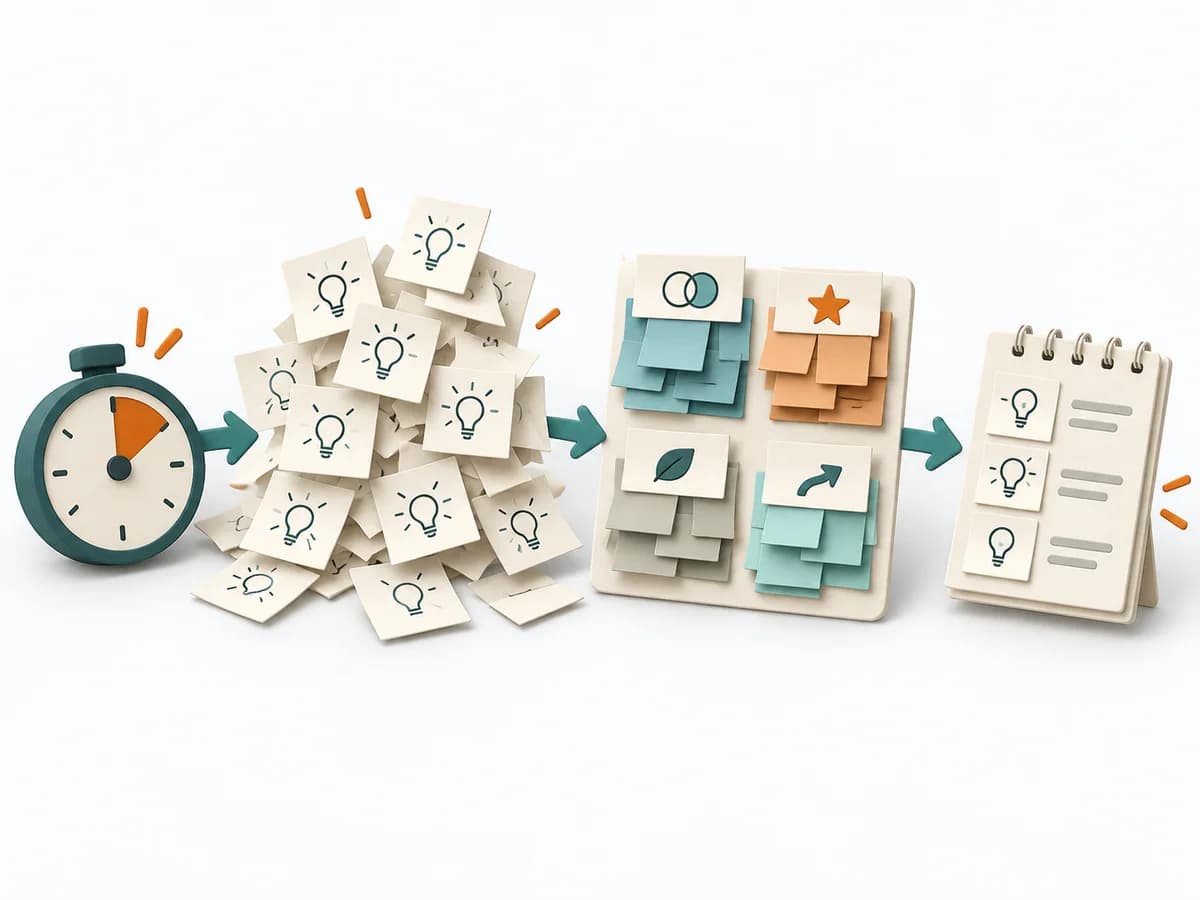 Innovation Rapid Ideation | 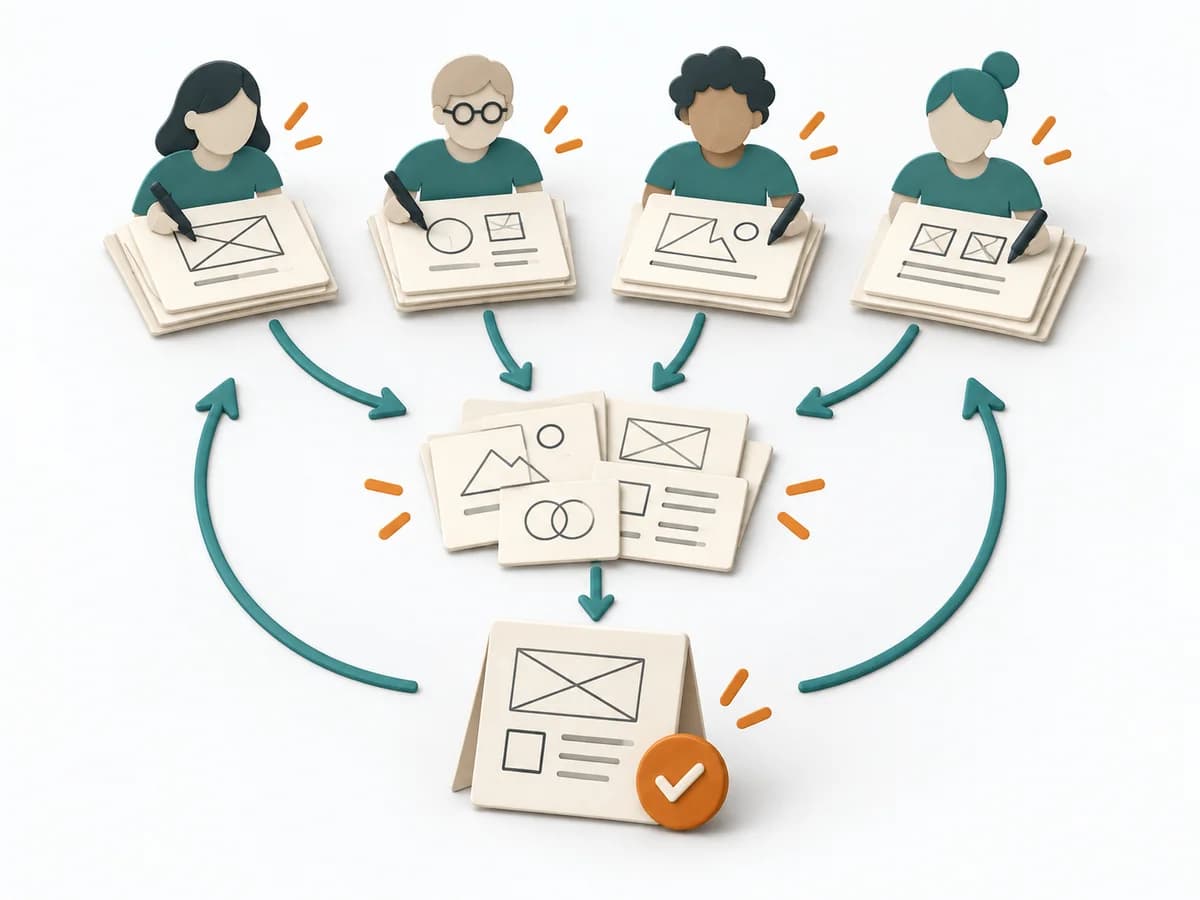 Innovation Design Charrette |
|---|---|---|---|---|
Purposedifferent | The PARA Method organizes knowledge into Projects, Areas, Resources, and Archives. It creates order when digital notes, files, and tasks no longer cleanly fit current work. | Concept Mapping arranges terms and relationships in a network that makes subject-matter connections tangible. It fits when a topic needs to be understood structurally rather than linearly. | When a decision needs to be prepared quickly, the method generates many solution-close variants in a short time. It deliberately relies on pace to undercut self-censorship and perfectionism. This quickly produces a usable field for prioritization and further work. | In a tightly timed design process with many participants, the method pools several lines of thinking in a short time. It brings parallel design energy without letting the discussion tip into endless coordination. This quickly produces solid directions for architecture or space. |
Complexitydifferent | Medium | Medium | Low | Medium |
Timedifferent | 1-3 h Setup, laufend | 1-2 h | 5-20 min | Halber Tag bis mehrere Tage |
Participantsdifferent | 1 | 1-8 | 1-20 | 10-50 |
Formatdifferent | Async | Workshop + async | Workshop + async | Workshop |
Outputdifferent | PARA Structure, Project Notes, Knowledge Archive | Concept Map, Relationship Labels, Knowledge Gaps | Ideenpool, Roh-Shortlist, Cluster | Sketches and Concepts, Consolidated Solution Sketch, Prioritized Direction |
Tagsno overlap | KnowledgeProductivityOrganization | KnowledgeConceptsMappingSensemaking | BrainstormingIdeationDivergenceSpeed | BrainstormingWorkshopCollaborationIdeation |