View methods side by side.
Choose up to four methods. Add them using the search and share the comparison by copying its link.
| Criterion |  Knowledge Modeling PARA Method |  Systems Thinking CATWOE Analysis | 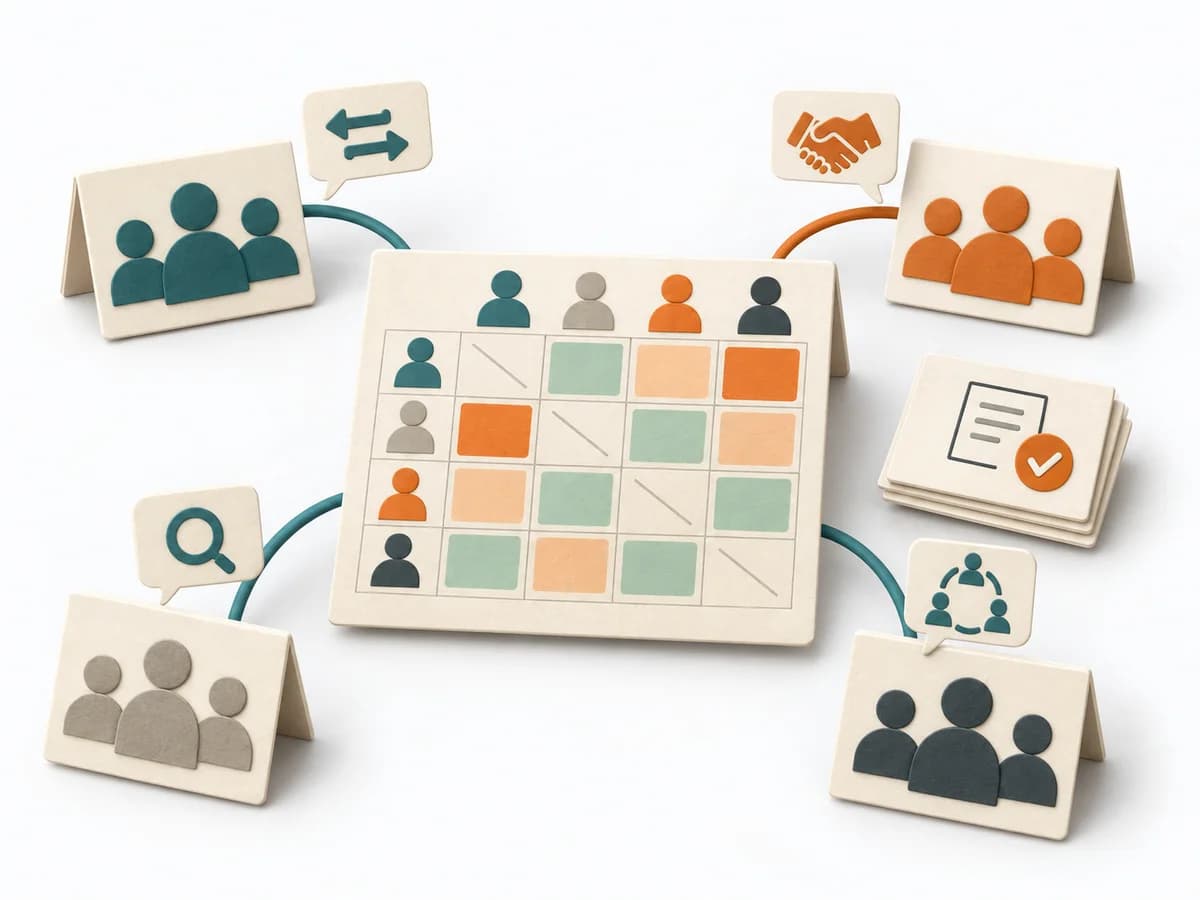 Team Design Team Topologies Interaction Modes |  Facilitation Alignment Mapping |
|---|---|---|---|---|
Purposedifferent | The PARA Method organizes knowledge into Projects, Areas, Resources, and Archives. It creates order when digital notes, files, and tasks no longer cleanly fit current work. | CATWOE structures a problem from six viewpoints and prevents too narrow a view of the situation. Different experiences of the system become comparably discussable this way. | When several teams collaborate repeatedly, it describes the right interaction mode for each interface between them. It clarifies responsibility, interaction, and load between teams. The result is captured as an interaction heat map and pairwise agreements. | When several people work toward one goal but hold different mental maps, Alignment Mapping makes the discrepancies visible. It arranges goals, assumptions, and priorities so shared direction becomes verifiable. |
Complexitysame | Medium | Medium | Medium | Medium |
Timedifferent | 1-3 h Setup, laufend | 45-90 min | Half day | 1-2 h |
Participantsdifferent | 1 | 3-8 | Team-Leads plus Architecture | 4-12 |
Formatdifferent | Async | Workshop + async | Workshop | Workshop |
Outputdifferent | PARA Structure, Project Notes, Knowledge Archive | CATWOE Canvas, Root Definition, Stakeholder Perspectives, Constraints | Interaction Heat Map, Agreements per Pair | Alignment Map, Open Issues, Decision Questions |
Tagsno overlap | KnowledgeProductivityOrganization | Systems thinkingFramingStakeholders | TeamAlignmentCollaborationOrganization | AlignmentStakeholdersStrategyFacilitation |