View methods side by side.
Choose up to four methods. Add them using the search and share the comparison by copying its link.
| Criterion |  Knowledge Modeling PARA Method | 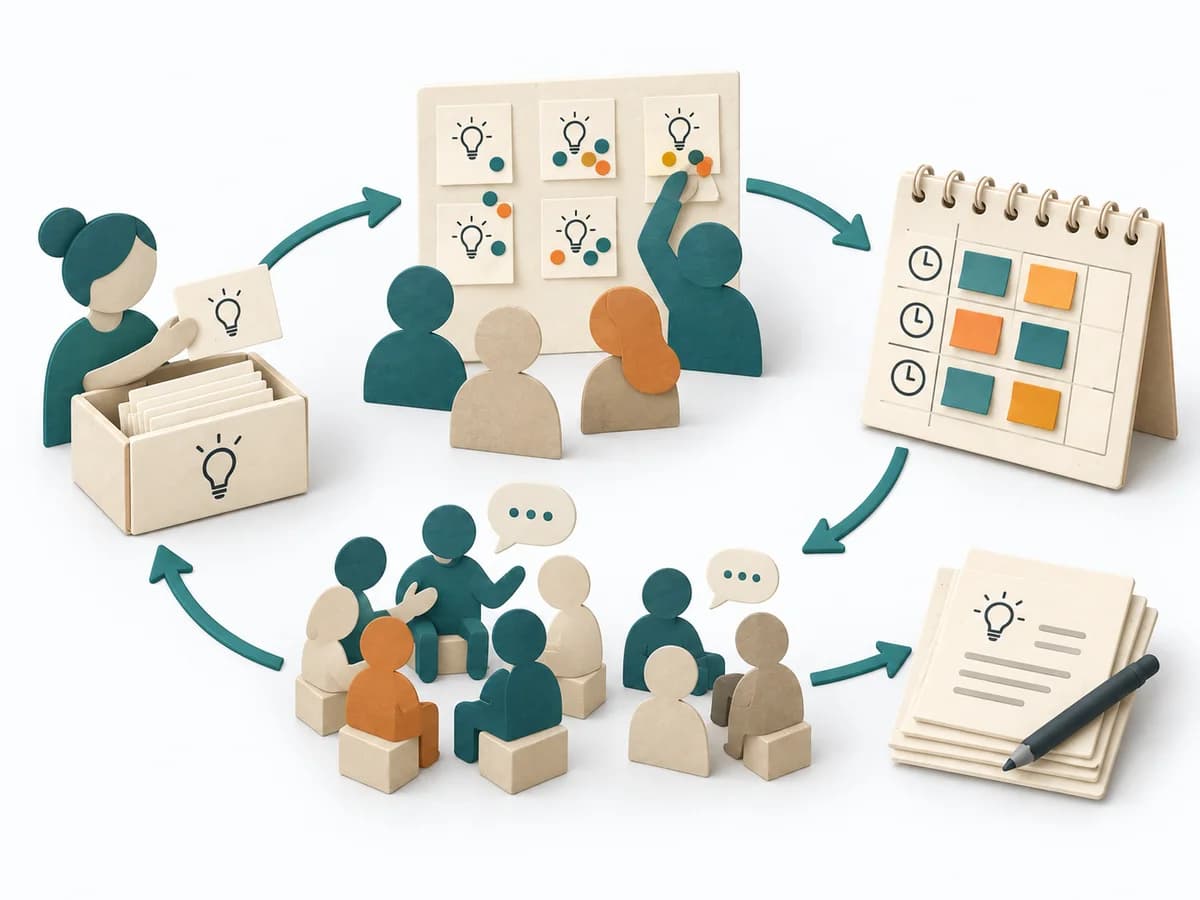 Facilitation Barcamp |  Knowledge Modeling Concept Mapping | 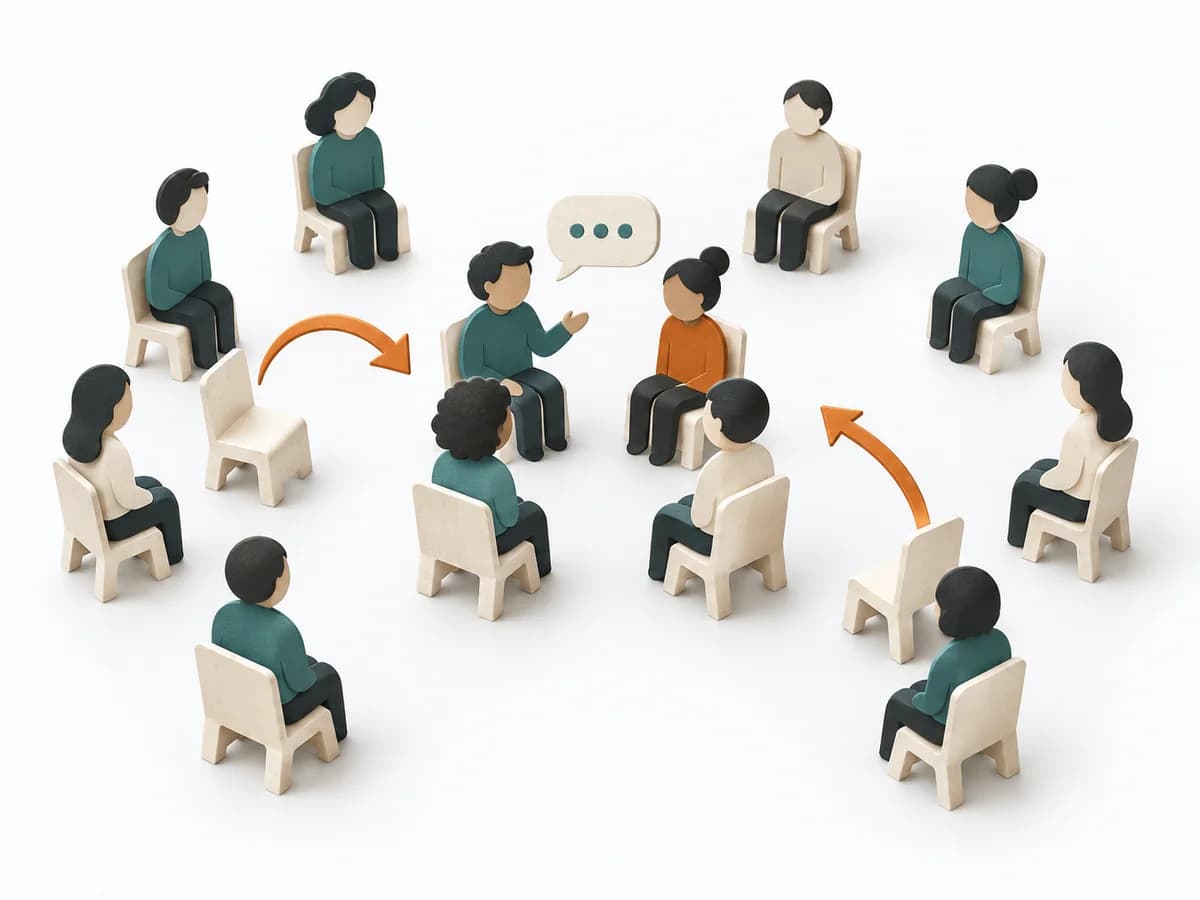 Facilitation Fishbowl Discussion |
|---|---|---|---|---|
Purposedifferent | The PARA Method organizes knowledge into Projects, Areas, Resources, and Archives. It creates order when digital notes, files, and tasks no longer cleanly fit current work. | When many people can contribute knowledge and the flow should stay open, Barcamp provides a framework for self-organized sessions. The format channels energy without defining the content too narrowly in advance. | Concept Mapping arranges terms and relationships in a network that makes subject-matter connections tangible. It fits when a topic needs to be understood structurally rather than linearly. | When a controversial topic needs depth and discipline at the same time, Fishbowl Discussion makes the structure of the conversation transparent. The format keeps the core small enough for real dialogue and open enough for controlled turnover. |
Complexitysame | Medium | Medium | Medium | Medium |
Timedifferent | 1-3 h Setup, laufend | Halber Tag bis 2 Tage | 1-2 h | 45-90 min |
Participantsdifferent | 1 | 15-200 | 1-8 | 8-80 |
Formatdifferent | Async | Workshop | Workshop + async | Workshop |
Outputdifferent | PARA Structure, Project Notes, Knowledge Archive | Session Board, Session Notes, Community Learnings | Concept Map, Relationship Labels, Knowledge Gaps | Discussion Insights, Observed Tensions, Follow-up Questions |
Tagsno overlap | KnowledgeProductivityOrganization | FacilitationLarge groupLearning | KnowledgeConceptsMappingSensemaking | FacilitationDialogueLarge group |