View methods side by side.
Choose up to four methods. Add them using the search and share the comparison by copying its link.
| Criterion |  Knowledge Modeling PARA Method |  Decision Making Assumption Surfacing | 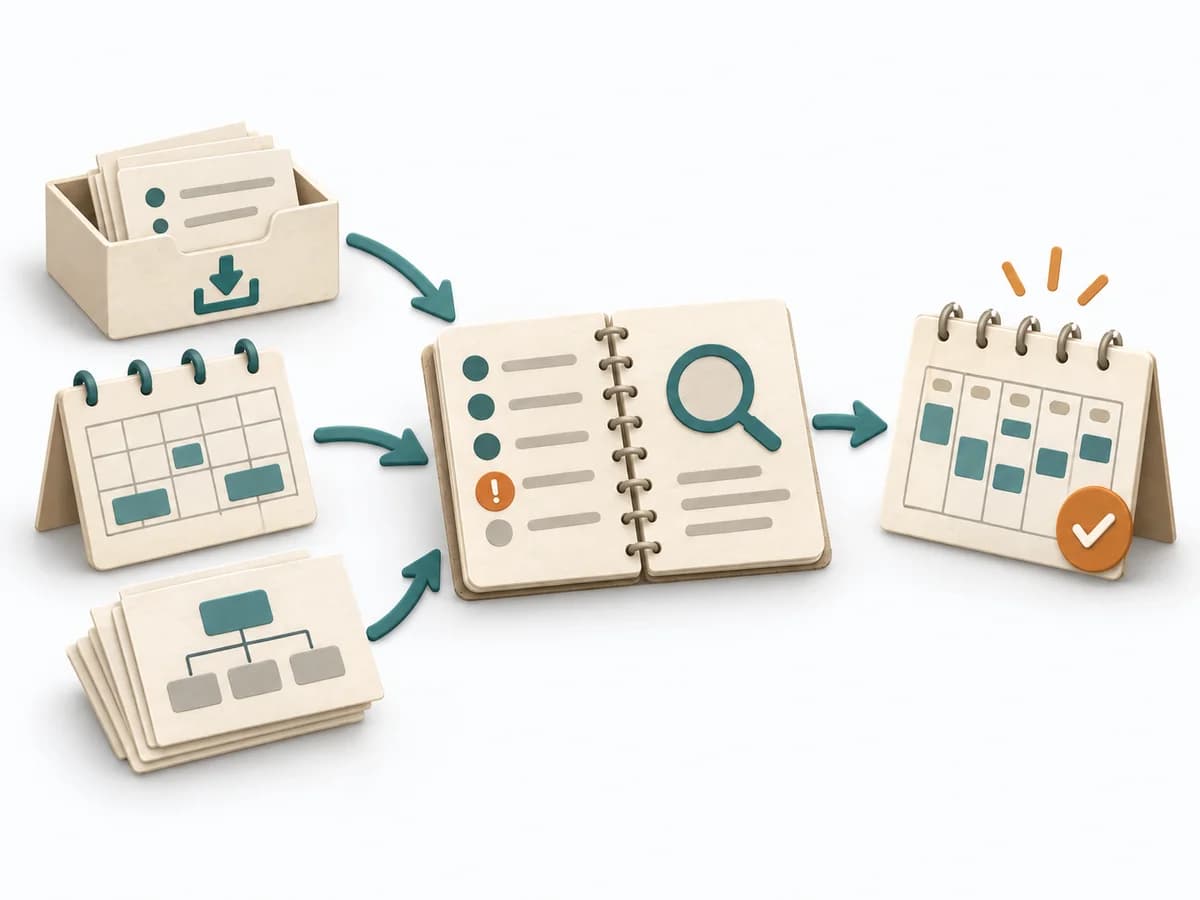 Operations Weekly Review | 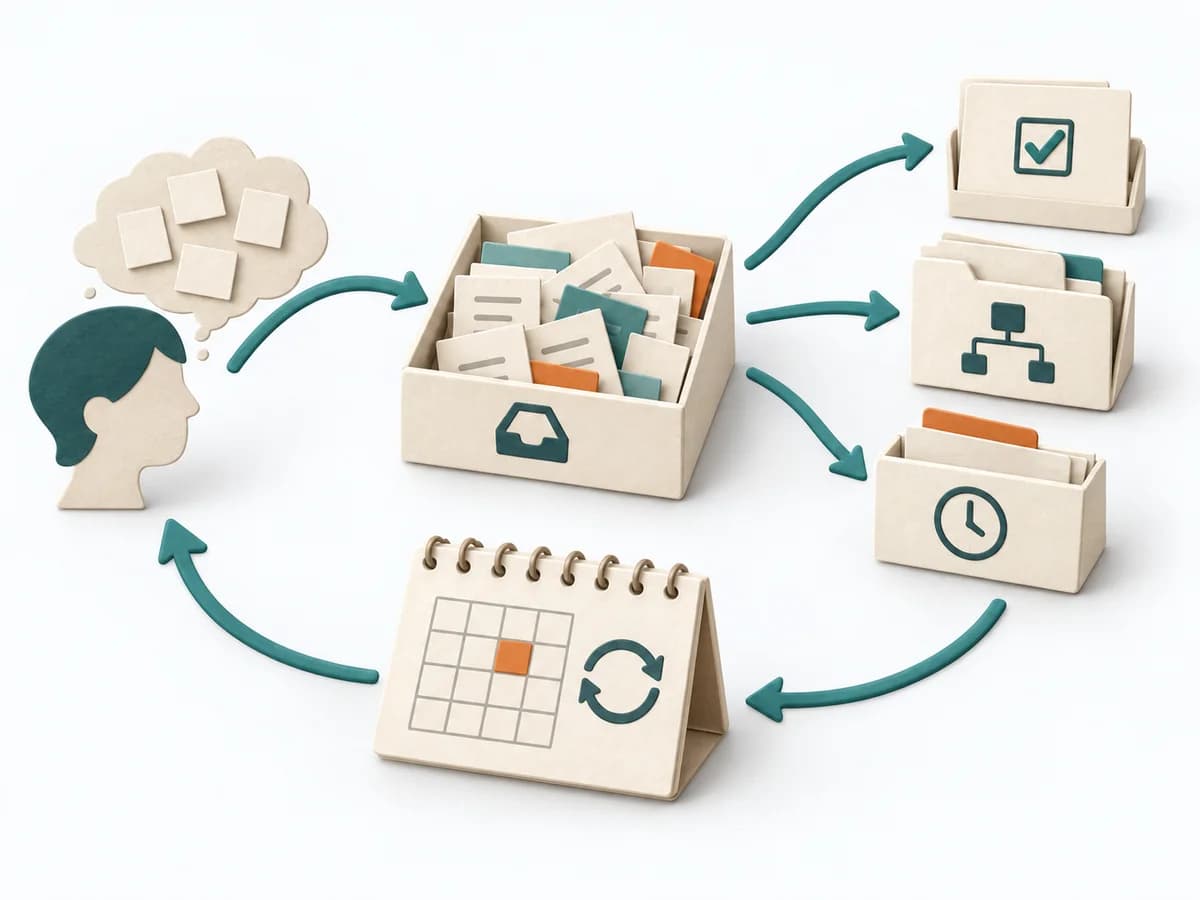 Operations Getting Things Done |
|---|---|---|---|---|
Purposedifferent | The PARA Method organizes knowledge into Projects, Areas, Resources, and Archives. It creates order when digital notes, files, and tasks no longer cleanly fit current work. | Plans often contain assumptions that were never openly stated and remain dangerous precisely because of that. Assumption Surfacing makes these silent premises visible and prioritizes which of them carry the initiative or could sink it. | In a week with many open loops, the method creates distance from operational noise. It organizes commitments, calendar, and projects so the next week becomes workable. | With many open commitments and ideas in daily life, a reliable external storage system emerges. The method relieves the mind so priority and context don't have to compete in memory. |
Complexitydifferent | Medium | Low | Low | Medium |
Timedifferent | 1-3 h Setup, laufend | 45-90 min | 30-60 min | 1-2 h Setup, laufend |
Participantsdifferent | 1 | 2-8 | 1 | 1 |
Formatdifferent | Async | Workshop + async | Async | Async |
Outputdifferent | PARA Structure, Project Notes, Knowledge Archive | Assumption List, Critical Assumptions, Learning Plan | Updated Task System, Weekly Focus, Next Actions | Action Lists, Project List, Review Routine |
Tagsno overlap | KnowledgeProductivityOrganization | AssumptionsRiskDecisionDiscovery | ProductivityExecutionPlanning | ProductivityPlanningTasksExecution |