View methods side by side.
Choose up to four methods. Add them using the search and share the comparison by copying its link.
| Criterion |  Knowledge Modeling PARA Method |  Product Discovery Assumption Mapping | 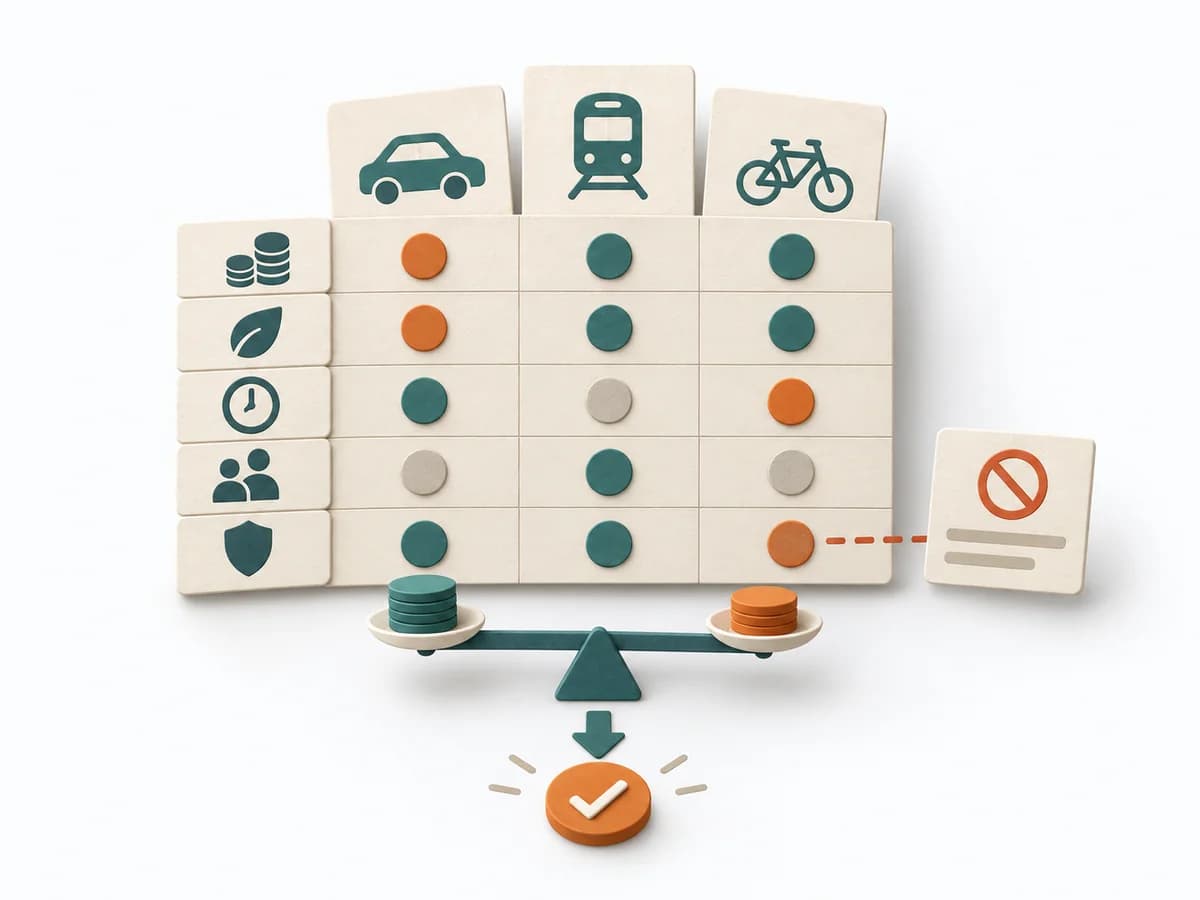 Decision Making Trade-off Analysis | 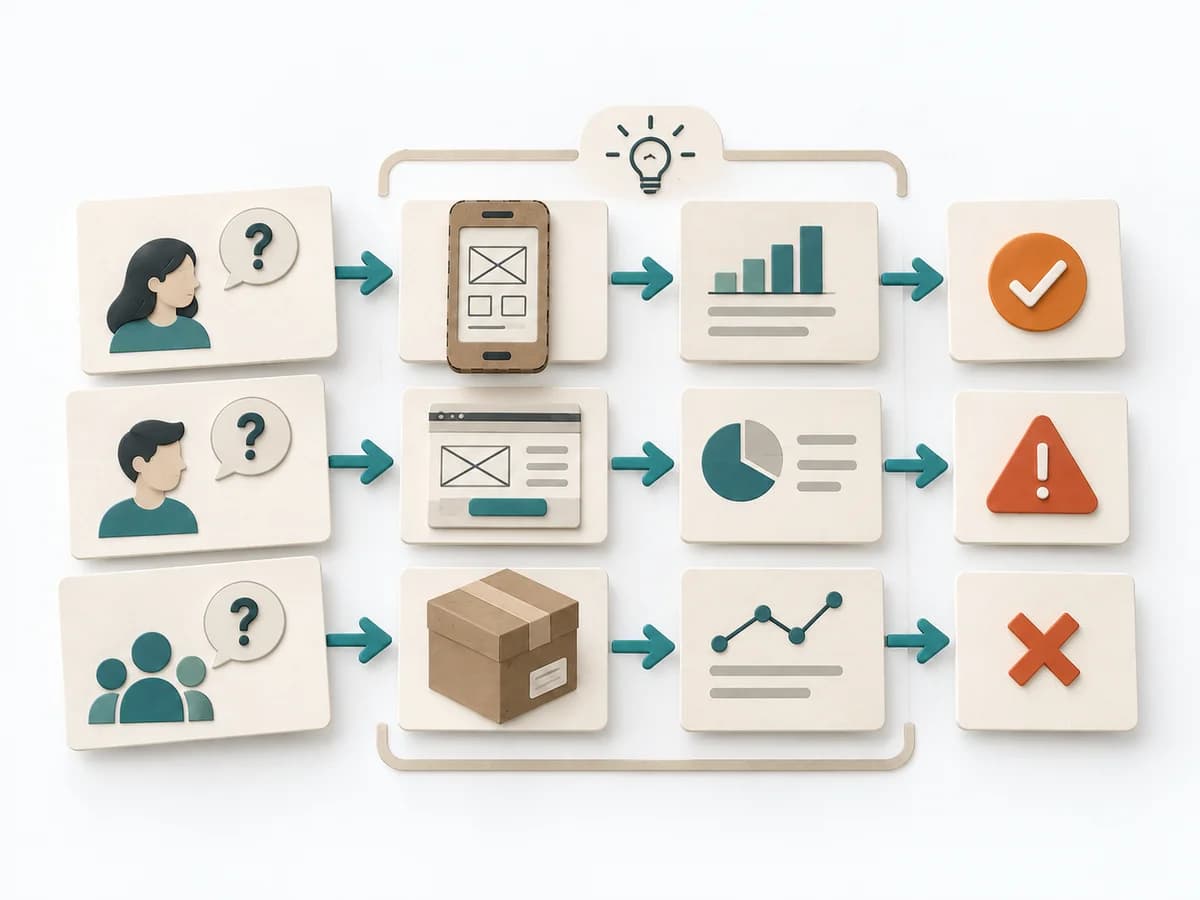 Product Discovery MVP Test Matrix |
|---|---|---|---|---|
Purposedifferent | The PARA Method organizes knowledge into Projects, Areas, Resources, and Archives. It creates order when digital notes, files, and tasks no longer cleanly fit current work. | When assumptions still sit unordered in the room, it weighs uncertainty against leverage. It makes visible which hypotheses should be checked first. | With limited resources, quality, speed, cost, and risk almost always compete with each other. Trade-off Analysis makes these tensions explicit and prevents decisions from producing hidden side effects. | When several minimal variants compete to answer the same question, it makes comparing and choosing between them cleaner. It separates problem, assumption, solution, and evidence. The result is captured as a Test Matrix and a Test Plan. |
Complexitysame | Medium | Medium | Medium | Medium |
Timedifferent | 1-3 h Setup, laufend | 45-60 min | 45-120 min | 45-75 min |
Participantsdifferent | 1 | 2-8 | 2-8 | 2-8 |
Formatdifferent | Async | Workshop + async | Workshop + async | Workshop |
Outputdifferent | PARA Structure, Project Notes, Knowledge Archive | Assumption map, Test backlog, Risk ranking | Trade-off Matrix, Criteria List, Decision Rationale, Accepted Downsides | Test Matrix, Test Plan |
Tagsno overlap | KnowledgeProductivityOrganization | AssumptionsRiskExperimentsValidation | TradeoffsDecisionCriteriaOptions | ExperimentsValidationDiscoveryOptions |