View methods side by side.
Choose up to four methods. Add them using the search and share the comparison by copying its link.
| Criterion |  Knowledge Modeling PARA Method |  Operations ALPEN Method | 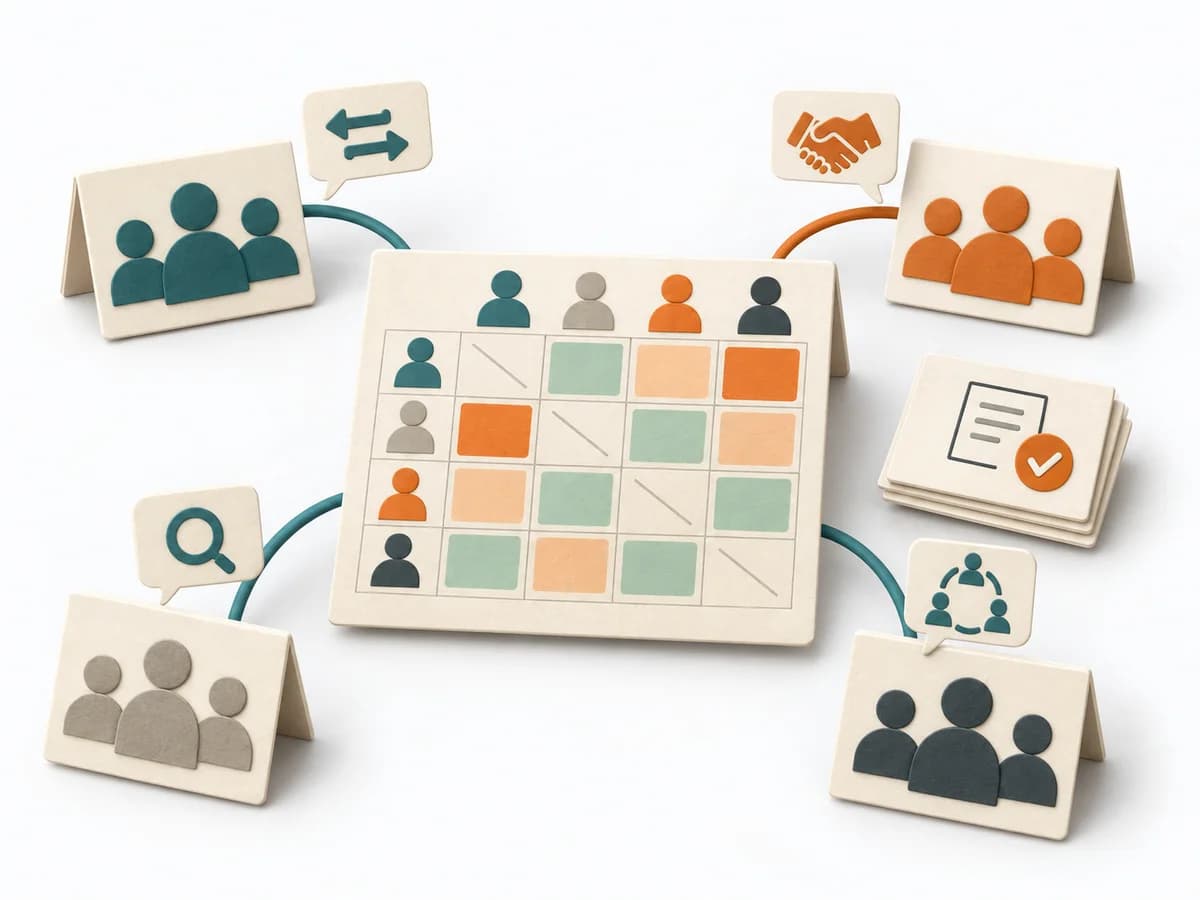 Team Design Team Topologies Interaction Modes | 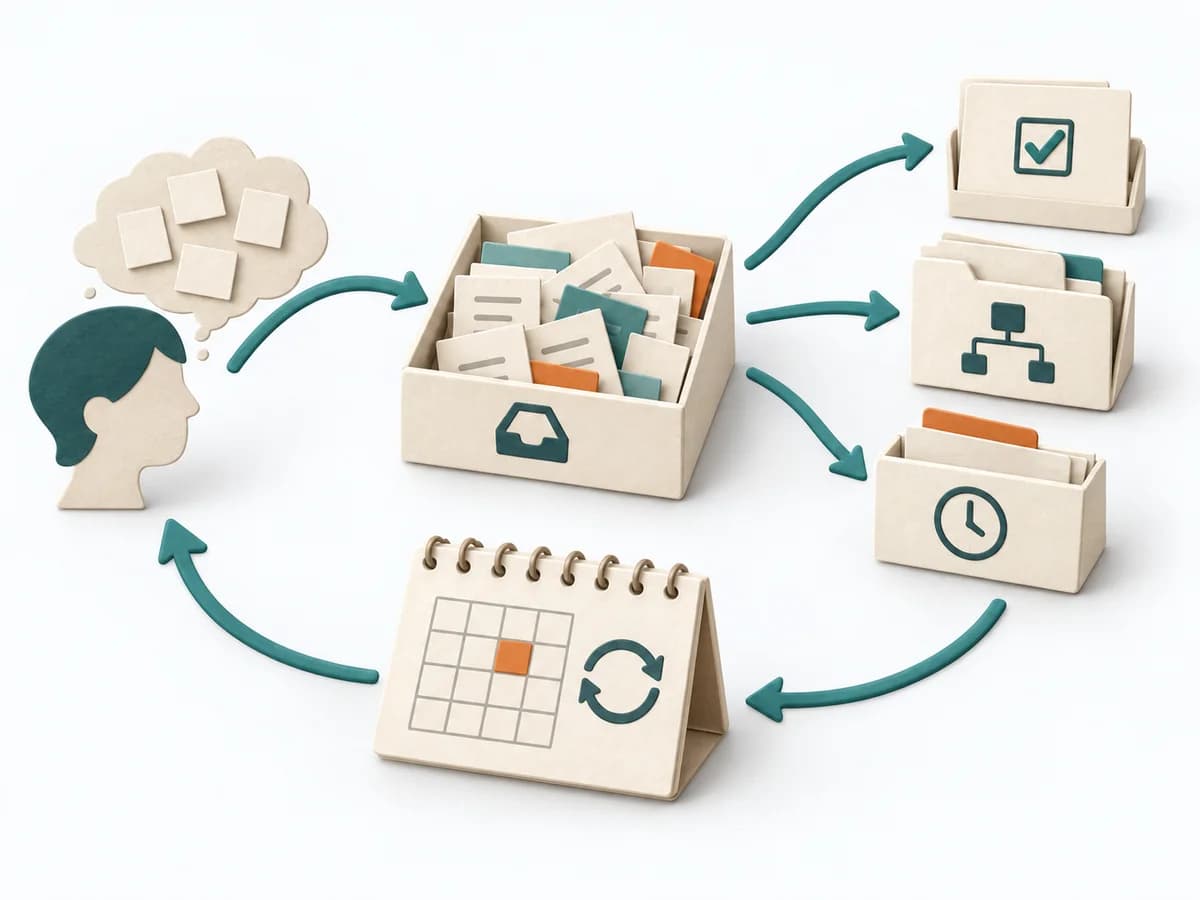 Operations Getting Things Done |
|---|---|---|---|---|
Purposedifferent | The PARA Method organizes knowledge into Projects, Areas, Resources, and Archives. It creates order when digital notes, files, and tasks no longer cleanly fit current work. | With an overloaded day full of too many tasks, a realistic picture of the day emerges. The method connects estimating, deciding, and buffer thinking so planning fits available energy and time. | When several teams collaborate repeatedly, it describes the right interaction mode for each interface between them. It clarifies responsibility, interaction, and load between teams. The result is captured as an interaction heat map and pairwise agreements. | With many open commitments and ideas in daily life, a reliable external storage system emerges. The method relieves the mind so priority and context don't have to compete in memory. |
Complexitydifferent | Medium | Low | Medium | Medium |
Timedifferent | 1-3 h Setup, laufend | 10-20 min daily | Half day | 1-2 h Setup, laufend |
Participantsdifferent | 1 | 1 | Team-Leads plus Architecture | 1 |
Formatdifferent | Async | Async | Workshop | Async |
Outputdifferent | PARA Structure, Project Notes, Knowledge Archive | Daily Plan, Time Estimates, Review Notes | Interaction Heat Map, Agreements per Pair | Action Lists, Project List, Review Routine |
Tagsno overlap | KnowledgeProductivityOrganization | PlanningTime managementProductivityOperations | TeamAlignmentCollaborationOrganization | ProductivityPlanningTasksExecution |