View methods side by side.
Choose up to four methods. Add them using the search and share the comparison by copying its link.
| Criterion |  Knowledge Modeling PARA Method |  Operations After-Action Review |  Architecture C4 Model | 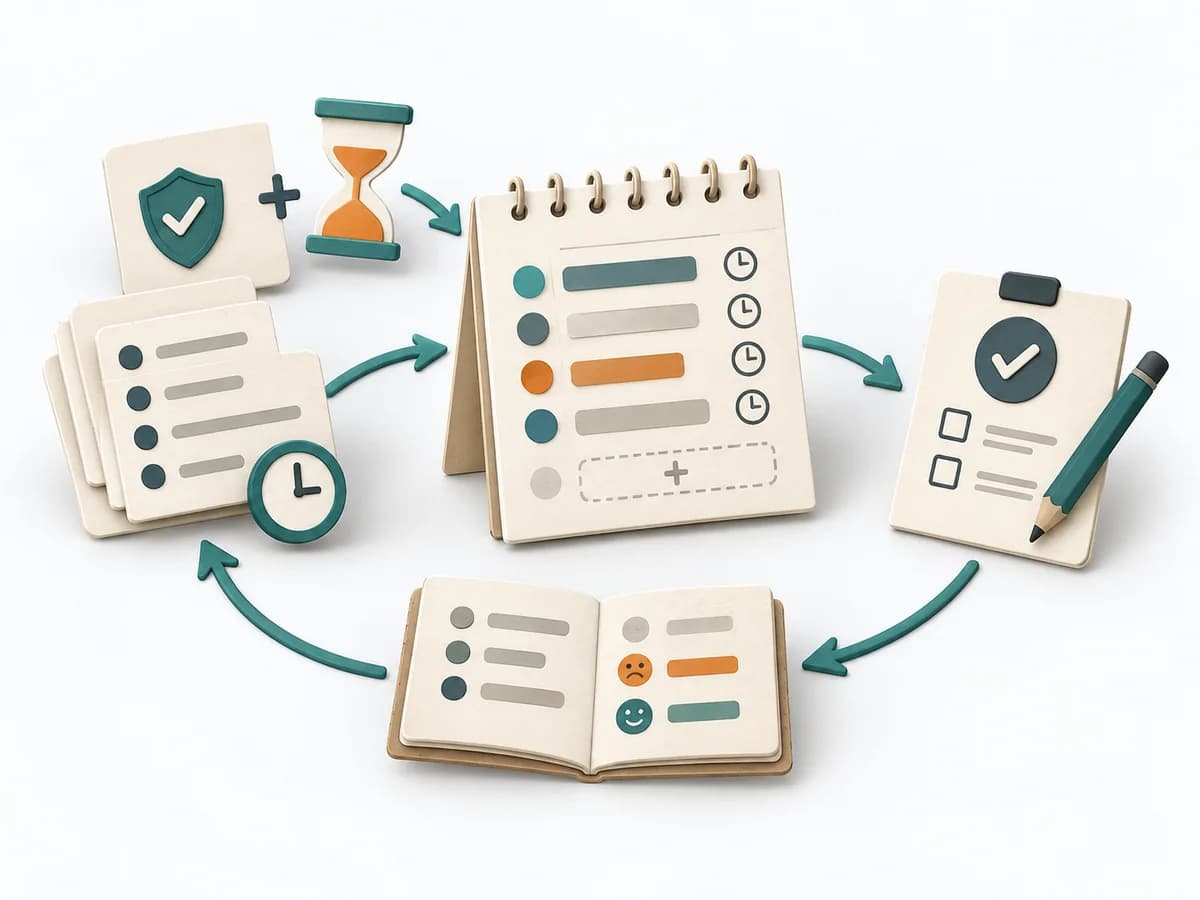 Operations ALPEN Method |
|---|---|---|---|---|
Purposedifferent | The PARA Method organizes knowledge into Projects, Areas, Resources, and Archives. It creates order when digital notes, files, and tasks no longer cleanly fit current work. | After missions or project phases with unclear outcomes, the method makes visible what actually happened and what can be learned from it. It separates course, effect, and causes so experience turns into solid improvement. | The C4 Model makes a system legible across several resolution levels, from context down to code. It suits situations where different audiences need to understand the same architecture from different altitudes. | With an overloaded day full of too many tasks, a realistic picture of the day emerges. The method connects estimating, deciding, and buffer thinking so planning fits available energy and time. |
Complexitydifferent | Medium | Low | Low | Low |
Timedifferent | 1-3 h Setup, laufend | 20-45 min | 1-4 h | 10-20 min daily |
Participantsdifferent | 1 | 3-12 | 1-5 | 1 |
Formatdifferent | Async | Workshop + async | Workshop + async | Async |
Outputdifferent | PARA Structure, Project Notes, Knowledge Archive | Lessons learned, Action items, Event summary | Context Diagram, Container Diagram, Component Diagram | Daily Plan, Time Estimates, Review Notes |
Tagsno overlap | KnowledgeProductivityOrganization | LearningOperationsImprovement | ArchitectureCommunicationVisualization | PlanningTime managementProductivityOperations |