View methods side by side.
Choose up to four methods. Add them using the search and share the comparison by copying its link.
| Criterion | 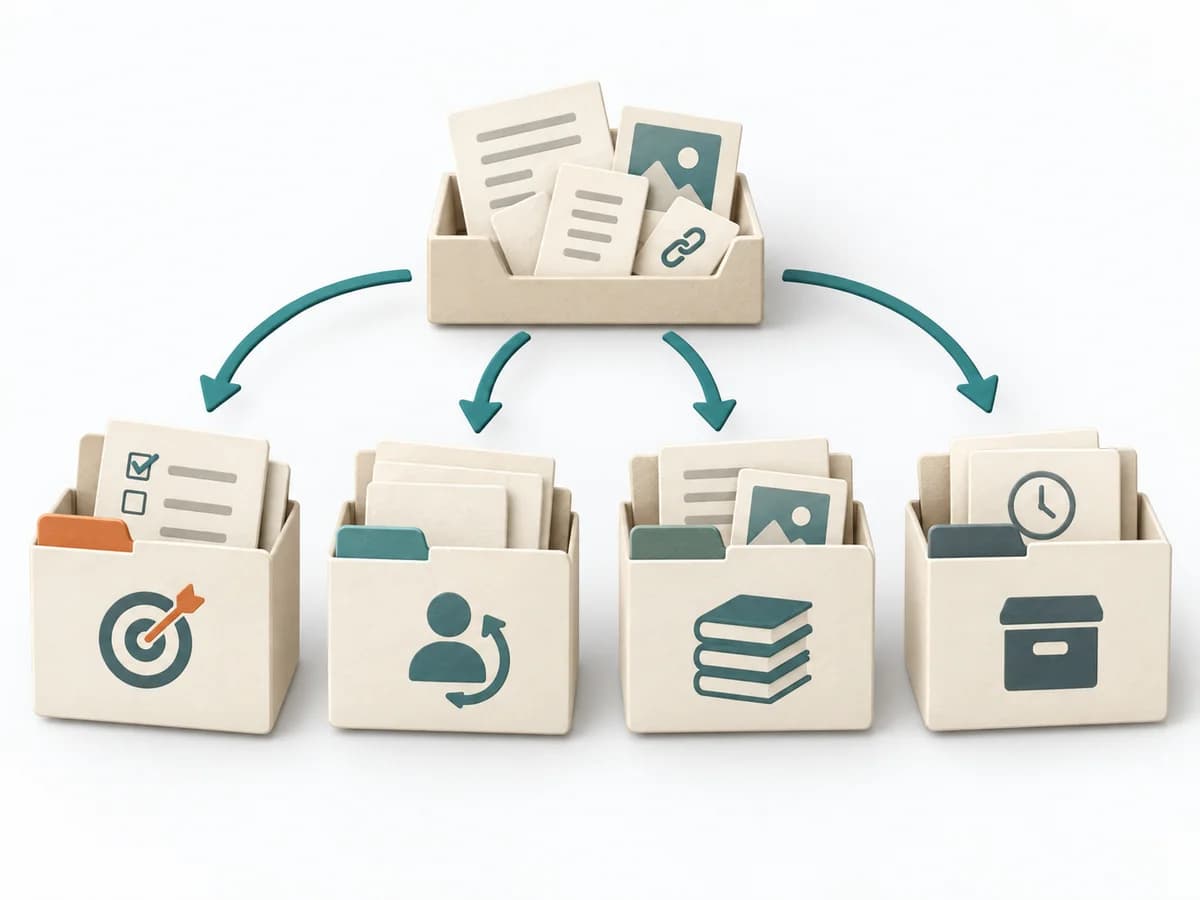 Knowledge Modeling PARA Method | 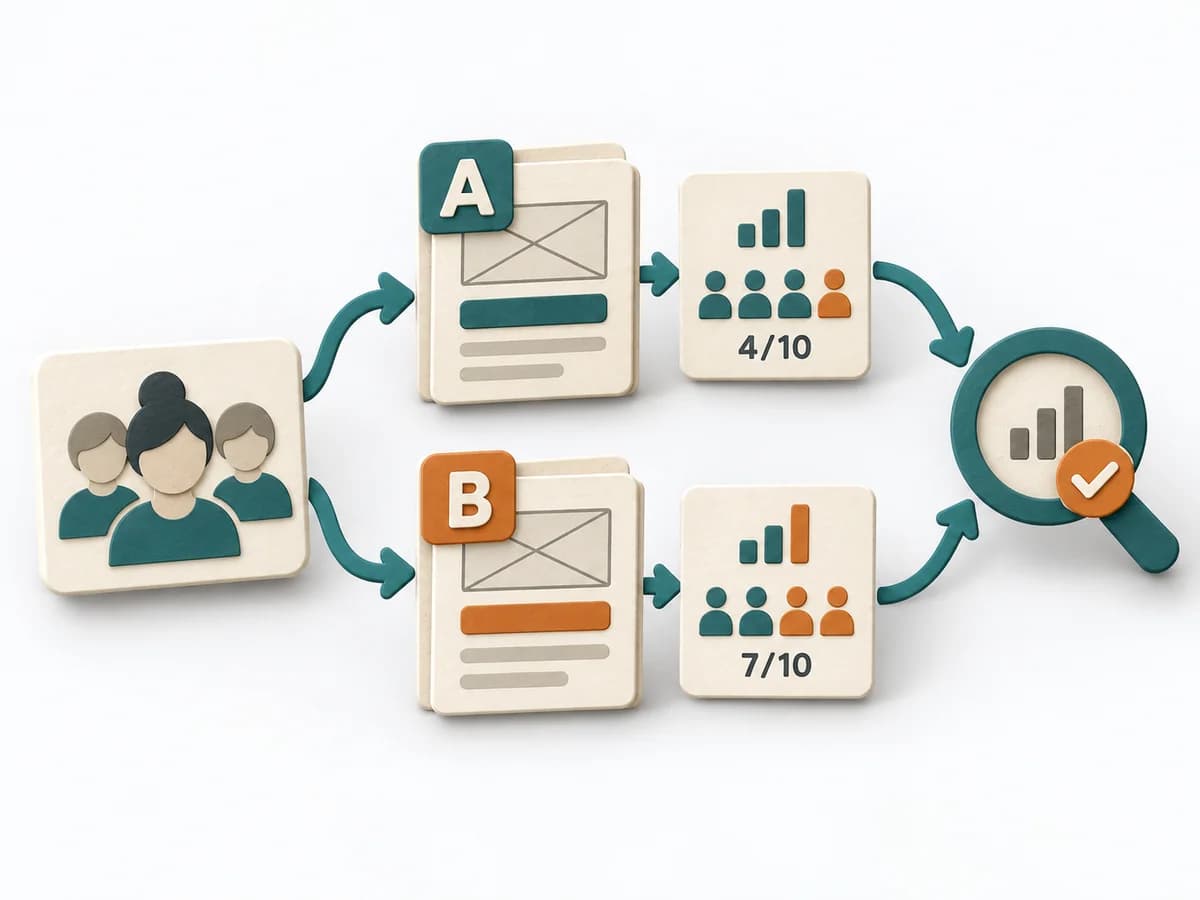 Growth A/B Testing | 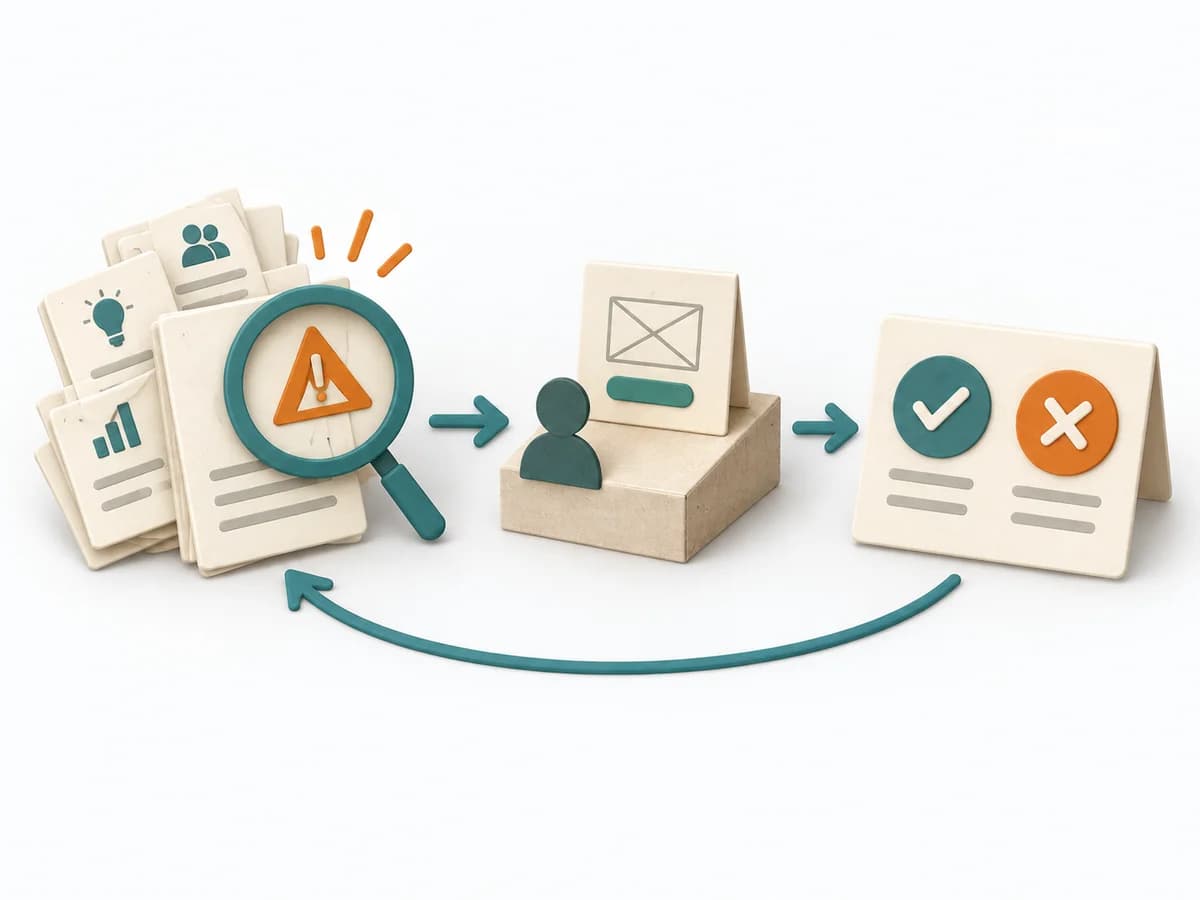 Product Discovery Riskiest Assumption Test |  Product Discovery Experiment Canvas |
|---|---|---|---|---|
Purposedifferent | The PARA Method organizes knowledge into Projects, Areas, Resources, and Archives. It creates order when digital notes, files, and tasks no longer cleanly fit current work. | When two variants compete, discussions quickly decide by taste rather than effect. A/B Testing checks behavior under controlled conditions and separates real improvement from chance or expectation effects. | When an idea hinges on one critical unknown, it prioritizes testing that exact piece of uncertainty first. It separates problem, assumption, solution, and evidence. The result is captured as a prioritized list of assumptions, a test plan, and a result report. | When experiments become unreadable after the fact, it arranges hypothesis, signal, and learning goal on a single canvas. It separates problem, assumption, solution, and evidence. The result is captured as a Completed Experiment Canvas and a Success Metric. |
Complexitydifferent | Medium | High | Medium | Low |
Timedifferent | 1-3 h Setup, laufend | 1-4 Wochen | 1-2 Wochen pro Iteration | 30-60 min |
Participantsdifferent | 1 | 1-6 | 2-6 | 1-5 |
Formatdifferent | Async | Async | Workshop + async | Workshop + async |
Outputdifferent | PARA Structure, Project Notes, Knowledge Archive | Experiment results, Decision log, Learning summary | Prioritized Assumption List, Test Plan, Results Report | Completed Experiment Canvas, Success Metric |
Tagsno overlap | KnowledgeProductivityOrganization | ExperimentsGrowthAnalyticsValidation | ExperimentsValidationDiscoveryAssumptions | ExperimentsValidationDiscoveryHypothesis |