View methods side by side.
Choose up to four methods. Add them using the search and share the comparison by copying its link.
| Criterion |  Knowledge Modeling PARA Method | 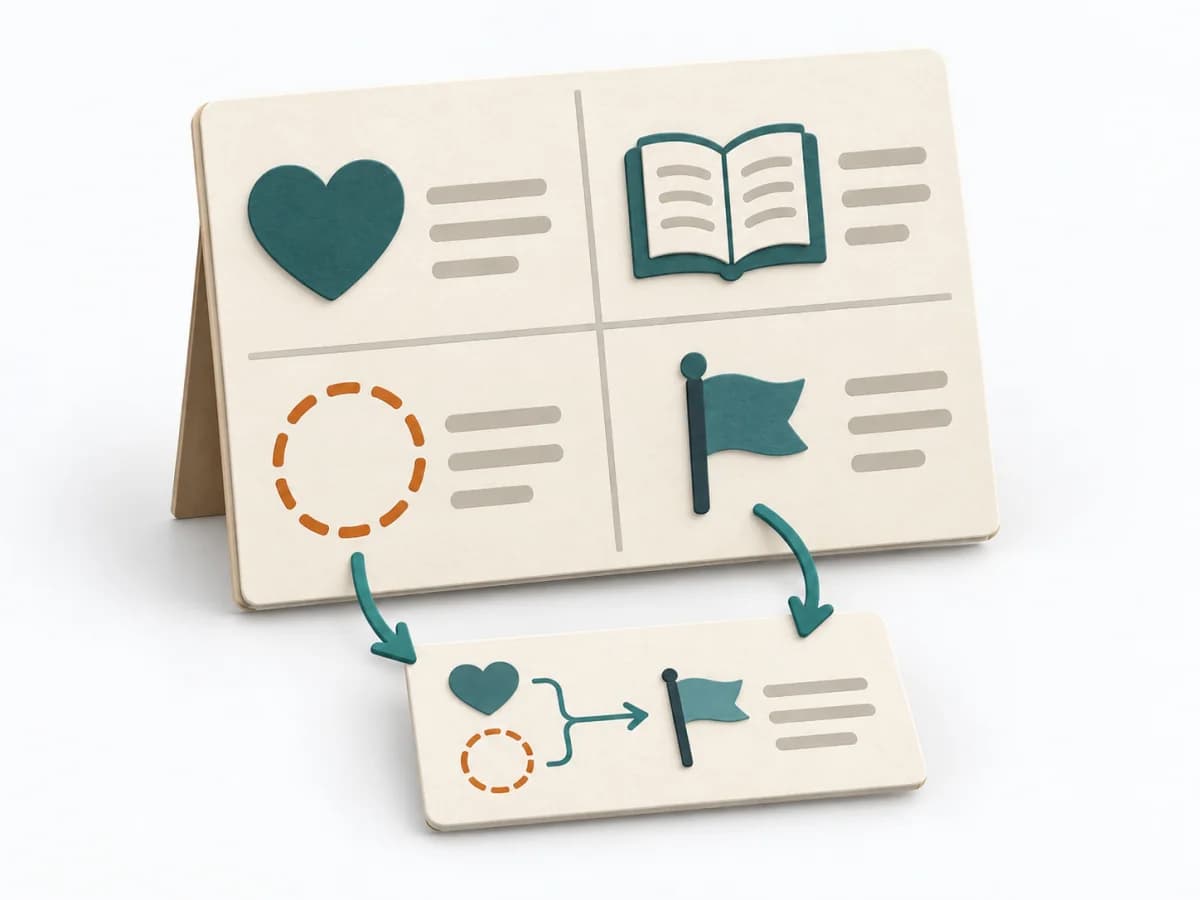 Agile 4Ls Retrospective | 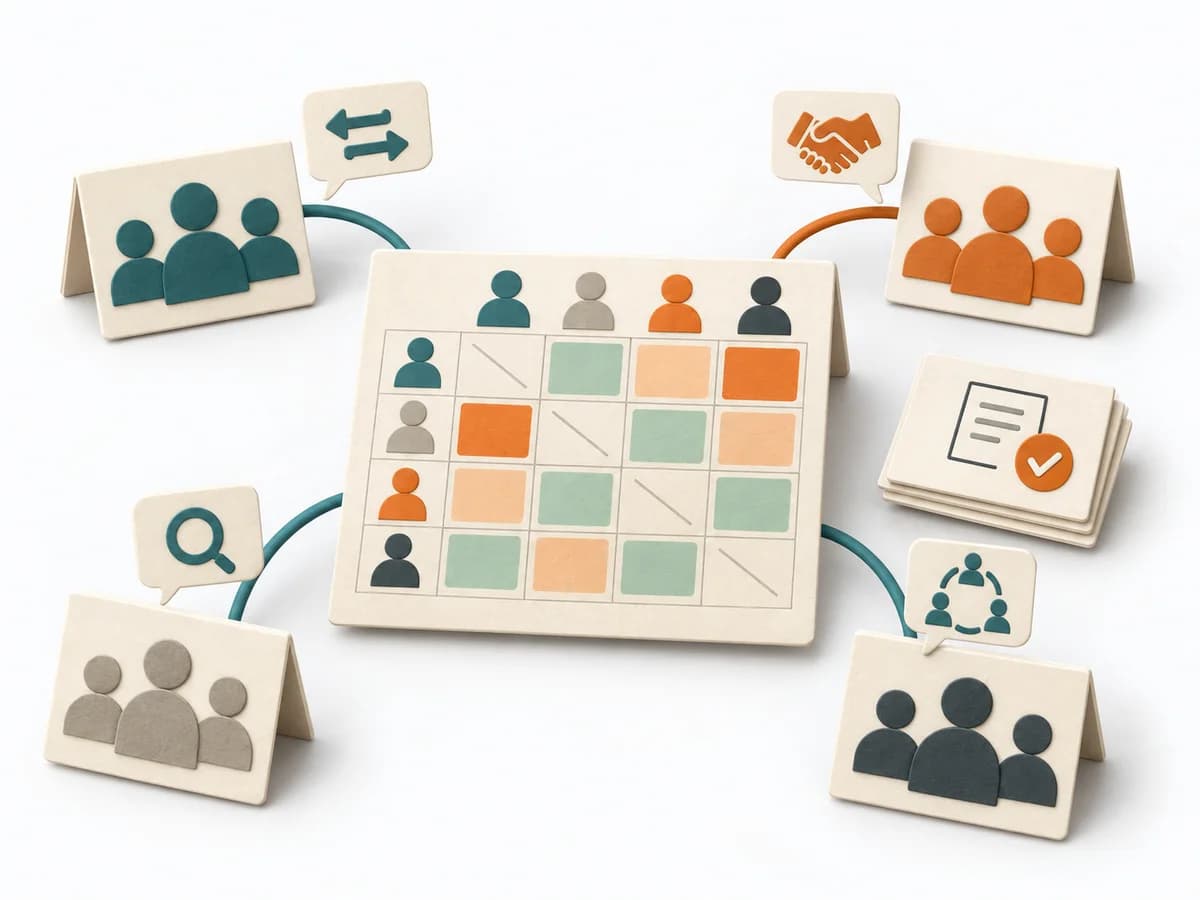 Team Design Team Topologies Interaction Modes | 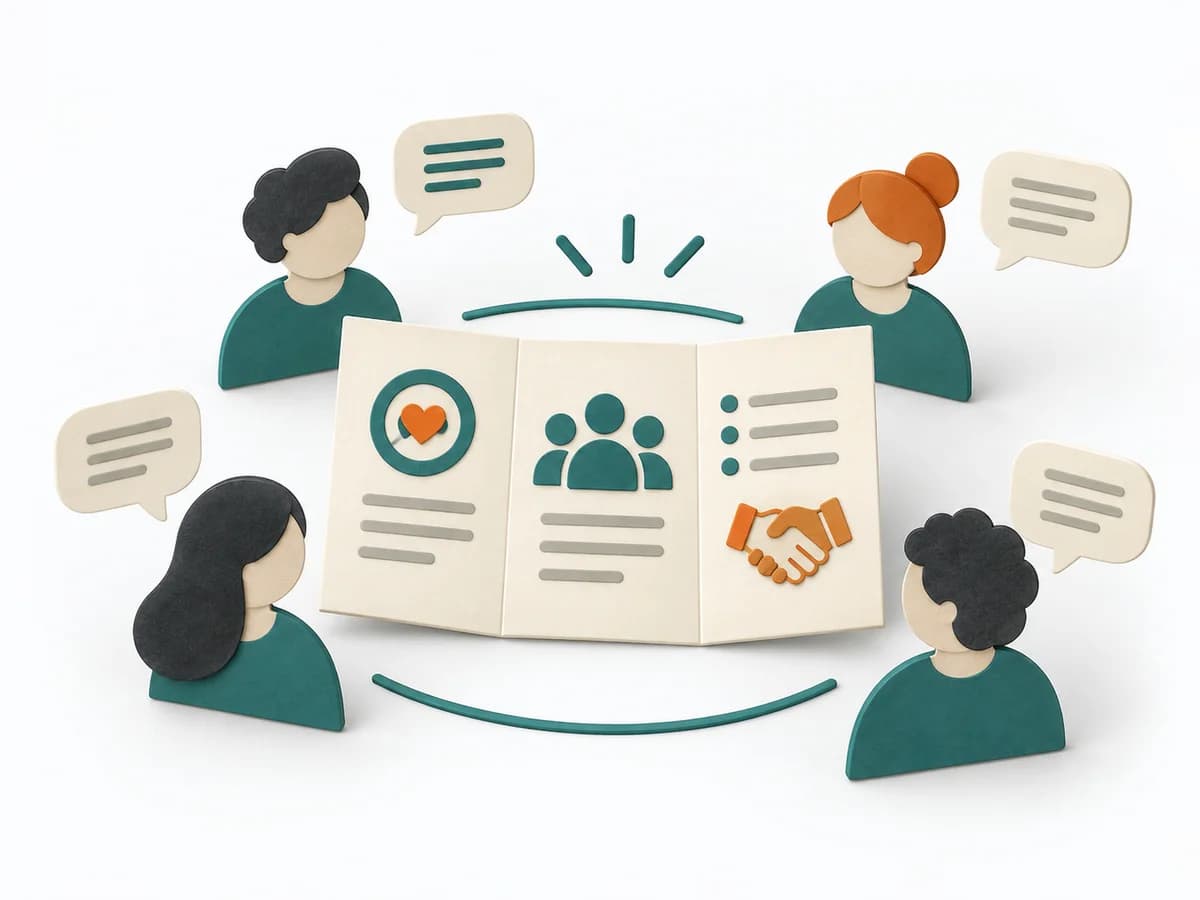 Facilitation Team Charter |
|---|---|---|---|---|
Purposedifferent | The PARA Method organizes knowledge into Projects, Areas, Resources, and Archives. It creates order when digital notes, files, and tasks no longer cleanly fit current work. | When a sprint should not only be assessed but also learned from, it captures experience in clear learning categories. It records what worked, what's missing, and what should run differently next time. | When several teams collaborate repeatedly, it describes the right interaction mode for each interface between them. It clarifies responsibility, interaction, and load between teams. The result is captured as an interaction heat map and pairwise agreements. | When a team is starting fresh or working past each other, Team Charter clarifies the shared working basis. It visibly sets out how collaboration, decision paths, and mutual conduct should work day to day. |
Complexitydifferent | Medium | Low | Medium | Medium |
Timedifferent | 1-3 h Setup, laufend | 45–75 min | Half day | 2-4 h |
Participantsdifferent | 1 | Team members involved | Team-Leads plus Architecture | 3-12 |
Formatdifferent | Async | Workshop | Workshop | Workshop |
Outputdifferent | PARA Structure, Project Notes, Knowledge Archive | 4Ls Board, Learning Themes, Improvement Actions | Interaction Heat Map, Agreements per Pair | Team Charter, Working Norms, Role Notes |
Tagsno overlap | KnowledgeProductivityOrganization | RetrospectiveLearningReflectionTeam | TeamAlignmentCollaborationOrganization | TeamAlignmentCollaboration |