View methods side by side.
Choose up to four methods. Add them using the search and share the comparison by copying its link.
| Criterion | 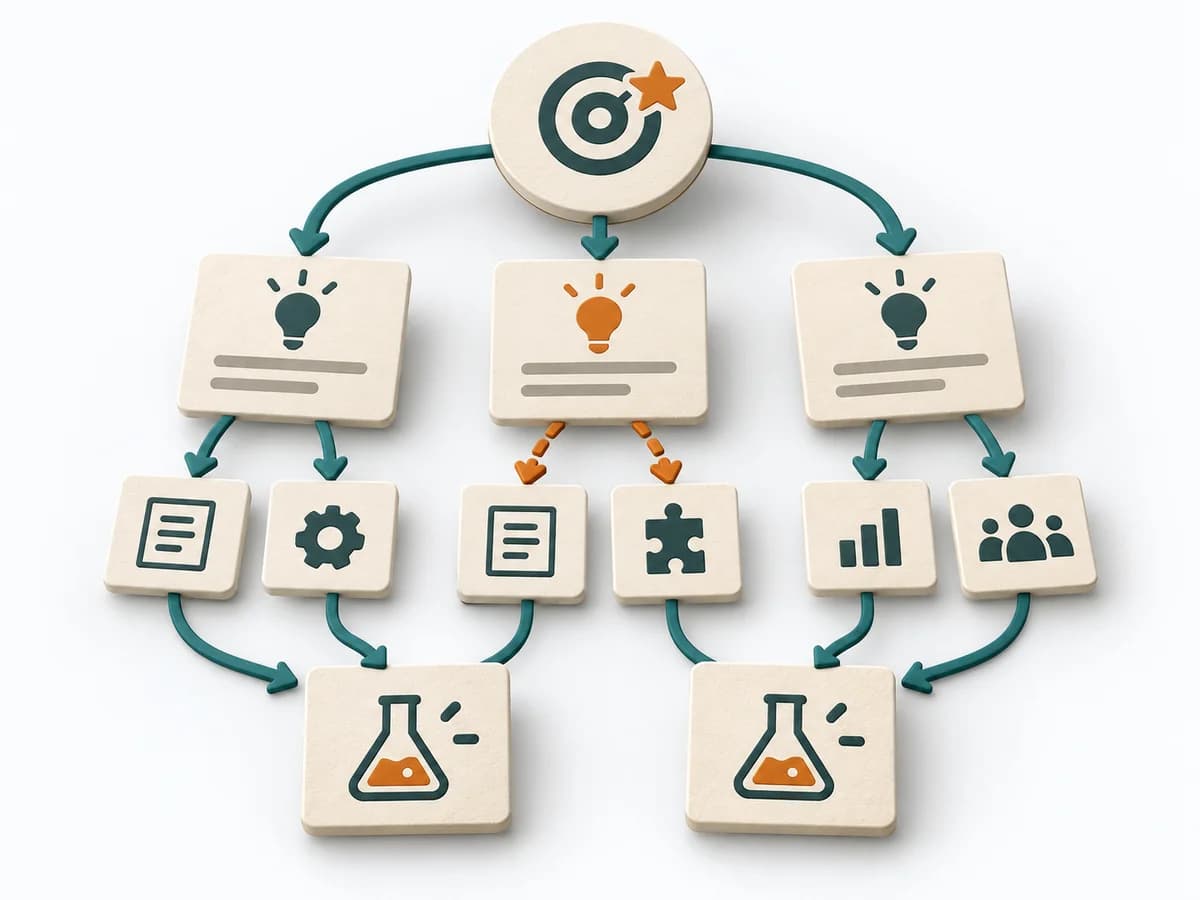 Product Discovery Opportunity Solution Tree |  Knowledge Modeling Concept Mapping | 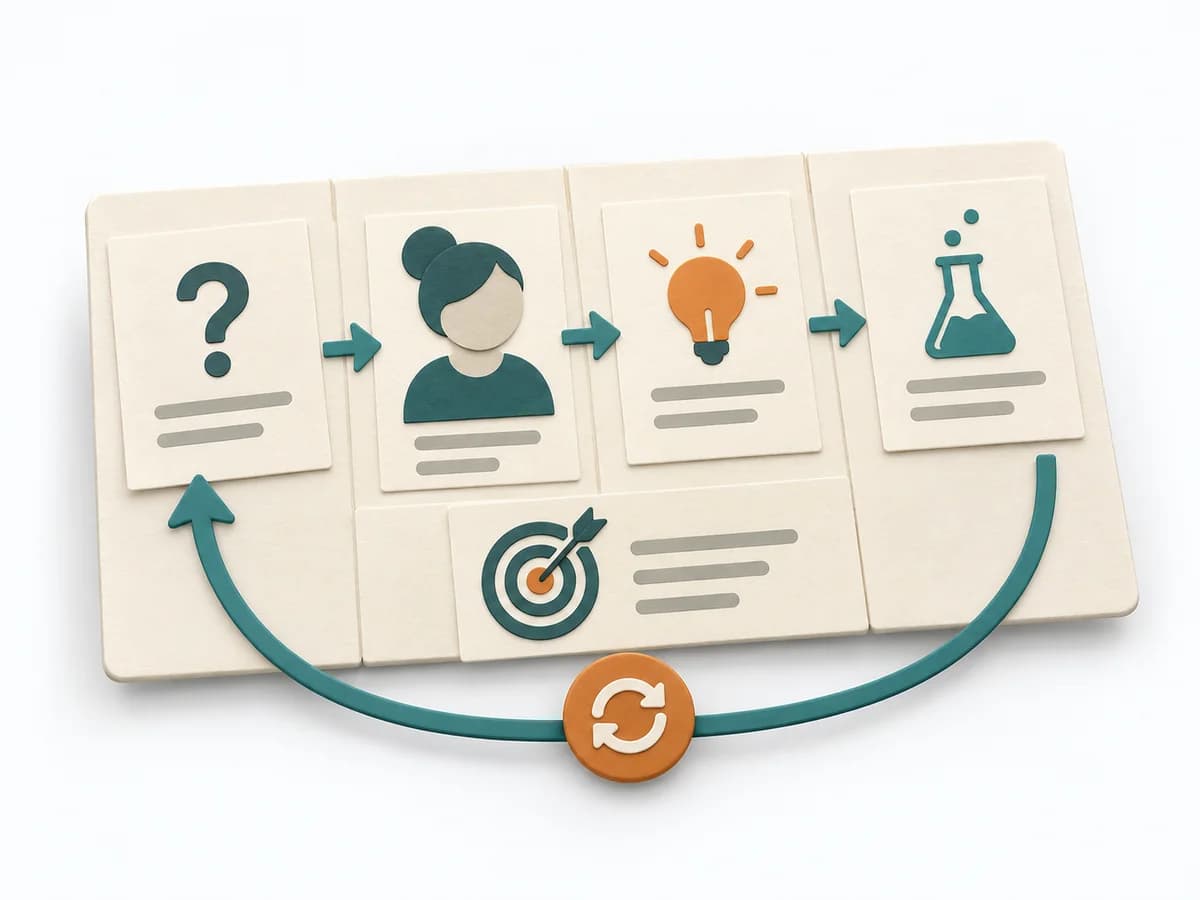 UX Design Lean UX Canvas | 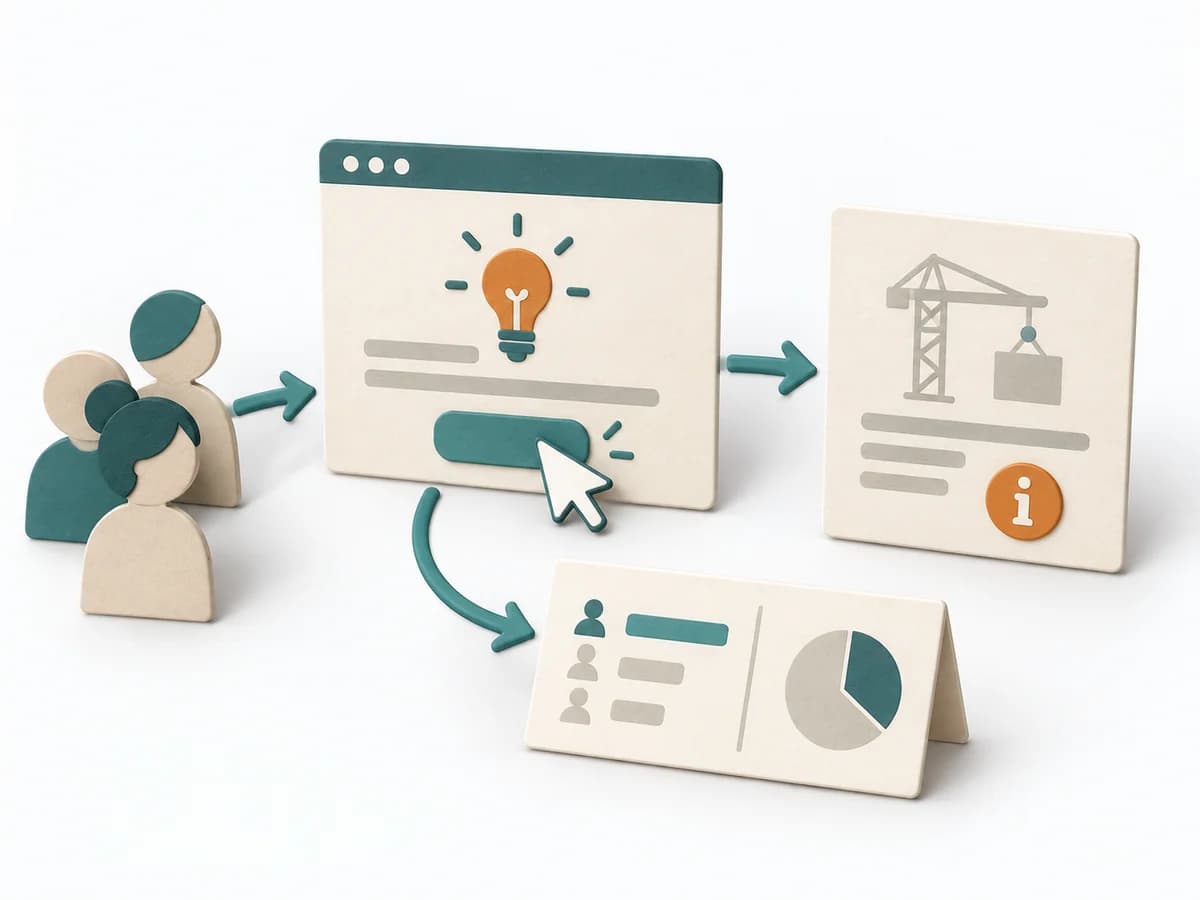 Product Discovery Fake Door Test |
|---|---|---|---|---|
Purposedifferent | When discovery keeps swinging between goals, ideas, and learning loops, it creates clear steering logic. It connects the desired outcome, opportunities, and experiments into a legible structure. | Concept Mapping arranges terms and relationships in a network that makes subject-matter connections tangible. It fits when a topic needs to be understood structurally rather than linearly. | The Lean UX Canvas helps clarify user behavior, touchpoints, and concept decisions. It makes assumptions and desired outcomes visible and captures the result as a completed canvas, hypothesis list, and first experiment. | When demand is still unclear, it measures interest in a feature before it is built. It separates real behavior from polite agreement and deliberately keeps build effort small. |
Complexitysame | Medium | Medium | Medium | Medium |
Timedifferent | 1-2 h Setup, laufend | 1-2 h | 2-3 h | 1-5 Tage |
Participantsdifferent | 2-6 | 1-8 | 3-8 | Nutzertraffic |
Formatdifferent | Workshop + async | Workshop + async | Workshop + async | Async |
Outputdifferent | Opportunity Solution Tree, Experiment Backlog, Learning Log | Concept Map, Relationship Labels, Knowledge Gaps | Completed Lean UX Canvas, Hypothesis list, First experiment | Click Data, Interest Signal, Learning Decision |
Tagsno overlap | DiscoveryOutcomesExperimentsOpportunity | KnowledgeConceptsMappingSensemaking | CanvasHypothesisOutcomesDiscovery | ValidationExperimentsDemandDiscovery |