View methods side by side.
Choose up to four methods. Add them using the search and share the comparison by copying its link.
| Criterion | 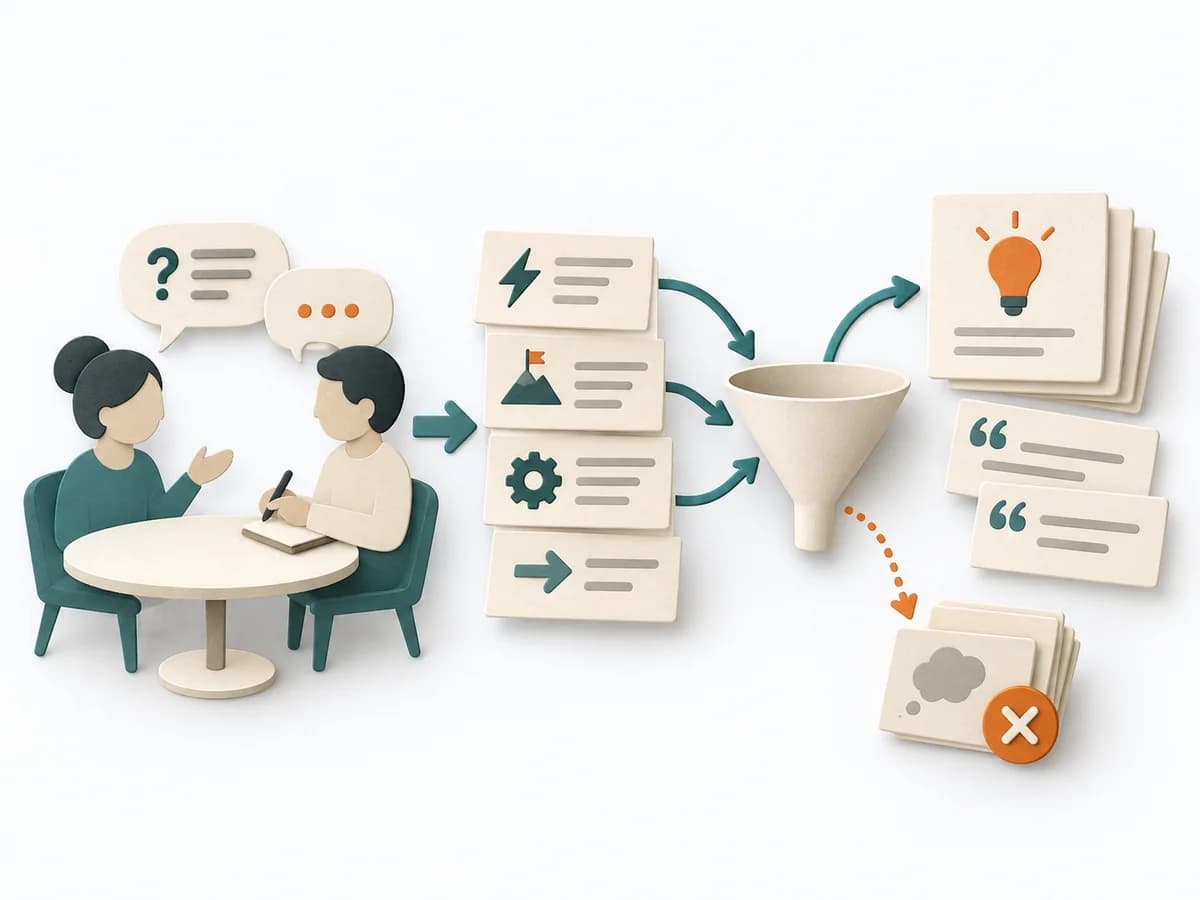 Product Discovery Opportunity Interview | 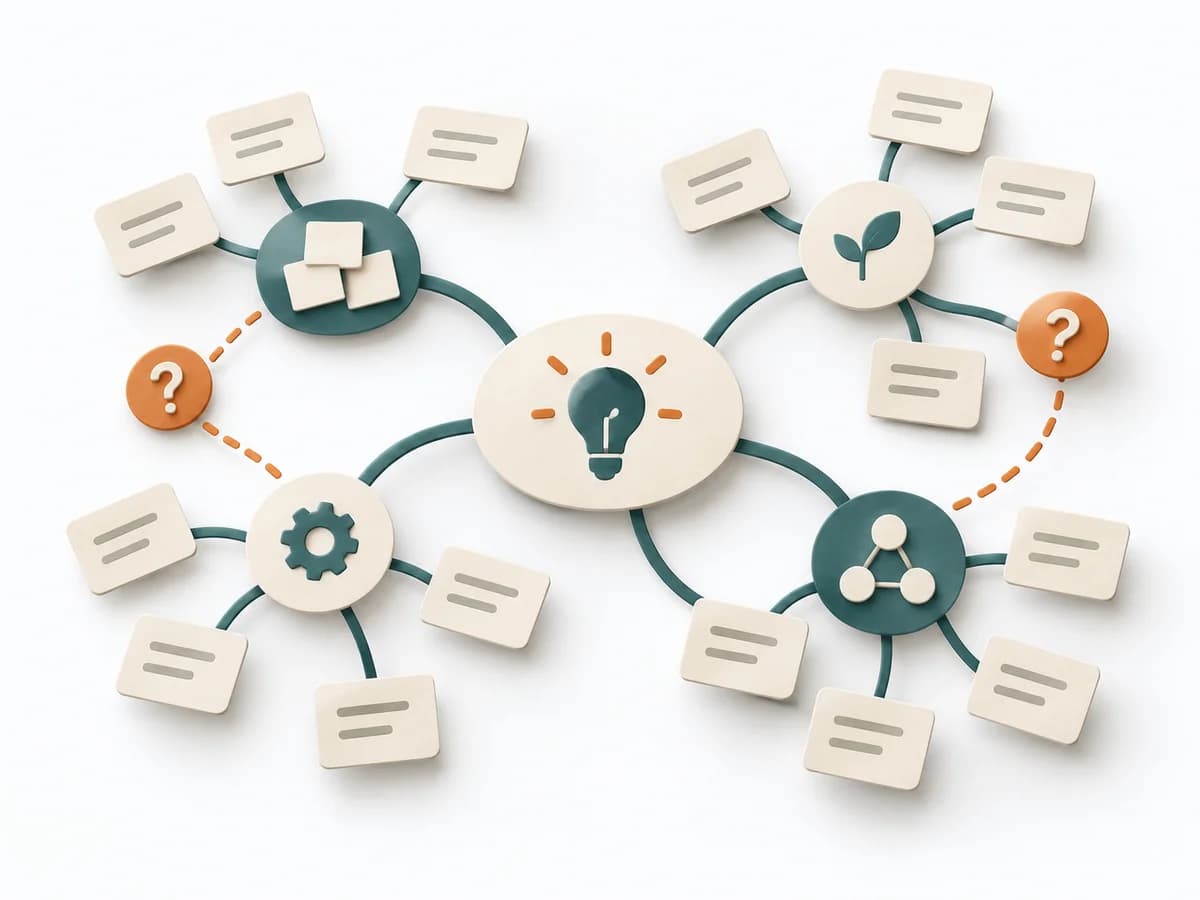 Facilitation Mind Mapping |  Product Discovery Experiment Canvas | 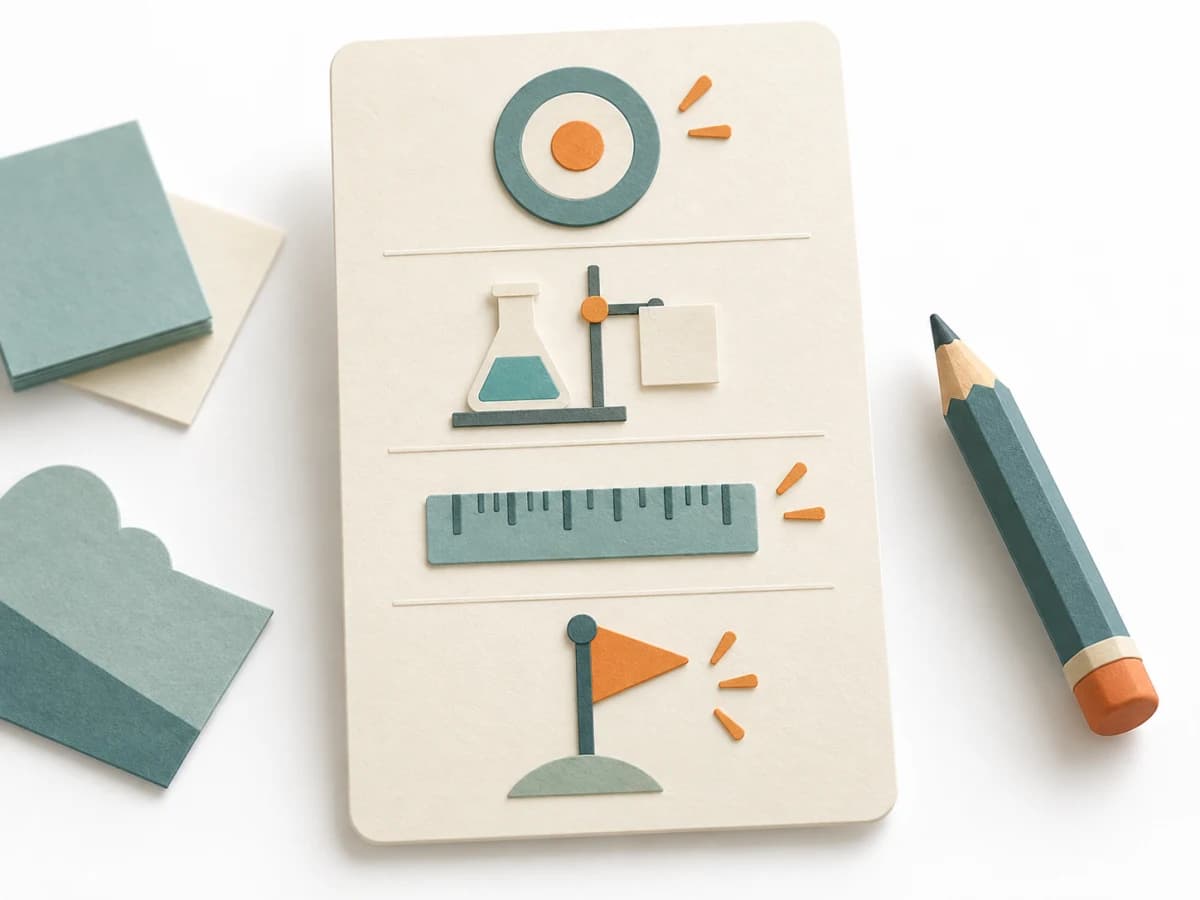 Product Discovery Test Card |
|---|---|---|---|---|
Purposedifferent | When opportunities are still hidden behind signals of need, it structures conversations around needs and obstacles. It looks for patterns that lead to new product opportunities. | When a topic is still unclear and too many thoughts surface at once, Mind Mapping creates an open surface for ordering them. It makes connections, subtopics, and starting points visible without fixing them too early. | When experiments become unreadable after the fact, it arranges hypothesis, signal, and learning goal on a single canvas. It separates problem, assumption, solution, and evidence. The result is captured as a Completed Experiment Canvas and a Success Metric. | The Test Card turns a critical assumption into a testable claim and specifies in advance which result counts as success. |
Complexitydifferent | Medium | Low | Low | Low |
Timedifferent | 30-60 min je Interview | 15-45 min | 30-60 min | 20-35 min |
Participantsdifferent | 5-12 Interviews | 1-10 | 1-5 | 1-5 |
Formatsame | Workshop + async | Workshop + async | Workshop + async | Workshop + async |
Outputdifferent | Interview Notes, Opportunity Themes, Customer Quotes | Mind Map, Topic Clusters, Open Questions | Completed Experiment Canvas, Success Metric | Test Card with a pre-set threshold |
Tagsno overlap | DiscoveryInterviewsOpportunityCustomer | BrainstormingIdeasMappingStructureFacilitation | ExperimentsValidationDiscoveryHypothesis | ExperimentsValidationDiscoveryHypothesis |