View methods side by side.
Choose up to four methods. Add them using the search and share the comparison by copying its link.
| Criterion | 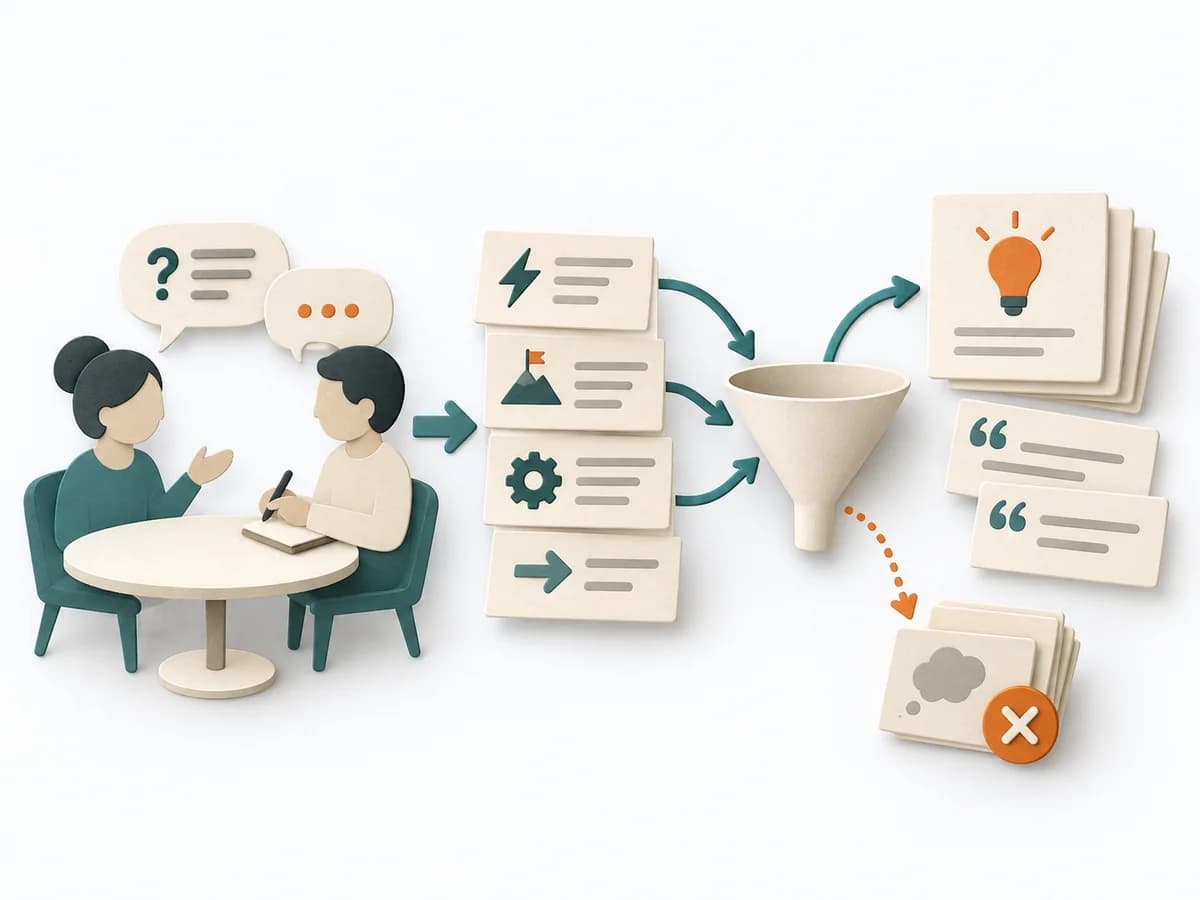 Product Discovery Opportunity Interview | 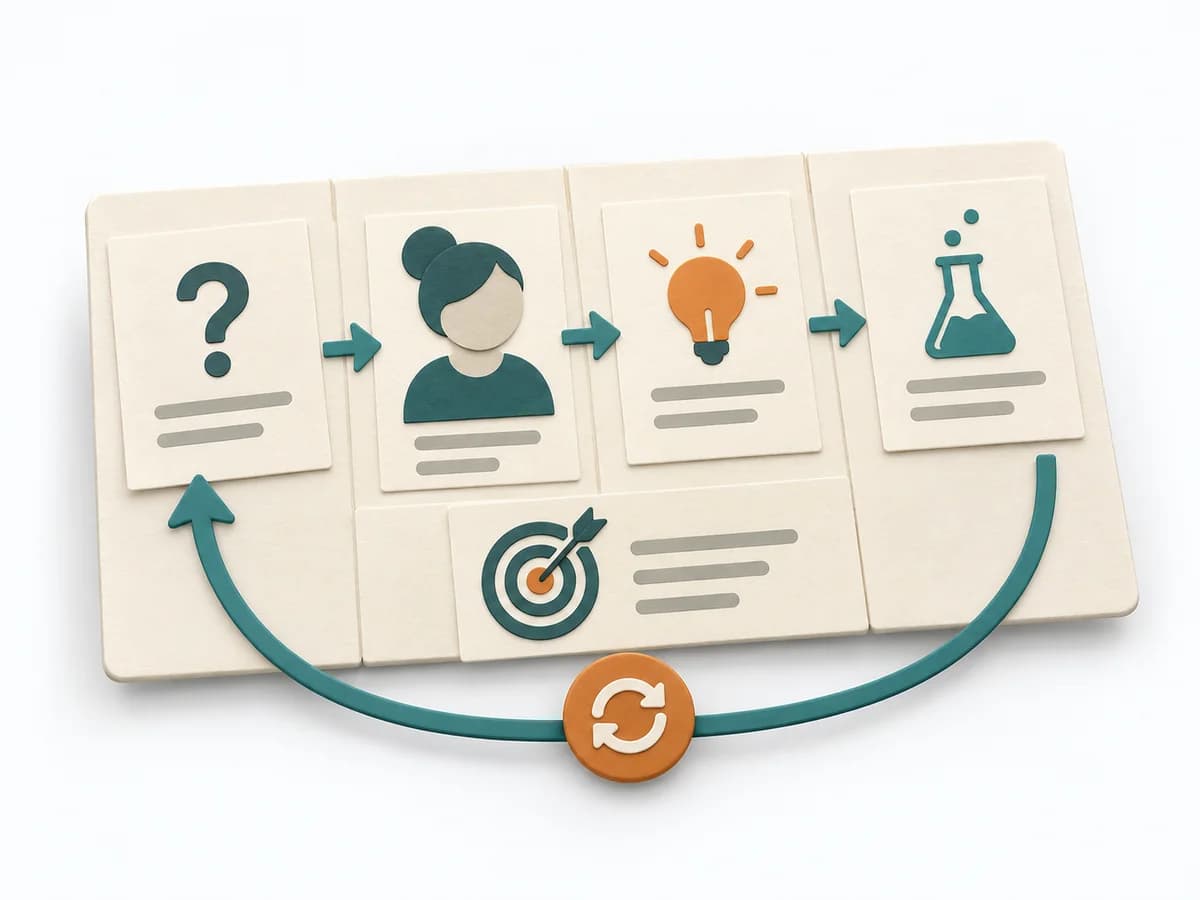 UX Design Lean UX Canvas | 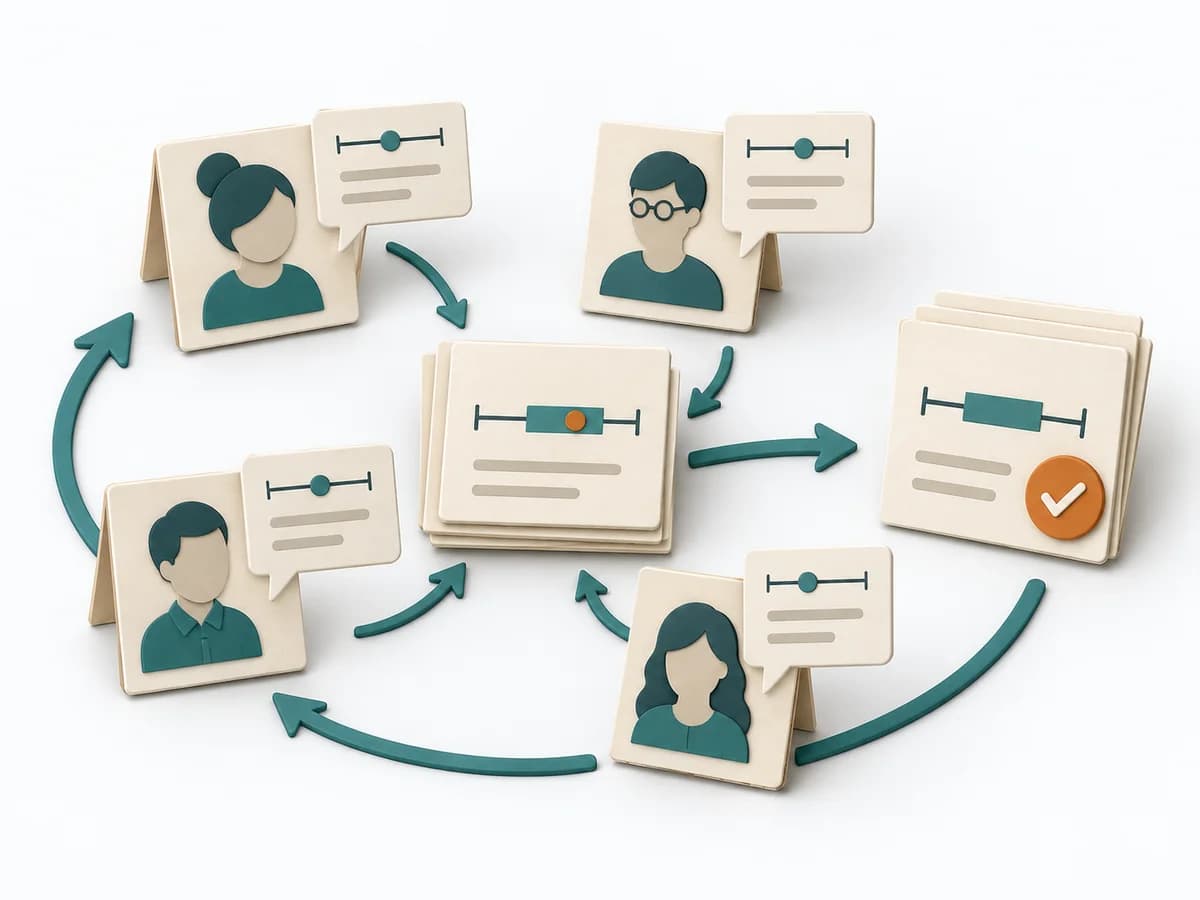 Decision Making Delphi Method |  Product Strategy DIBB |
|---|---|---|---|---|
Purposedifferent | When opportunities are still hidden behind signals of need, it structures conversations around needs and obstacles. It looks for patterns that lead to new product opportunities. | The Lean UX Canvas helps clarify user behavior, touchpoints, and concept decisions. It makes assumptions and desired outcomes visible and captures the result as a completed canvas, hypothesis list, and first experiment. | When knowledge is distributed and direct dominance should be avoided, groups quickly fall under the sway of their opinion leaders. The Delphi Method gathers assessments iteratively and gradually brings expert judgments closer together. | DIBB helps clarify target groups, value, goals, and priorities by making the logic behind a decision explicit. It captures results as a DIBB document, belief list, bet list, and learning report. |
Complexitydifferent | Medium | Medium | High | Low |
Timedifferent | 30-60 min je Interview | 2-3 h | 1-4 Wochen | 1-2 h |
Participantsdifferent | 5-12 Interviews | 3-8 | 6-30 Experten | 2-8 |
Formatdifferent | Workshop + async | Workshop + async | Async | Workshop + async |
Outputdifferent | Interview Notes, Opportunity Themes, Customer Quotes | Completed Lean UX Canvas, Hypothesis list, First experiment | Expert Forecast, Consensus Range, Assumption Notes | DIBB document, Belief list, Bet list, Learning report |
Tagsno overlap | DiscoveryInterviewsOpportunityCustomer | CanvasHypothesisOutcomesDiscovery | ForecastingExpertsDecisionStrategy | StrategyDecisionAssumptionsHypothesis |