View methods side by side.
Choose up to four methods. Add them using the search and share the comparison by copying its link.
| Criterion | 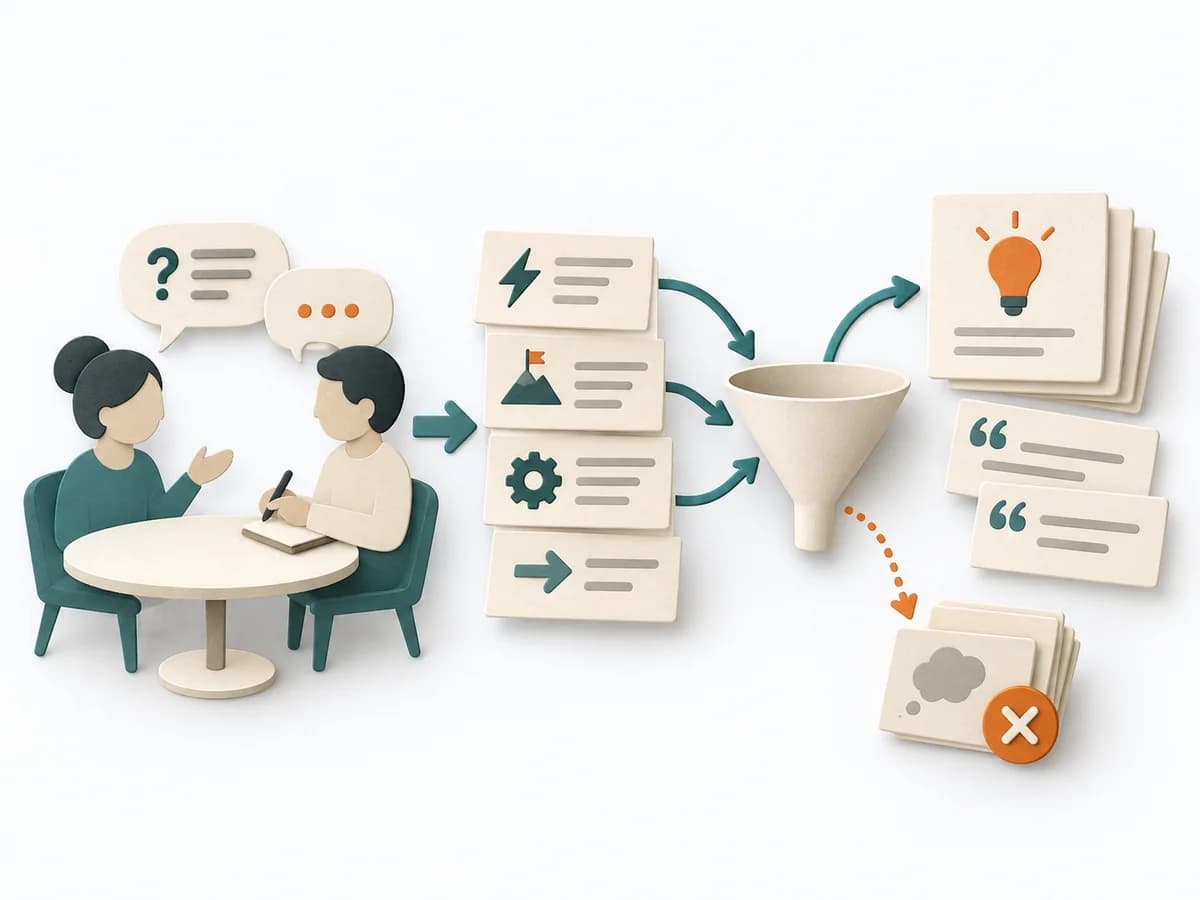 Product Discovery Opportunity Interview | 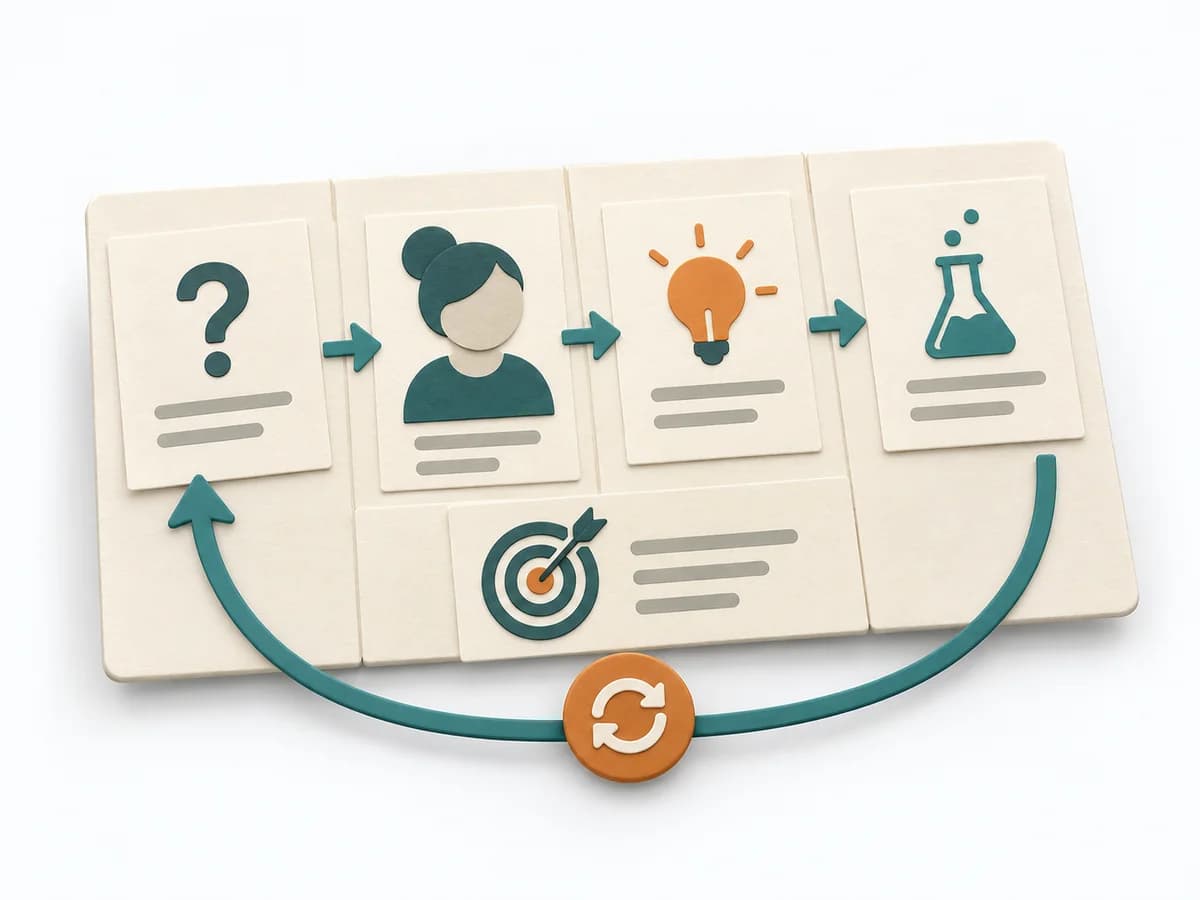 UX Design Lean UX Canvas | 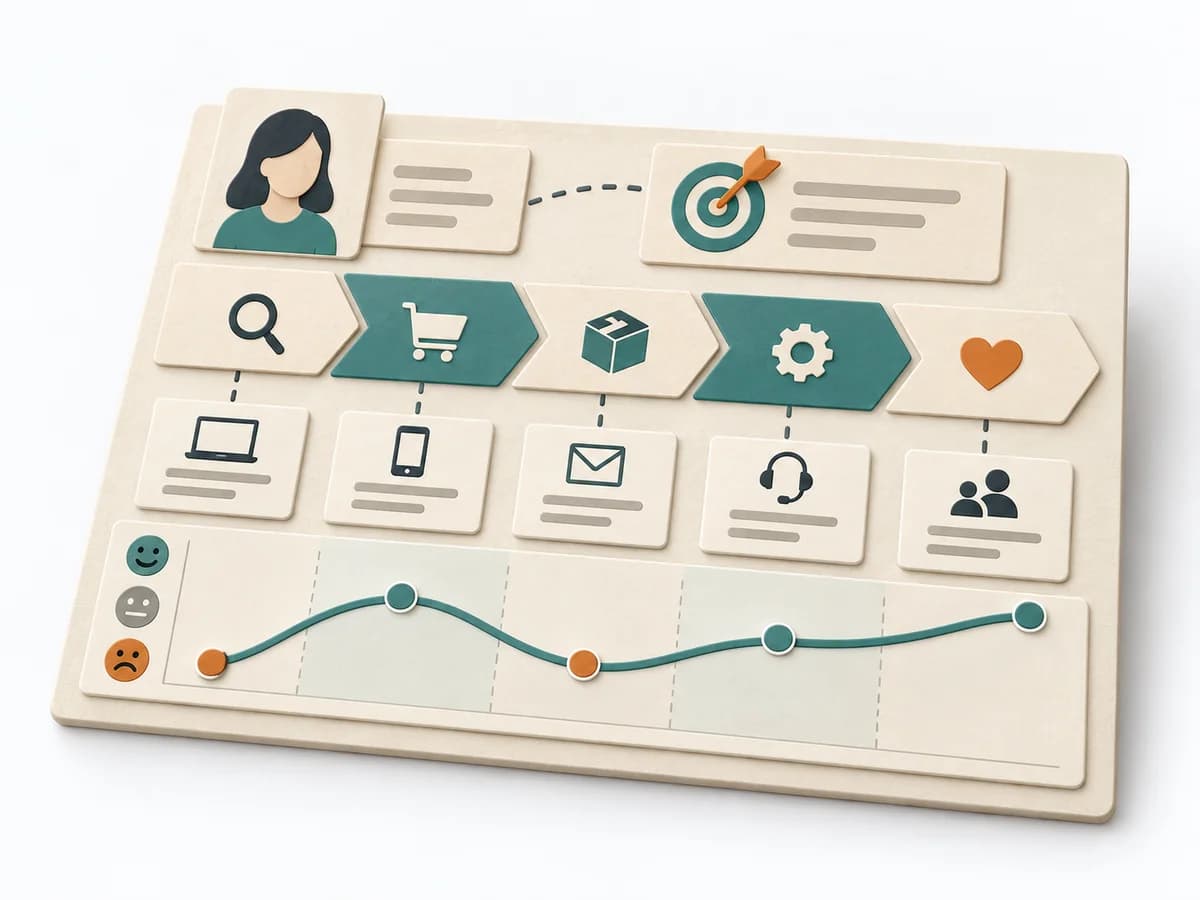 UX Design Customer Journey Canvas |  Product Discovery Experiment Canvas |
|---|---|---|---|---|
Purposedifferent | When opportunities are still hidden behind signals of need, it structures conversations around needs and obstacles. It looks for patterns that lead to new product opportunities. | The Lean UX Canvas helps clarify user behavior, touchpoints, and concept decisions. It makes assumptions and desired outcomes visible and captures the result as a completed canvas, hypothesis list, and first experiment. | When a journey needs to be understood across several phases, it arranges experience, touchpoints, and opportunities into one picture. It makes gaps and friction along the user path clear. | When experiments become unreadable after the fact, it arranges hypothesis, signal, and learning goal on a single canvas. It separates problem, assumption, solution, and evidence. The result is captured as a Completed Experiment Canvas and a Success Metric. |
Complexitydifferent | Medium | Medium | Medium | Low |
Timedifferent | 30-60 min je Interview | 2-3 h | 1-3 h | 30-60 min |
Participantsdifferent | 5-12 Interviews | 3-8 | 3-10 | 1-5 |
Formatdifferent | Workshop + async | Workshop + async | Workshop | Workshop + async |
Outputdifferent | Interview Notes, Opportunity Themes, Customer Quotes | Completed Lean UX Canvas, Hypothesis list, First experiment | Customer Journey Canvas, Pain Points, Experience Opportunities | Completed Experiment Canvas, Success Metric |
Tagsno overlap | DiscoveryInterviewsOpportunityCustomer | CanvasHypothesisOutcomesDiscovery | JourneyCustomerService designCanvas | ExperimentsValidationDiscoveryHypothesis |