View methods side by side.
Choose up to four methods. Add them using the search and share the comparison by copying its link.
| Criterion | 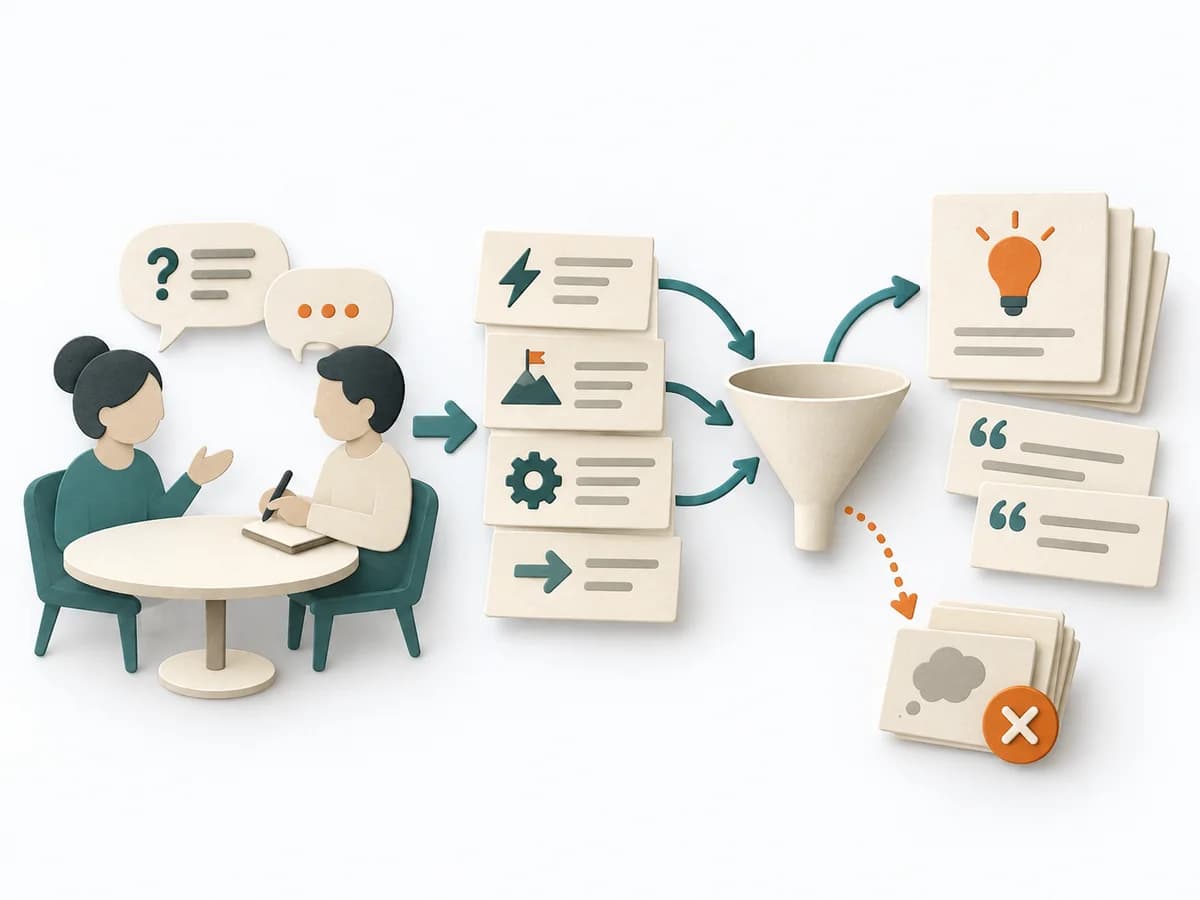 Product Discovery Opportunity Interview |  UX Research Customer Journey Mapping | 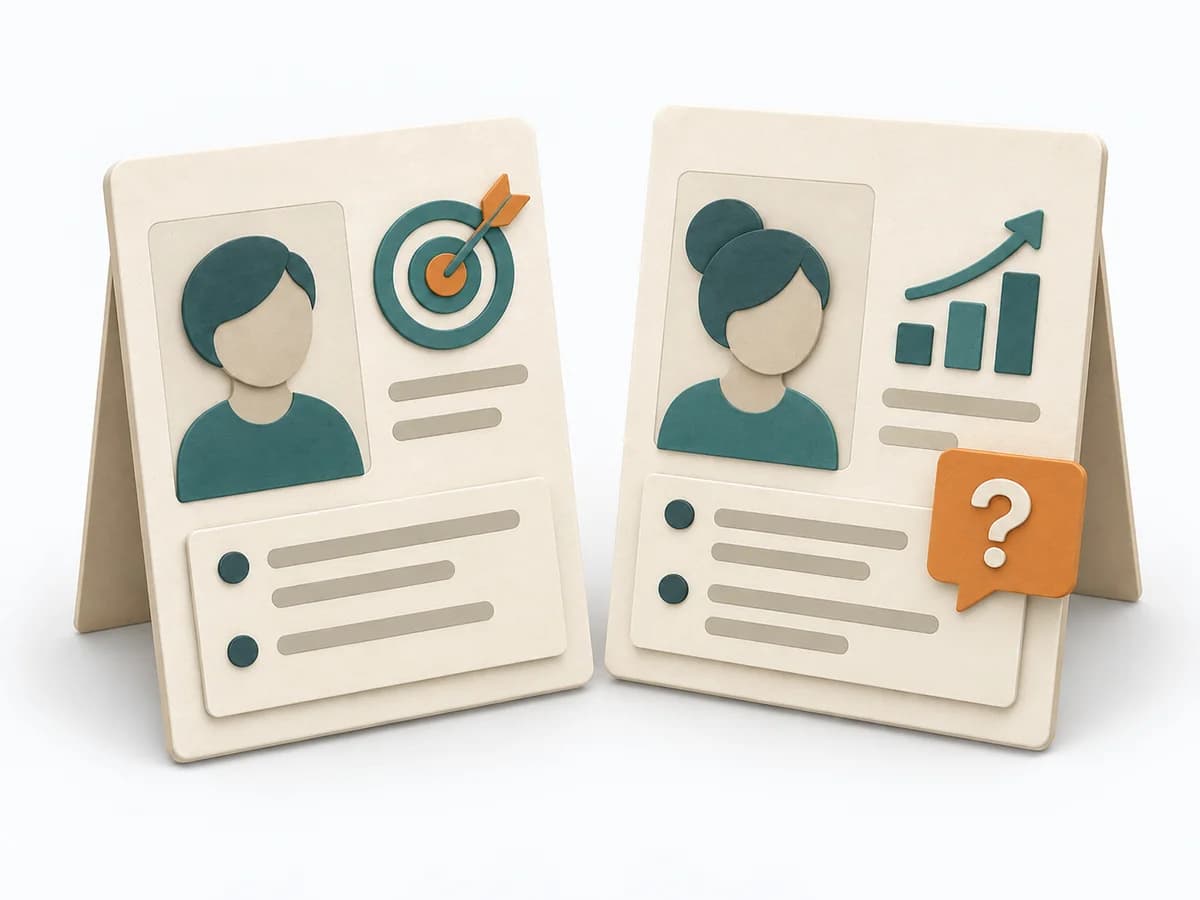 UX Research Personas | 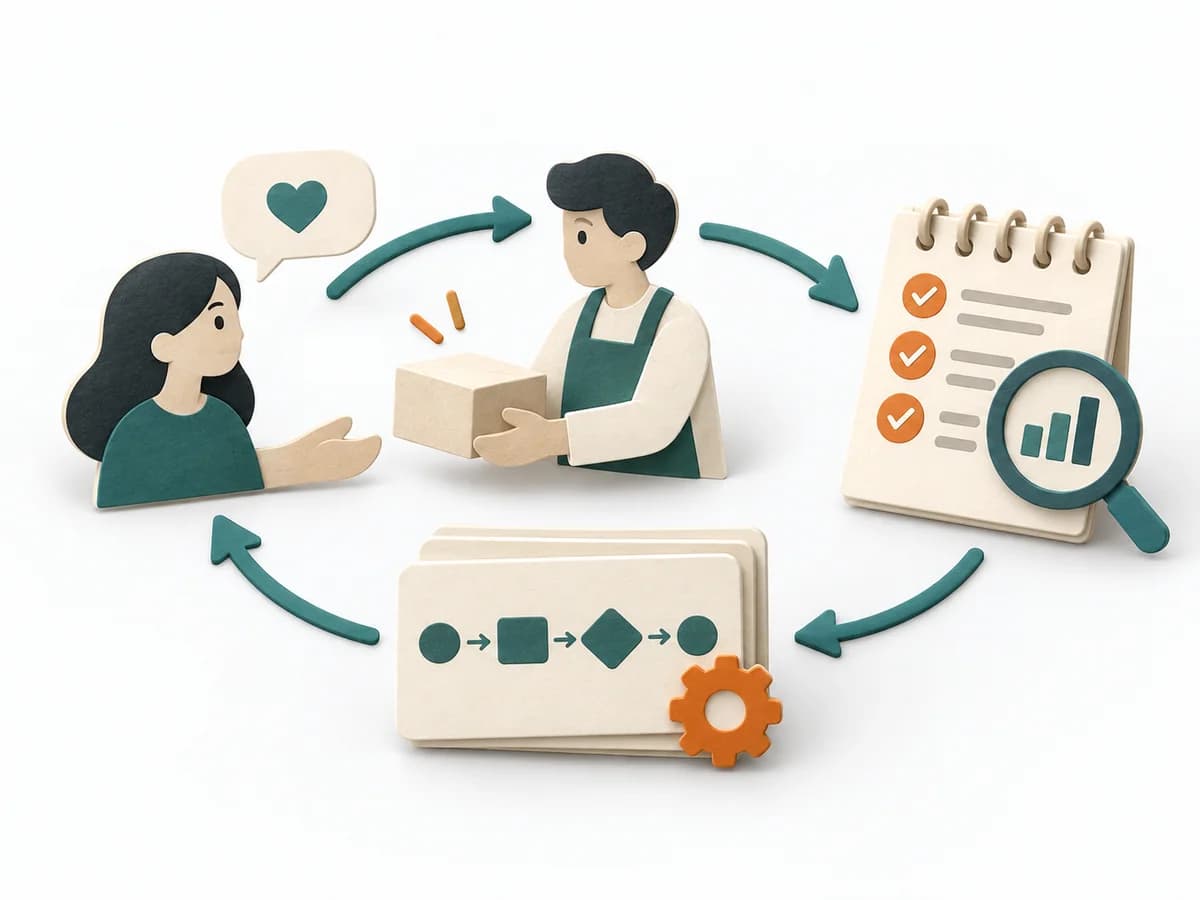 Product Discovery Concierge MVP |
|---|---|---|---|---|
Purposedifferent | When opportunities are still hidden behind signals of need, it structures conversations around needs and obstacles. It looks for patterns that lead to new product opportunities. | When a user journey falls apart across many touchpoints, customer journey mapping makes the experience visible as a coherent arc. Phases, emotions, and breaks become legible enough to prioritize critical moments deliberately. | When target groups stay too vague and teams talk about the same people differently, personas create a shared, solid picture of usage. Condensed profiles make needs, contexts, and differences tangible enough for decisions. | When an idea can first fail or grow through genuine hands-on support, it relies on manual work instead of automation. It shows whether user value holds up even under manual execution. |
Complexitysame | Medium | Medium | Medium | Medium |
Timedifferent | 30-60 min je Interview | 2-4 h | 1-3 Tage | 1-4 Wochen |
Participantsdifferent | 5-12 Interviews | 4-10 | Internes Team | 3-10 Kunden |
Formatdifferent | Workshop + async | Workshop | Workshop + async | Workshop + async |
Outputdifferent | Interview Notes, Opportunity Themes, Customer Quotes | Journey Map, Pain-point List, Opportunity Backlog | Persona Profiles, Needs Summary, Scenario Notes | Concierge Learnings, Service Blueprint, MVP Risks |
Tagsno overlap | DiscoveryInterviewsOpportunityCustomer | JourneyServiceService design | ResearchCustomerSynthesis | MVPValidationServiceDiscovery |