View methods side by side.
Choose up to four methods. Add them using the search and share the comparison by copying its link.
| Criterion | 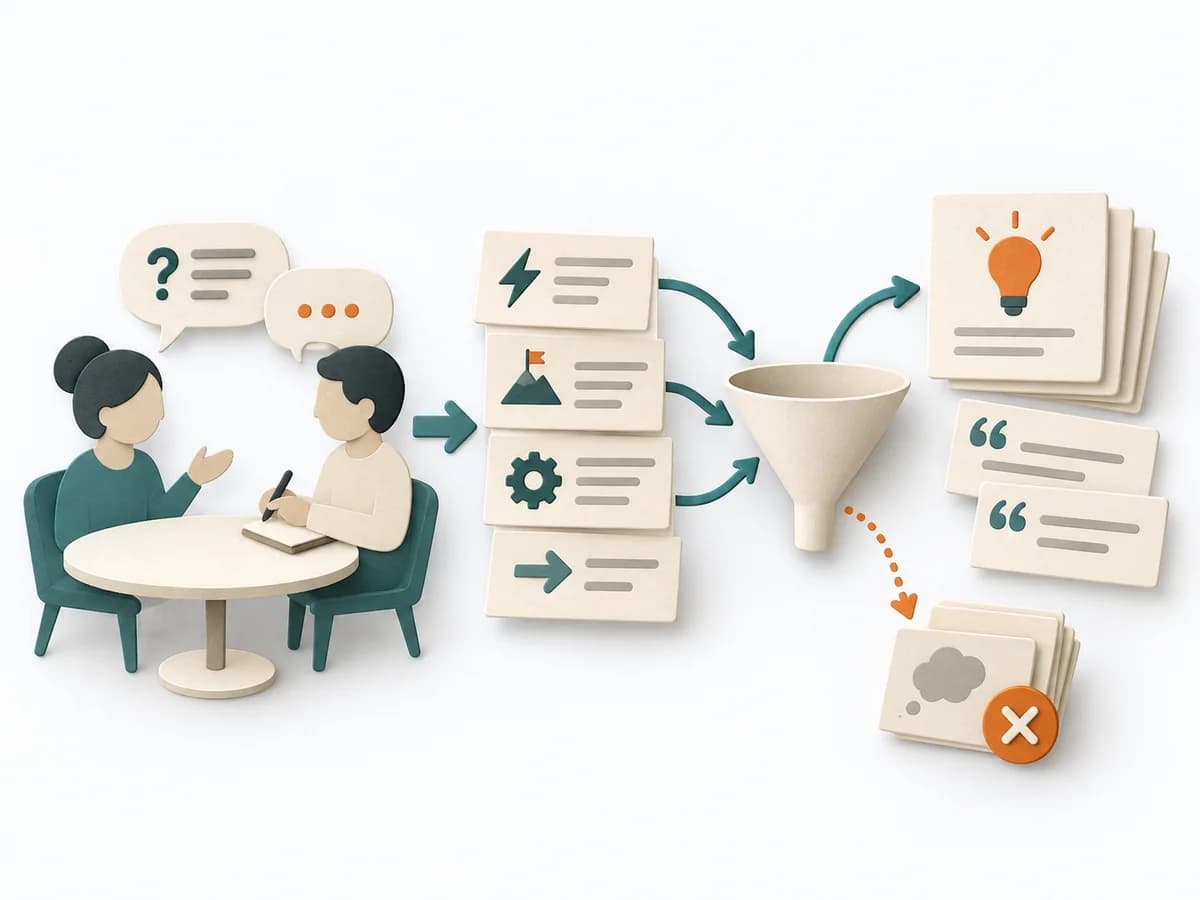 Product Discovery Opportunity Interview |  Product Strategy DIBB |  Decision Making Constraint Analysis | 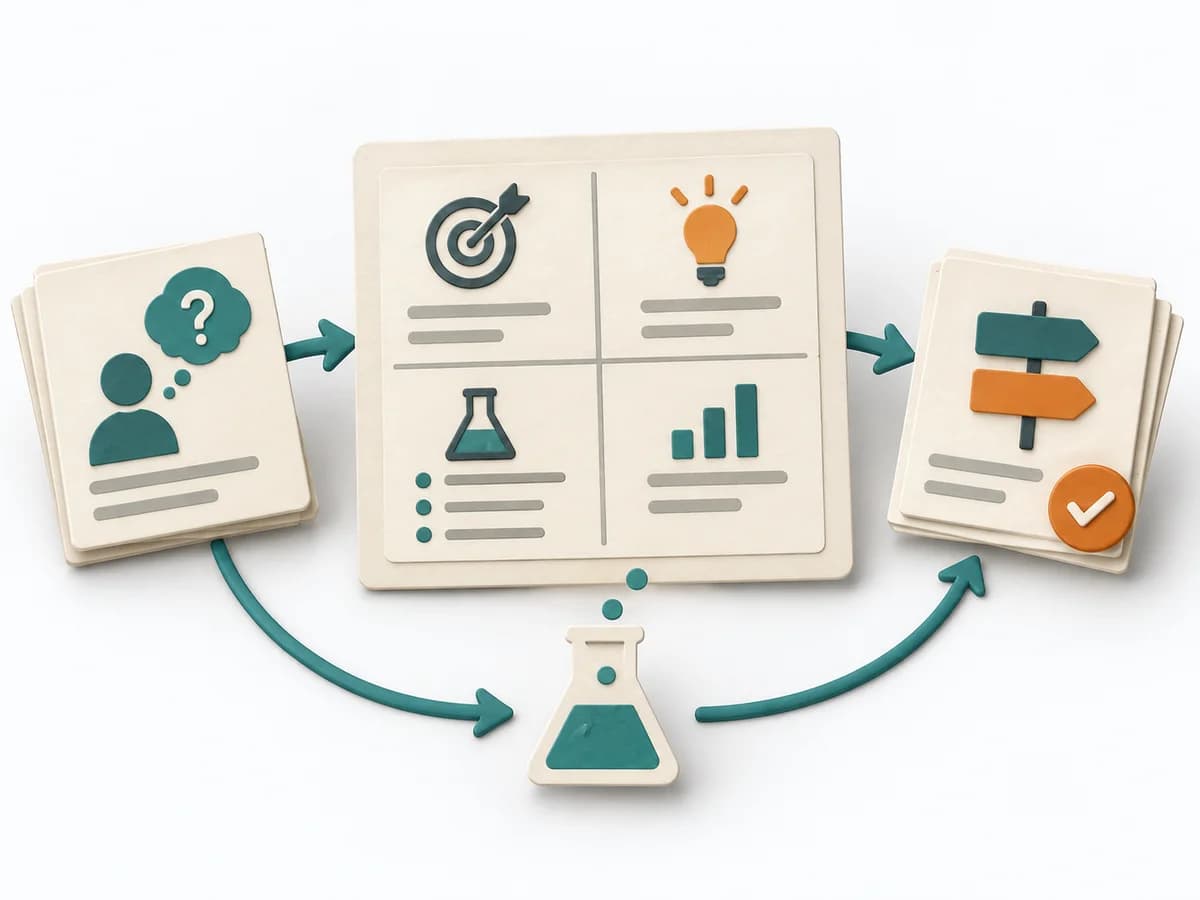 Product Discovery Experiment Canvas |
|---|---|---|---|---|
Purposedifferent | When opportunities are still hidden behind signals of need, it structures conversations around needs and obstacles. It looks for patterns that lead to new product opportunities. | DIBB helps clarify target groups, value, goals, and priorities by making the logic behind a decision explicit. It captures results as a DIBB document, belief list, bet list, and learning report. | When an initiative stalls, the limit often lies not in the idea but in hard or soft boundary conditions. Constraint Analysis separates these limits and shows which of them can actually be shaped. | When experiments become unreadable after the fact, it arranges hypothesis, signal, and learning goal on a single canvas. It separates problem, assumption, solution, and evidence. The result is captured as a Completed Experiment Canvas and a Success Metric. |
Complexitydifferent | Medium | Low | Low | Low |
Timedifferent | 30-60 min je Interview | 1-2 h | 30-90 min | 30-60 min |
Participantsdifferent | 5-12 Interviews | 2-8 | 2-8 | 1-5 |
Formatsame | Workshop + async | Workshop + async | Workshop + async | Workshop + async |
Outputdifferent | Interview Notes, Opportunity Themes, Customer Quotes | DIBB document, Belief list, Bet list, Learning report | Constraint List, Hard/Soft Classification, Option Impact Notes, Decision Boundaries | Completed Experiment Canvas, Success Metric |
Tagsno overlap | DiscoveryInterviewsOpportunityCustomer | StrategyDecisionAssumptionsHypothesis | ConstraintsDecisionPlanningOptions | ExperimentsValidationDiscoveryHypothesis |