View methods side by side.
Choose up to four methods. Add them using the search and share the comparison by copying its link.
| Criterion |  Product Discovery Outcome-Driven Innovation | 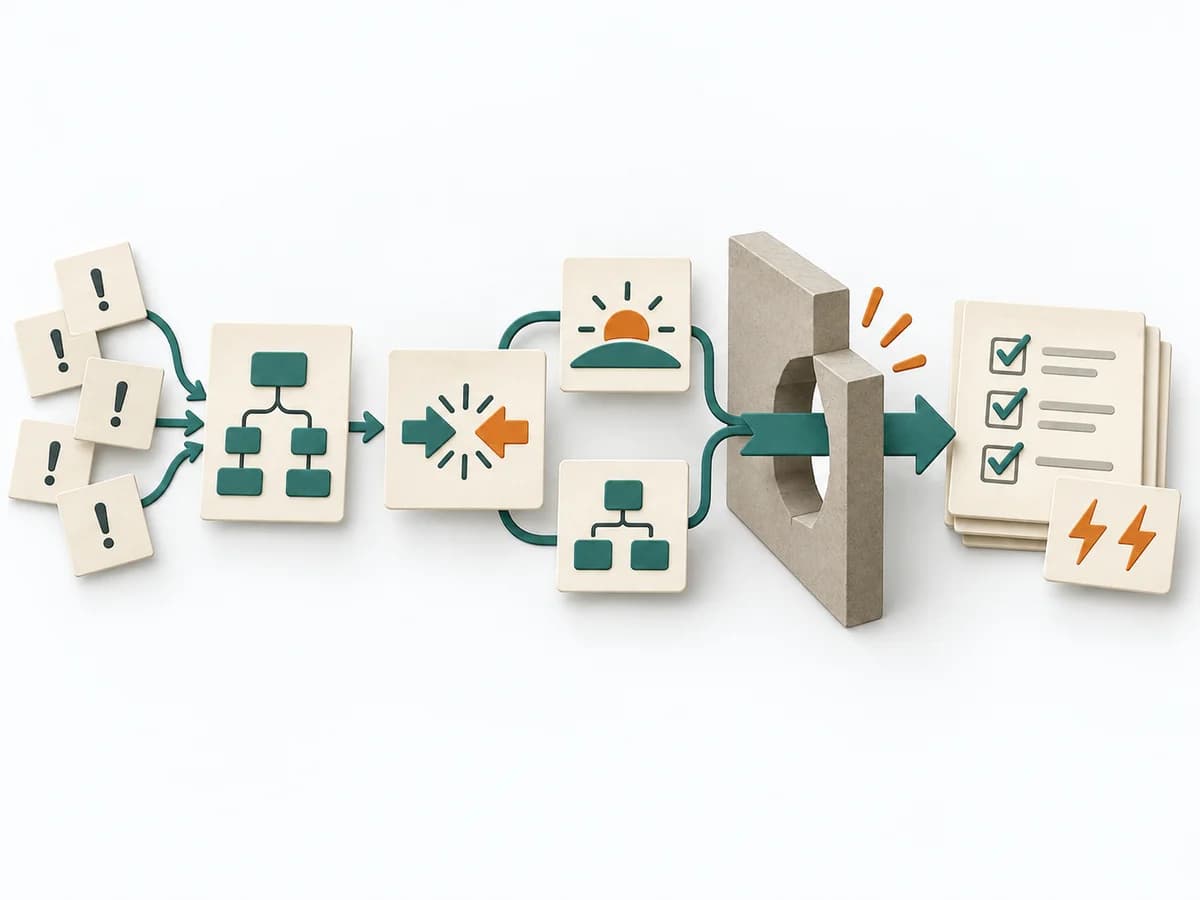 Systems Thinking Theory of Constraints Thinking Process |
|---|---|---|
Purposedifferent | Outcome-Driven Innovation clarifies customer problems, solution opportunities, and evidence. It separates jobs, desired outcomes, importance, satisfaction, and opportunity, and captures results as desired outcome statements, an opportunity landscape, and segments by underserved needs. | The Theory of Constraints Thinking Process exposes a system's bottleneck and the logic behind it. It suits situations where many symptoms trace back to the same limiting relationship. |
Complexitysame | High | High |
Timedifferent | Mehrere Wochen | 0.5-3 Tage |
Participantsdifferent | 2-6 researchers plus sample | 4-10 |
Formatdifferent | Workshop + async | Workshop |
Outputdifferent | Desired outcome statements, Opportunity landscape, Segmentation by underserved needs, Innovation hypotheses | Current Reality Logic, Conflict Cloud, Future Reality Tree, Implementation Obstacles |
Tagsno overlap | OutcomesInnovationResearchQuantitative | Theory of ConstraintsConstraintsSystems thinkingCausality |
Often compared together
Methods with strong topical overlap with the current selection, not yet in the comparison.