View methods side by side.
Choose up to four methods. Add them using the search and share the comparison by copying its link.
| Criterion |  Facilitation Nominal Group Technique | 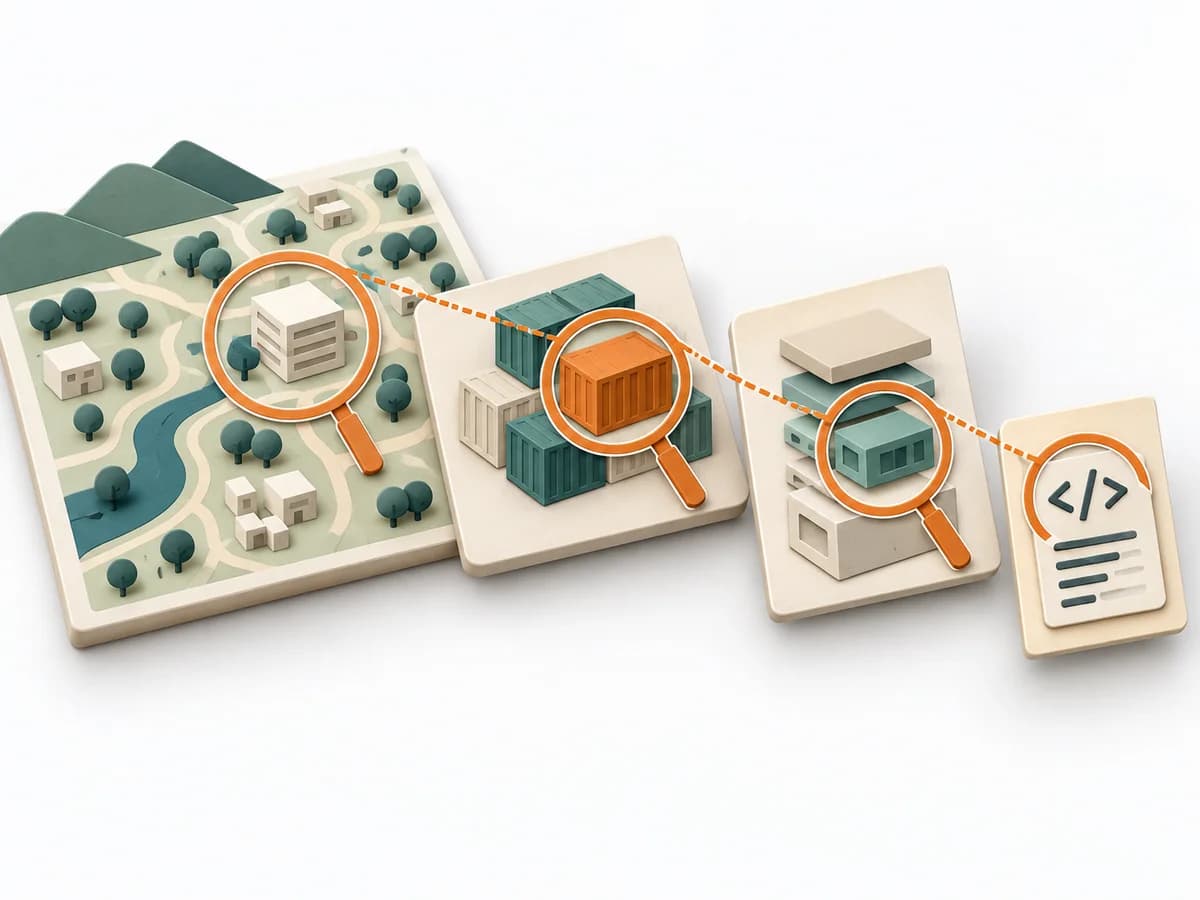 Architecture C4 Model |  Architecture Architecture Decision Record |  Facilitation Dot Voting |
|---|---|---|---|---|
Purposedifferent | When loud voices could dominate a round, Nominal Group Technique protects individual thinking time from group effects. It collects ideas separately first and only then enables shared weighting. | The C4 Model makes a system legible across several resolution levels, from context down to code. It suits situations where different audiences need to understand the same architecture from different altitudes. | An ADR permanently records an architecture decision with context, trade-offs, and consequence. It creates continuity for later changes because the decision path stays traceable. | When a workshop has produced too many options and the group needs to condense quickly, dot voting makes preferences visible in a short time. It bundles individual votes into a solid signal for the next selection. |
Complexitydifferent | Medium | Low | Low | Low |
Timedifferent | 60-120 min | 1-4 h | 15-45 min | 5-15 min |
Participantsdifferent | 5-12 | 1-5 | 1-3 | 3-20 |
Formatdifferent | Workshop | Workshop + async | Async | Workshop |
Outputdifferent | Ranked Ideas, Clarified Options, Group Priority | Context Diagram, Container Diagram, Component Diagram | ADR File, Decision Log, Rationale | Ranked list, Consensus signal, Shortlist |
Tagsno overlap | FacilitationPrioritizationVotingInclusion | ArchitectureCommunicationVisualization | ArchitectureRationaleDocumentationGovernance | FacilitationVotingConsensusPrioritization |