View methods side by side.
Choose up to four methods. Add them using the search and share the comparison by copying its link.
| Criterion | 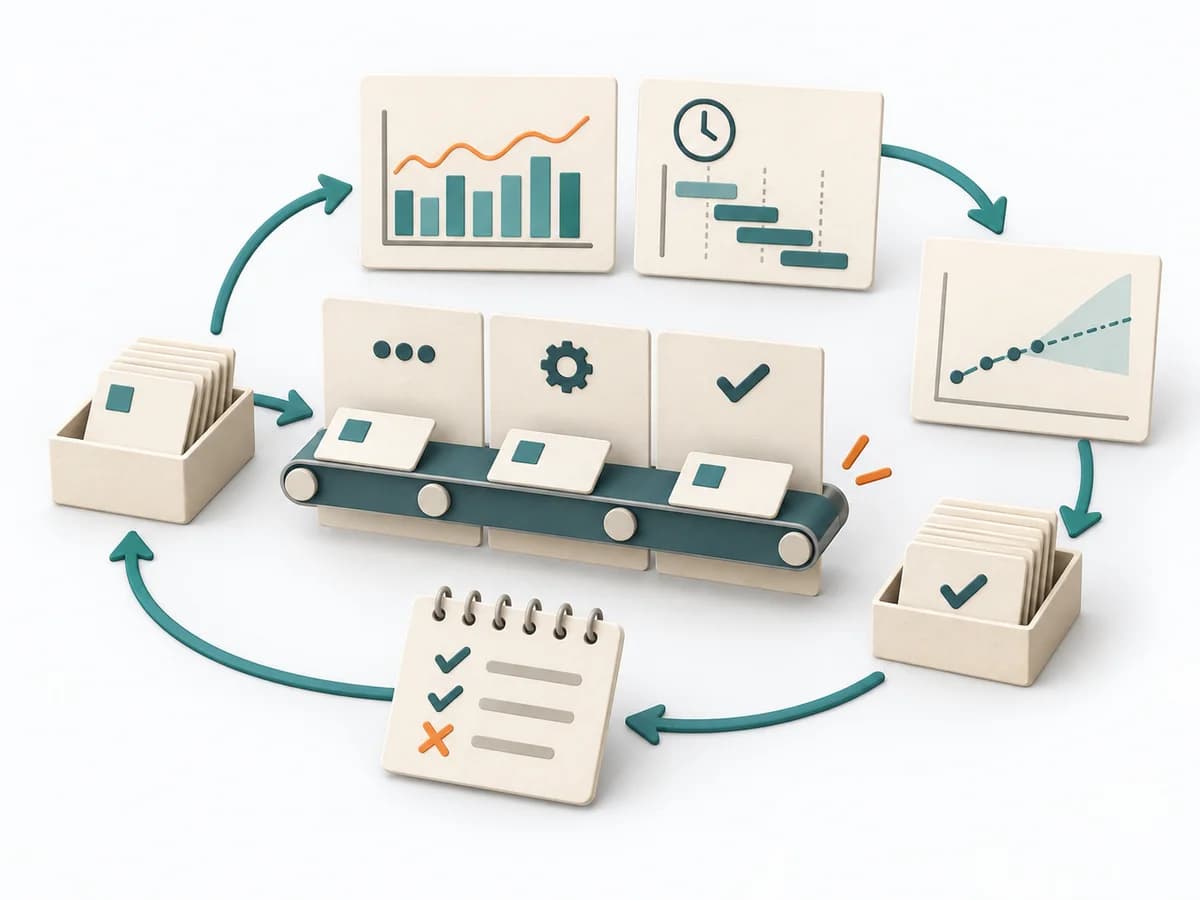 Agile NoEstimates | 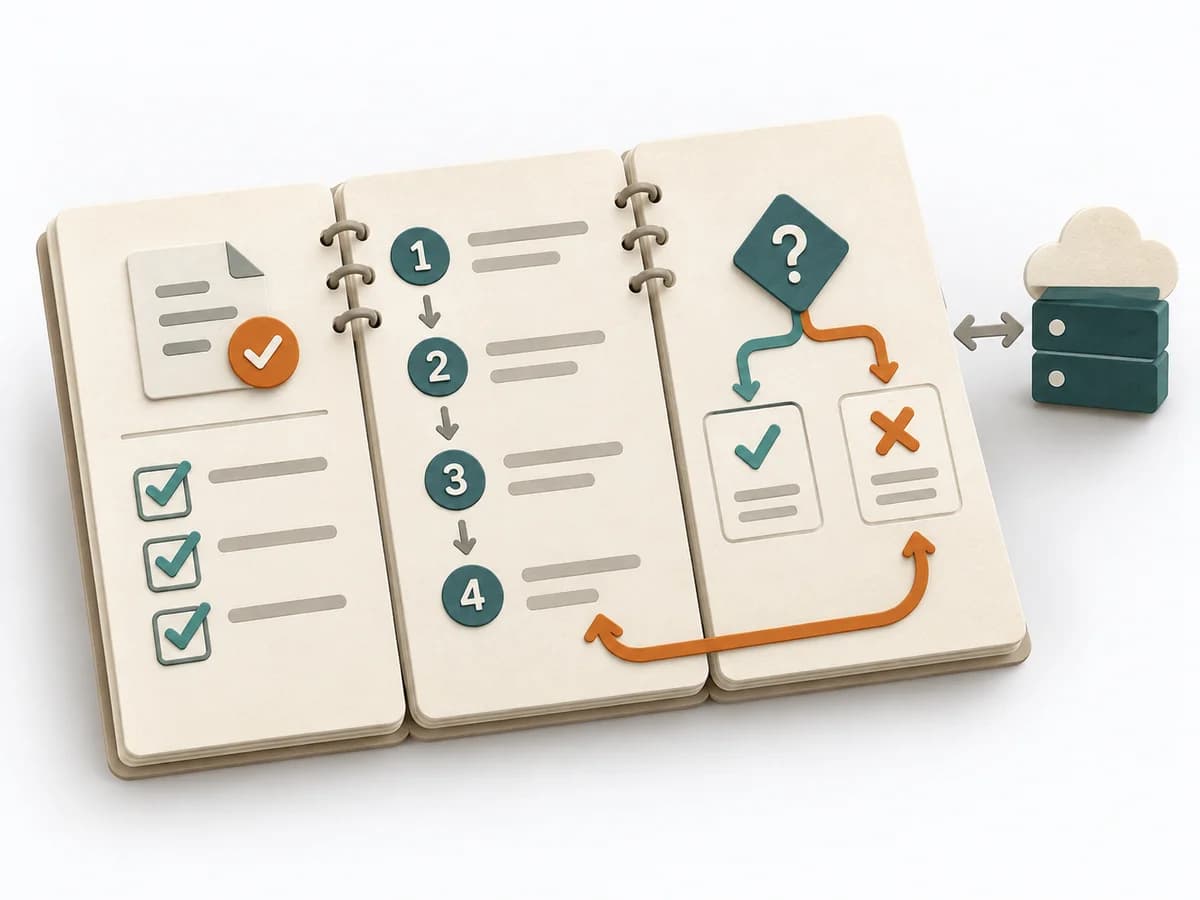 Operations Runbook | 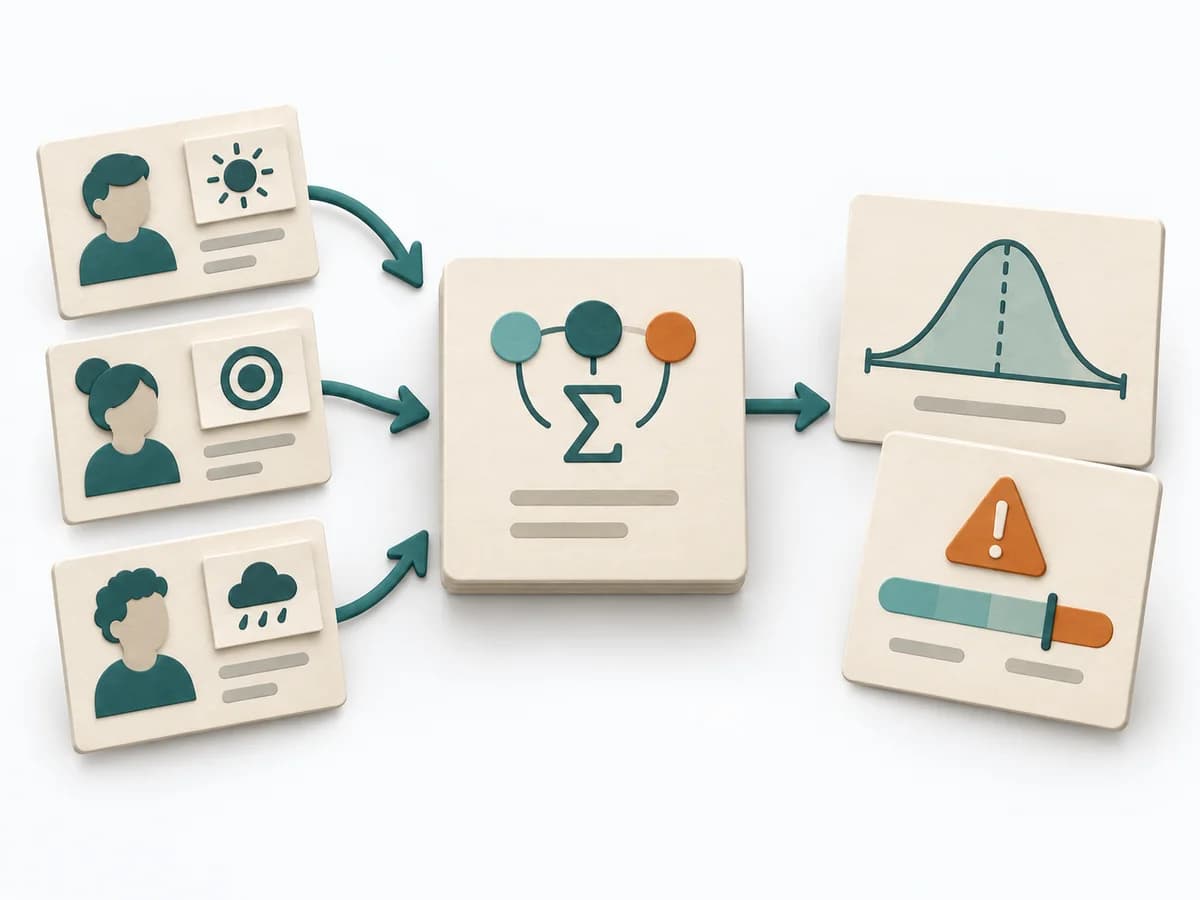 Decision Making PERT Estimation |  Operations Failure Mode and Effects Analysis |
|---|---|---|---|---|
Purposedifferent | When estimating slows a team down more than it helps, it shifts the focus to flow, small slices, and real lead time. It sorts work by value, risk, and delivery ability. The result is captured as Throughput Data, Flow Forecast, and Slicing Rules. | For recurring operational tasks or incidents, the method keeps solid action logic ready. It reduces uncertainty when time pressure, role changes, or rare situations demand fast access. | On complex initiatives, a plain average tends to understate just how uncertain the outcome really is. It separates options, evaluation criteria, and open risks. The result is captured as a PERT Estimate, Expected Value, and Risk Notes. | For a process, product, or service with noticeable failure risks, the method assesses possible failure modes in advance. It directs attention to combinations of occurrence, effect, and detectability. |
Complexitydifferent | Medium | Low | Medium | High |
Timedifferent | laufend | 20-60 min | 15-45 min | 2-6 h |
Participantsdifferent | 2-12 | 1-4 | 1-8 | 3-10 |
Formatdifferent | Workshop + async | Async | Workshop + async | Workshop |
Outputdifferent | Throughput Data, Flow Forecast, Slicing Rules | Runbook, Checklist, Escalation Path | PERT Estimate, Expected Value, Risk Notes | FMEA Table, Risk Priority, Mitigation Actions |
Tagsno overlap | EstimationForecastingFlow | OperationsReliabilityDocumentation | EstimationUncertaintyRisk | RiskQualityOperationsRoot cause |