View methods side by side.
Choose up to four methods. Add them using the search and share the comparison by copying its link.
| Criterion | 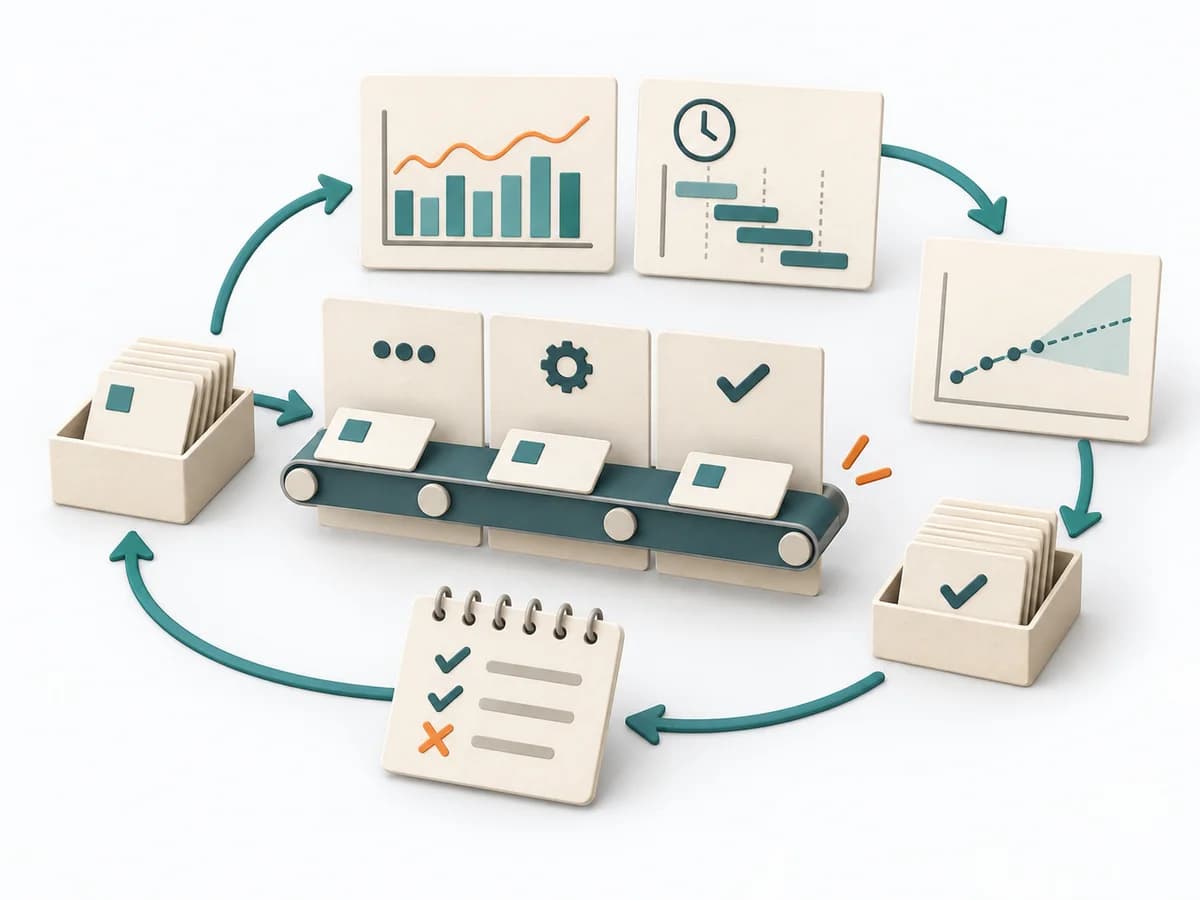 Agile NoEstimates | 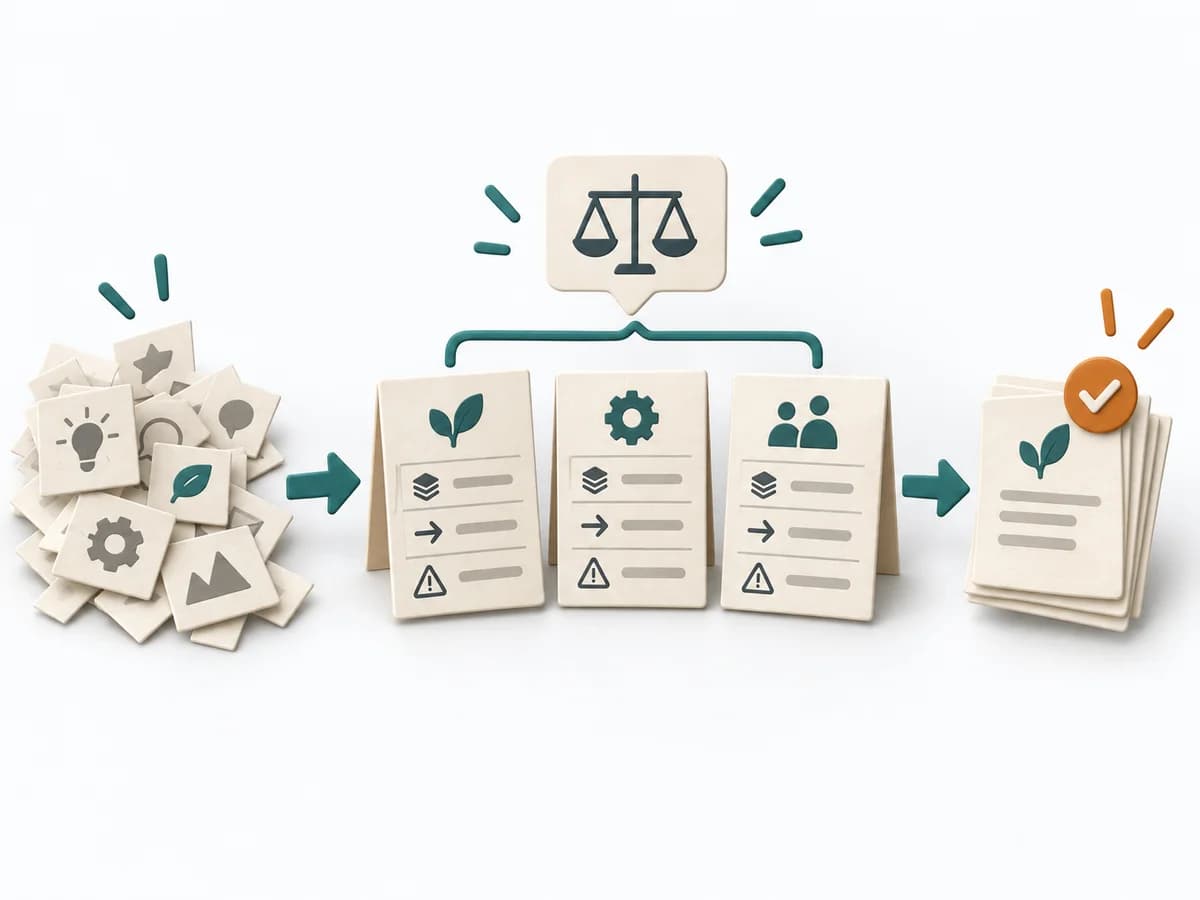 Decision Making Option Framing | 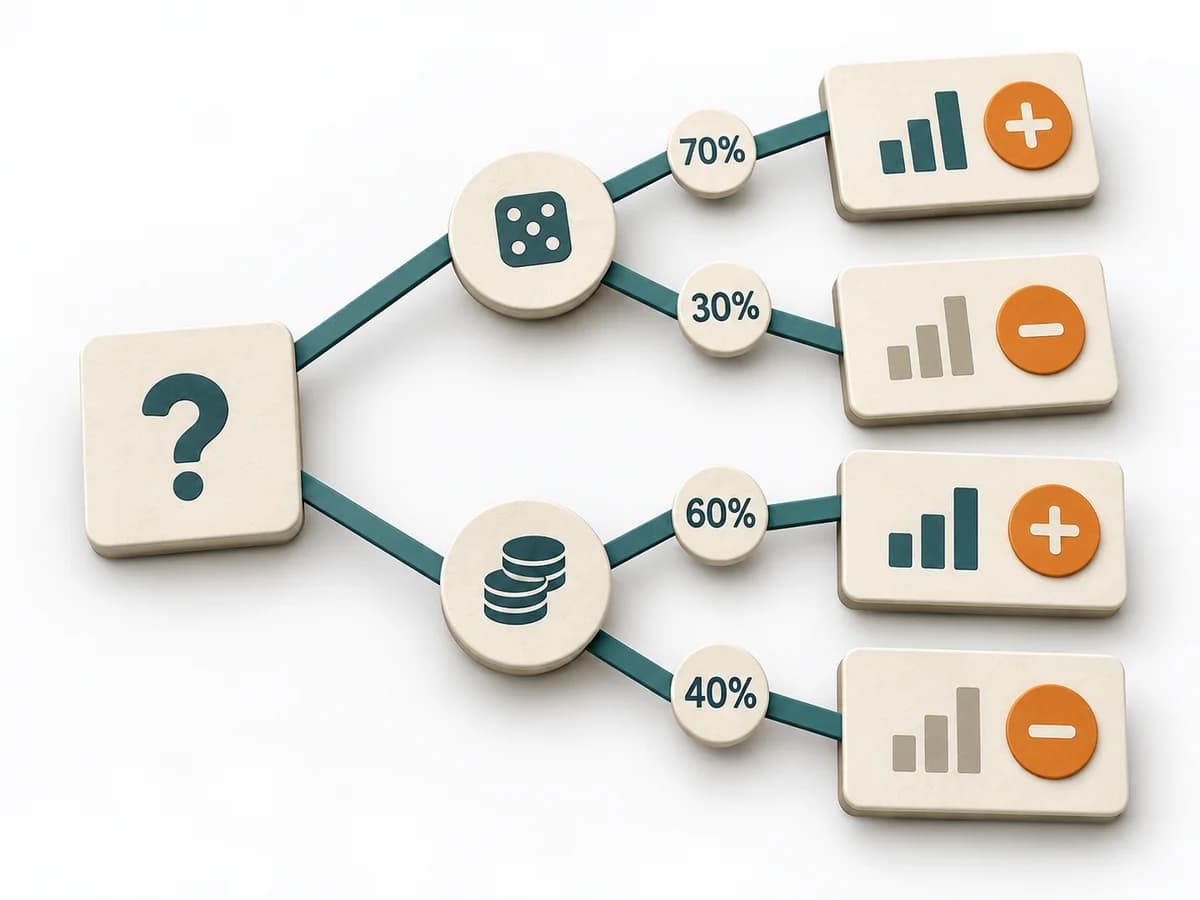 Decision Making Decision Tree |  Product Strategy DIBB |
|---|---|---|---|---|
Purposedifferent | When estimating slows a team down more than it helps, it shifts the focus to flow, small slices, and real lead time. It sorts work by value, risk, and delivery ability. The result is captured as Throughput Data, Flow Forecast, and Slicing Rules. | In early decisions, alternatives are often still vague, incomplete, or blended together. Option Framing brings every possibility into a comparable form and makes visible which variant actually fits the question. | For decisions with follow-on paths and dependencies, a linear comparison is often not enough. A Decision Tree shows how options branch under conditions and which consequences hang on each branch. | DIBB helps clarify target groups, value, goals, and priorities by making the logic behind a decision explicit. It captures results as a DIBB document, belief list, bet list, and learning report. |
Complexitydifferent | Medium | Medium | Medium | Low |
Timedifferent | laufend | 45-120 min | 30-90 min | 1-2 h |
Participantsdifferent | 2-12 | 3-8 | 1-6 | 2-8 |
Formatsame | Workshop + async | Workshop + async | Workshop + async | Workshop + async |
Outputdifferent | Throughput Data, Flow Forecast, Slicing Rules | Option Frames, Assumption Notes, Comparable Shortlist, Decision Inputs | Decision Tree, Option Map, Assumption List | DIBB document, Belief list, Bet list, Learning report |
Tagsno overlap | EstimationForecastingFlow | OptionsDecision framingStrategyComparison | DecisionTreeOptions | StrategyDecisionAssumptionsHypothesis |