View methods side by side.
Choose up to four methods. Add them using the search and share the comparison by copying its link.
| Criterion | 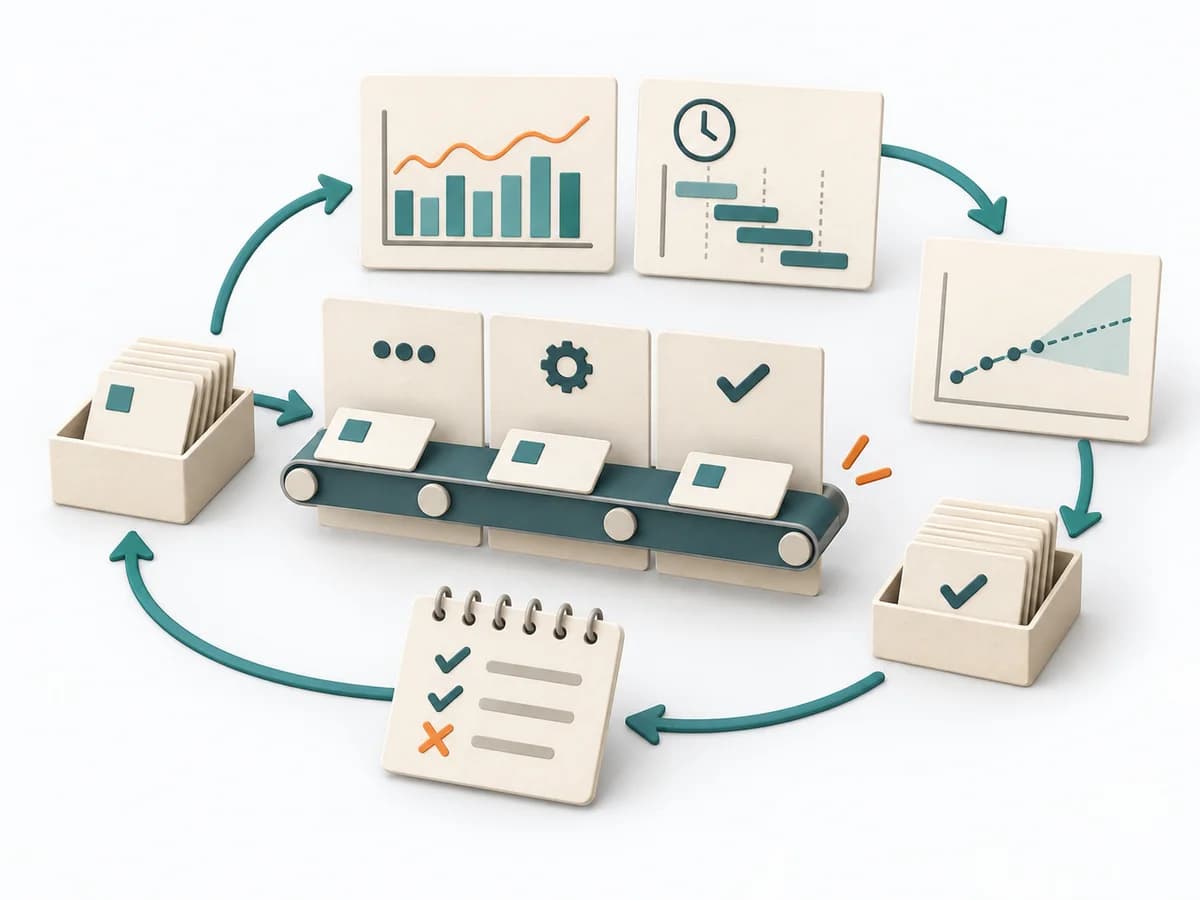 Agile NoEstimates | 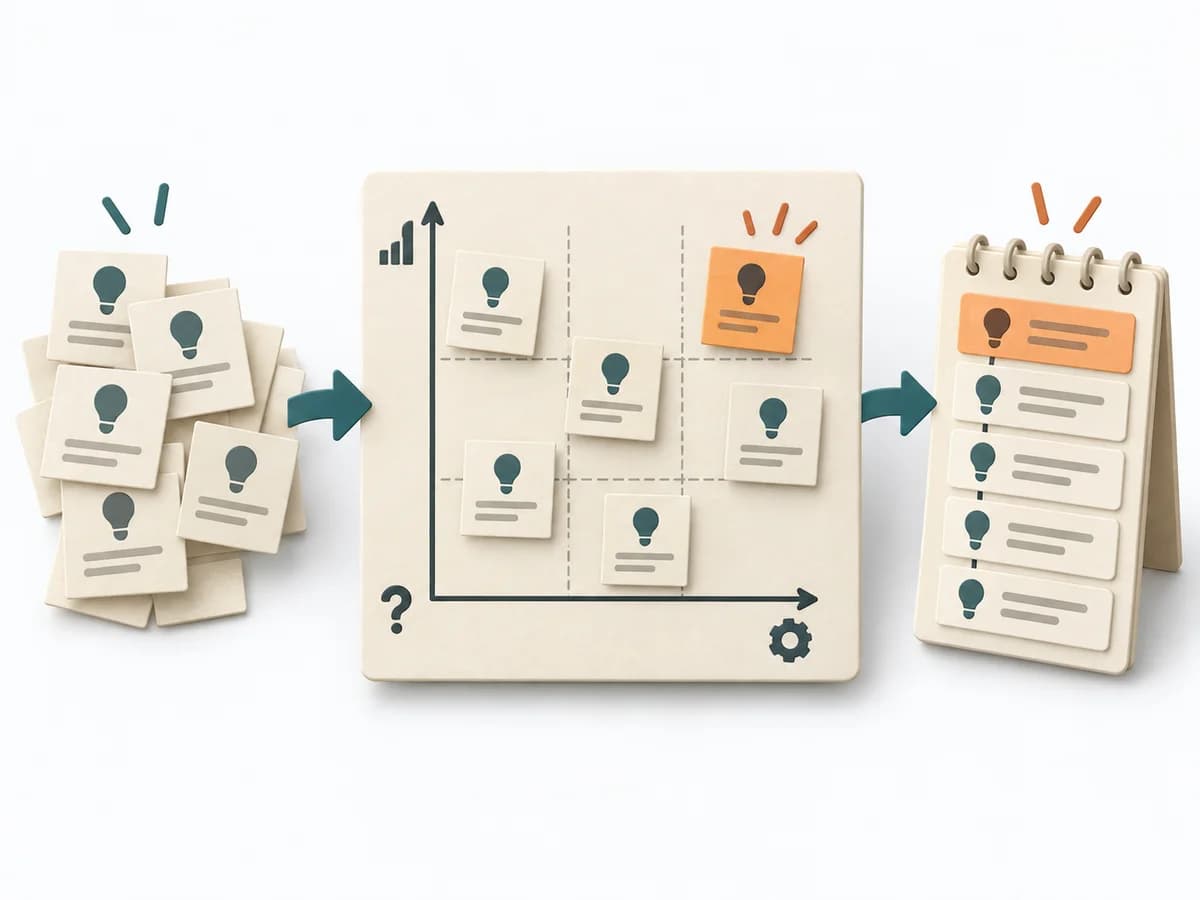 Product Discovery Hypothesis Prioritization Canvas | 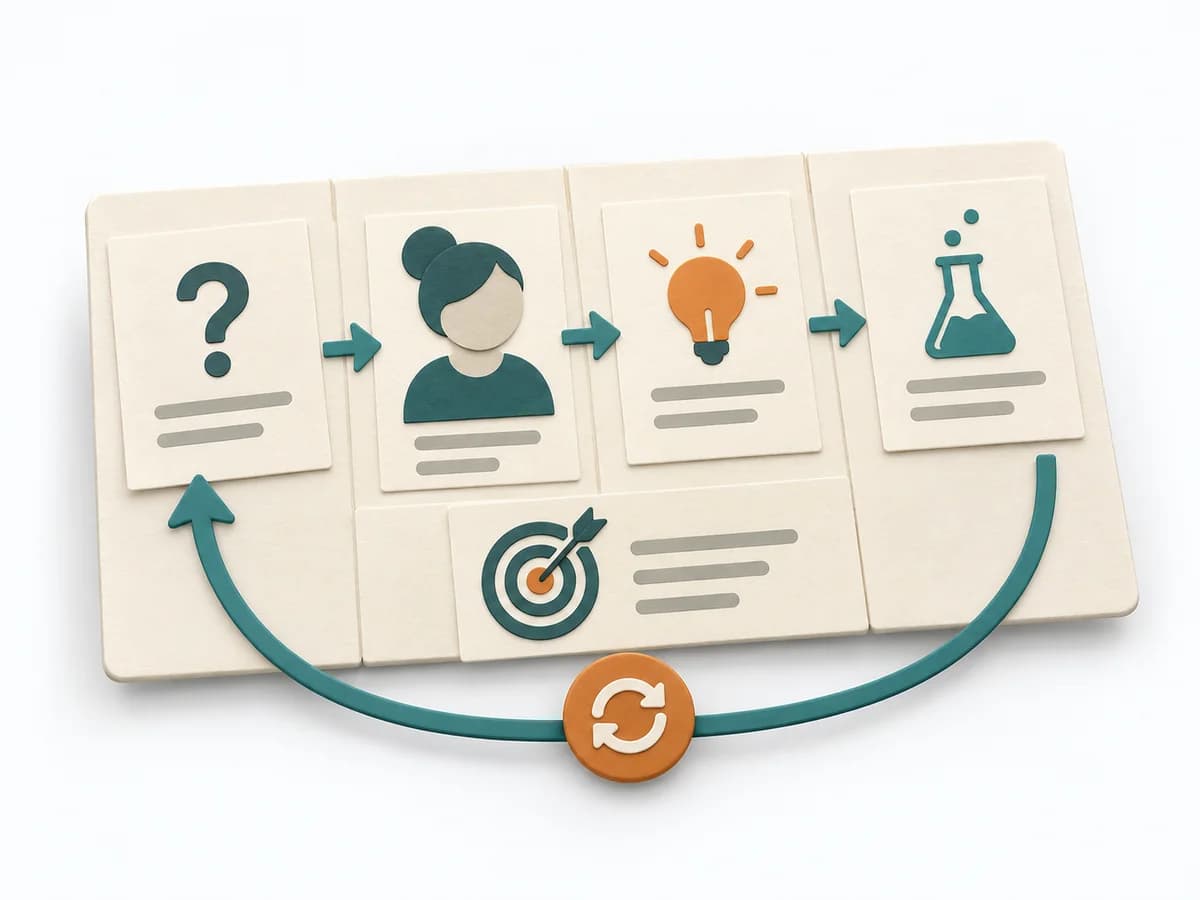 UX Design Lean UX Canvas | 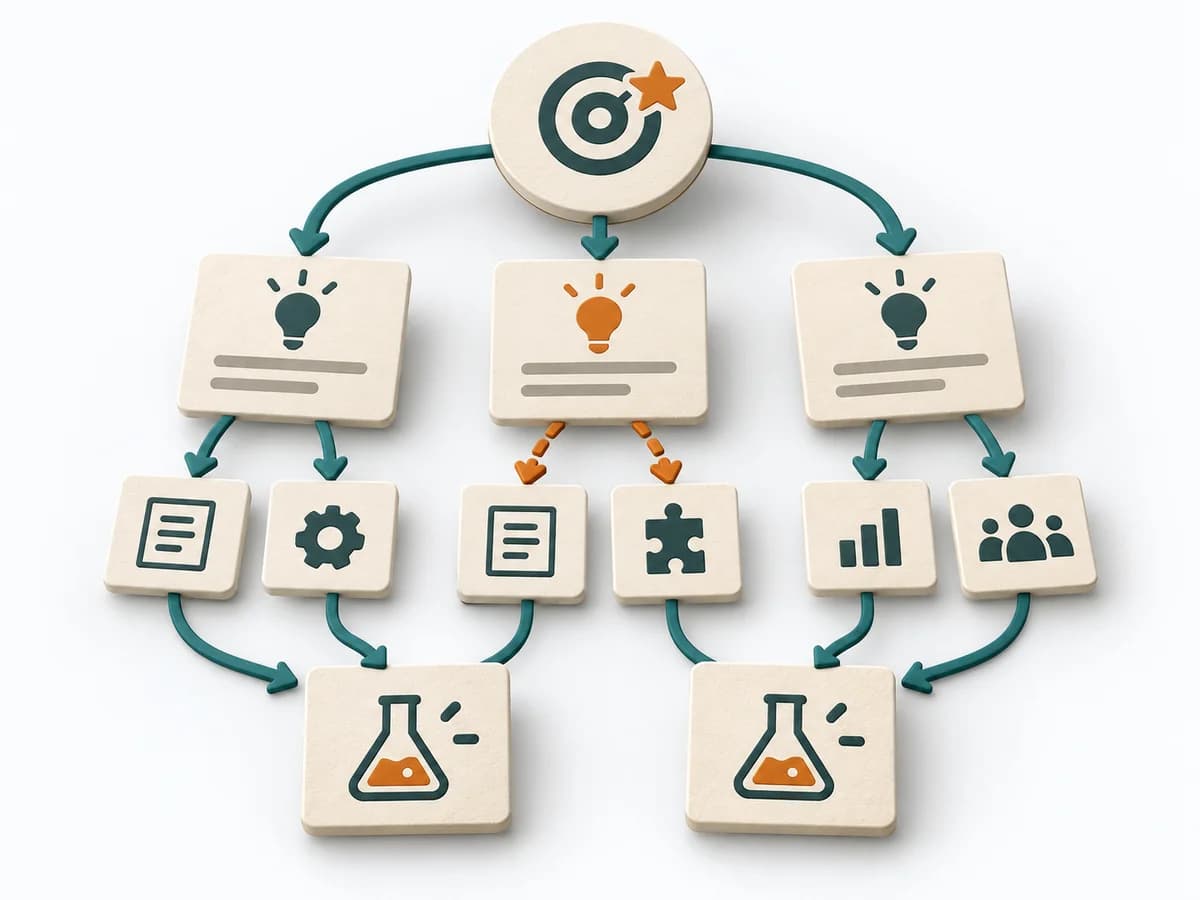 Product Discovery Opportunity Solution Tree |
|---|---|---|---|---|
Purposedifferent | When estimating slows a team down more than it helps, it shifts the focus to flow, small slices, and real lead time. It sorts work by value, risk, and delivery ability. The result is captured as Throughput Data, Flow Forecast, and Slicing Rules. | When many hypotheses compete for attention, it brings order to their learning sequence and importance. It separates problem, assumption, solution, and evidence. The result is captured as a prioritization canvas and a hypothesis backlog. | The Lean UX Canvas helps clarify user behavior, touchpoints, and concept decisions. It makes assumptions and desired outcomes visible and captures the result as a completed canvas, hypothesis list, and first experiment. | When discovery keeps swinging between goals, ideas, and learning loops, it creates clear steering logic. It connects the desired outcome, opportunities, and experiments into a legible structure. |
Complexitysame | Medium | Medium | Medium | Medium |
Timedifferent | laufend | 60-90 min | 2-3 h | 1-2 h Setup, laufend |
Participantsdifferent | 2-12 | 3-8 | 3-8 | 2-6 |
Formatdifferent | Workshop + async | Workshop | Workshop + async | Workshop + async |
Outputdifferent | Throughput Data, Flow Forecast, Slicing Rules | Prioritization Canvas, Hypothesis Backlog | Completed Lean UX Canvas, Hypothesis list, First experiment | Opportunity Solution Tree, Experiment Backlog, Learning Log |
Tagsno overlap | EstimationForecastingFlow | ExperimentsPrioritizationDiscoveryHypothesis | CanvasHypothesisOutcomesDiscovery | DiscoveryOutcomesExperimentsOpportunity |