View methods side by side.
Choose up to four methods. Add them using the search and share the comparison by copying its link.
| Criterion | 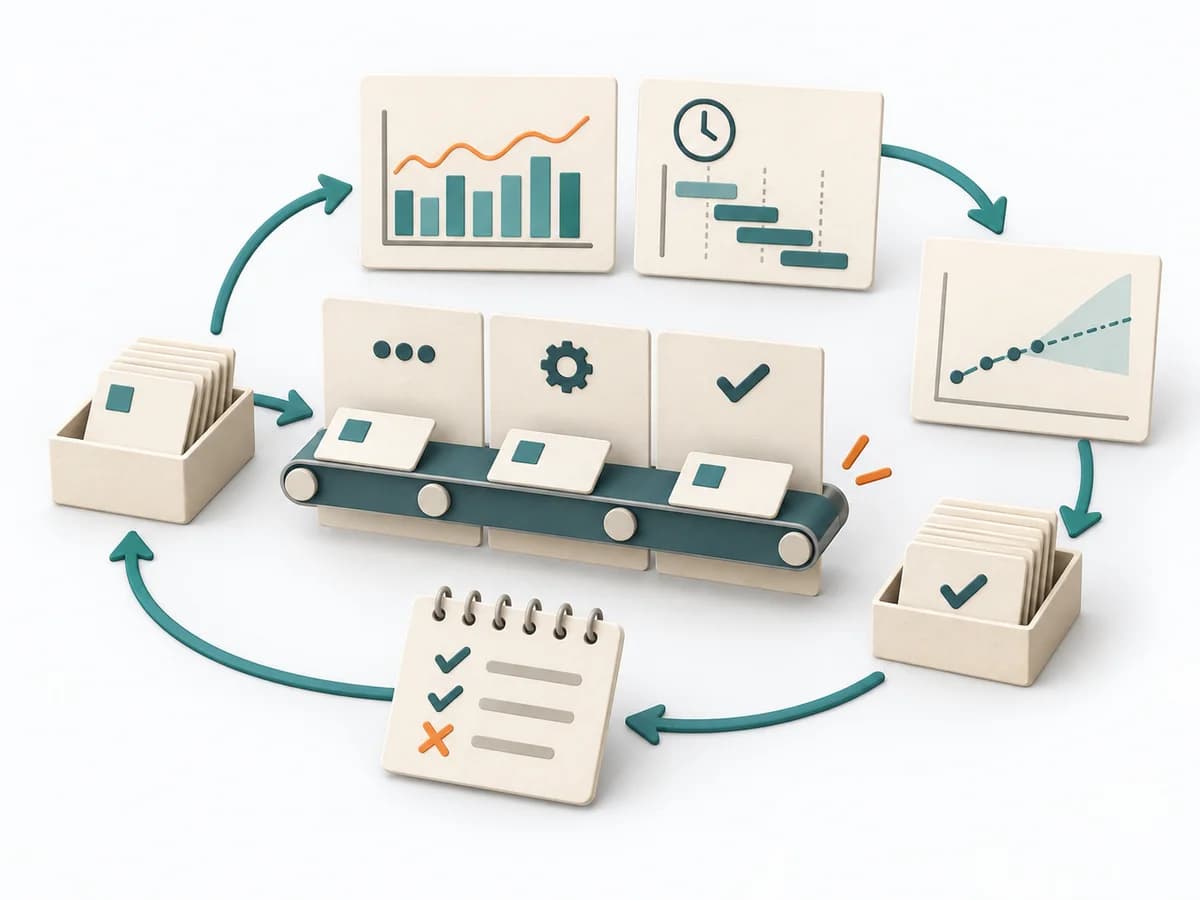 Agile NoEstimates |  Decision Making Force Field Analysis | 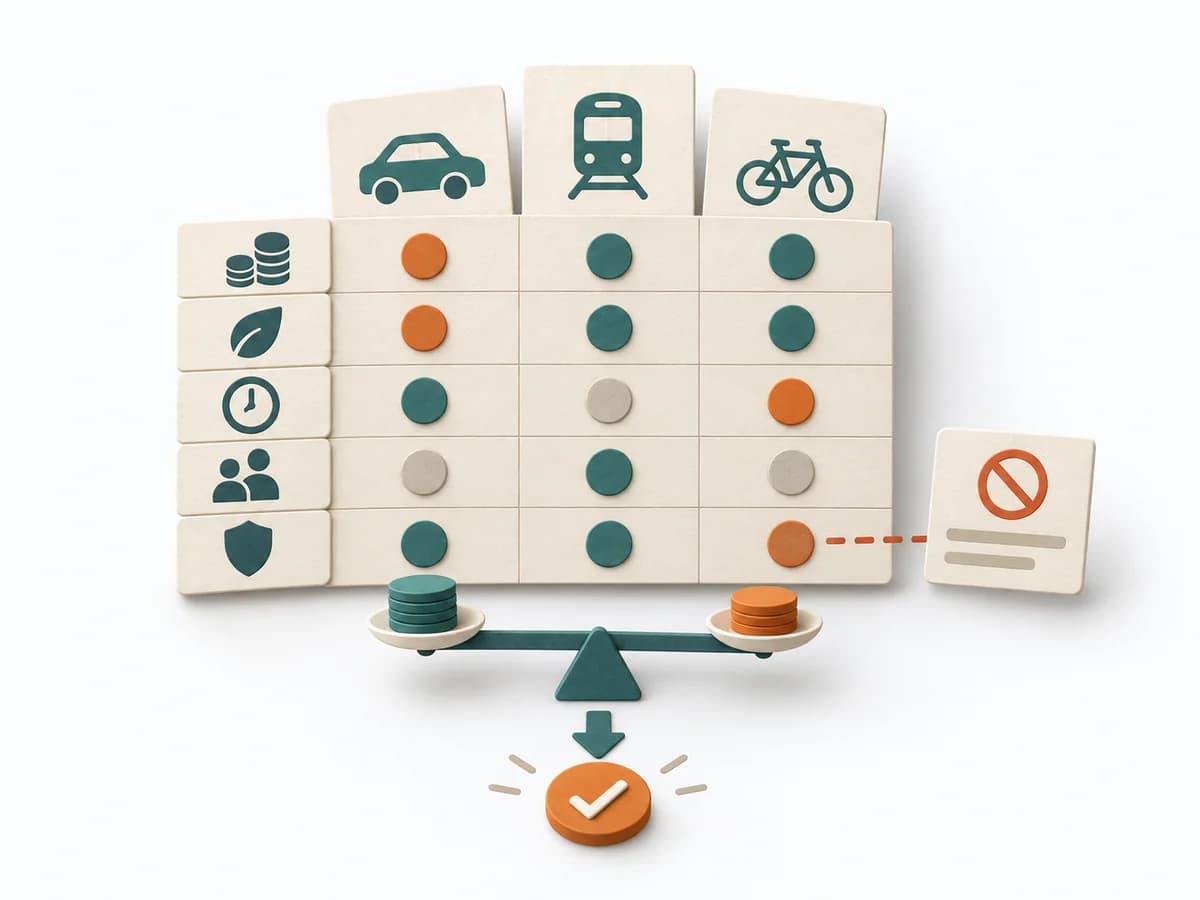 Decision Making Trade-off Analysis |  Decision Making Delphi Method |
|---|---|---|---|---|
Purposedifferent | When estimating slows a team down more than it helps, it shifts the focus to flow, small slices, and real lead time. It sorts work by value, risk, and delivery ability. The result is captured as Throughput Data, Flow Forecast, and Slicing Rules. | In change initiatives, supporting and restraining forces sit at the table at the same time. Force Field Analysis makes these tensions explicit and shows where change can be pushed forward by strengthening or relieving. | With limited resources, quality, speed, cost, and risk almost always compete with each other. Trade-off Analysis makes these tensions explicit and prevents decisions from producing hidden side effects. | When knowledge is distributed and direct dominance should be avoided, groups quickly fall under the sway of their opinion leaders. The Delphi Method gathers assessments iteratively and gradually brings expert judgments closer together. |
Complexitydifferent | Medium | Low | Medium | High |
Timedifferent | laufend | 45-90 min | 45-120 min | 1-4 Wochen |
Participantsdifferent | 2-12 | 3-12 | 2-8 | 6-30 Experten |
Formatdifferent | Workshop + async | Workshop | Workshop + async | Async |
Outputdifferent | Throughput Data, Flow Forecast, Slicing Rules | Force Field Map, Change Levers, Risk Notes | Trade-off Matrix, Criteria List, Decision Rationale, Accepted Downsides | Expert Forecast, Consensus Range, Assumption Notes |
Tagsno overlap | EstimationForecastingFlow | ChangeDecisionStrategy | TradeoffsDecisionCriteriaOptions | ForecastingExpertsDecisionStrategy |