View methods side by side.
Choose up to four methods. Add them using the search and share the comparison by copying its link.
| Criterion | 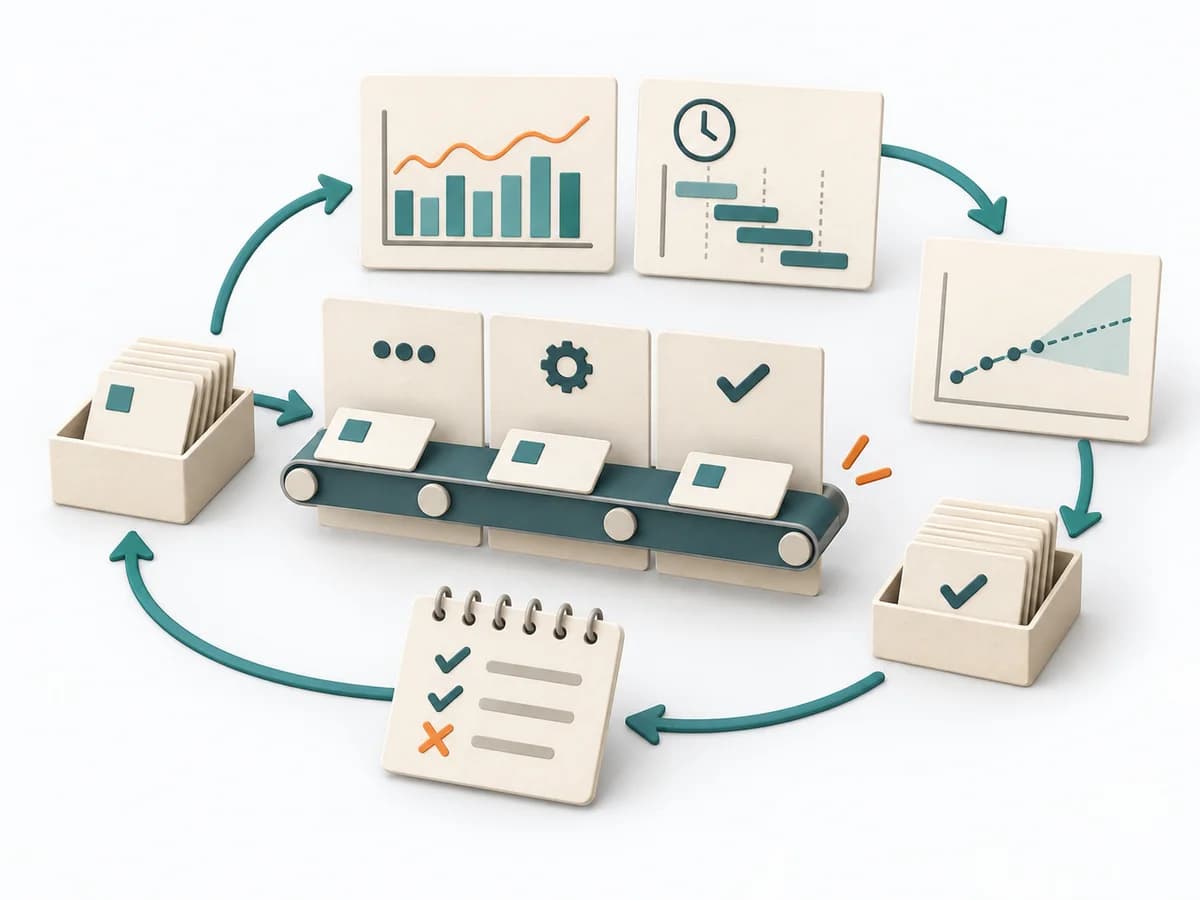 Agile NoEstimates |  Product Strategy DIBB | 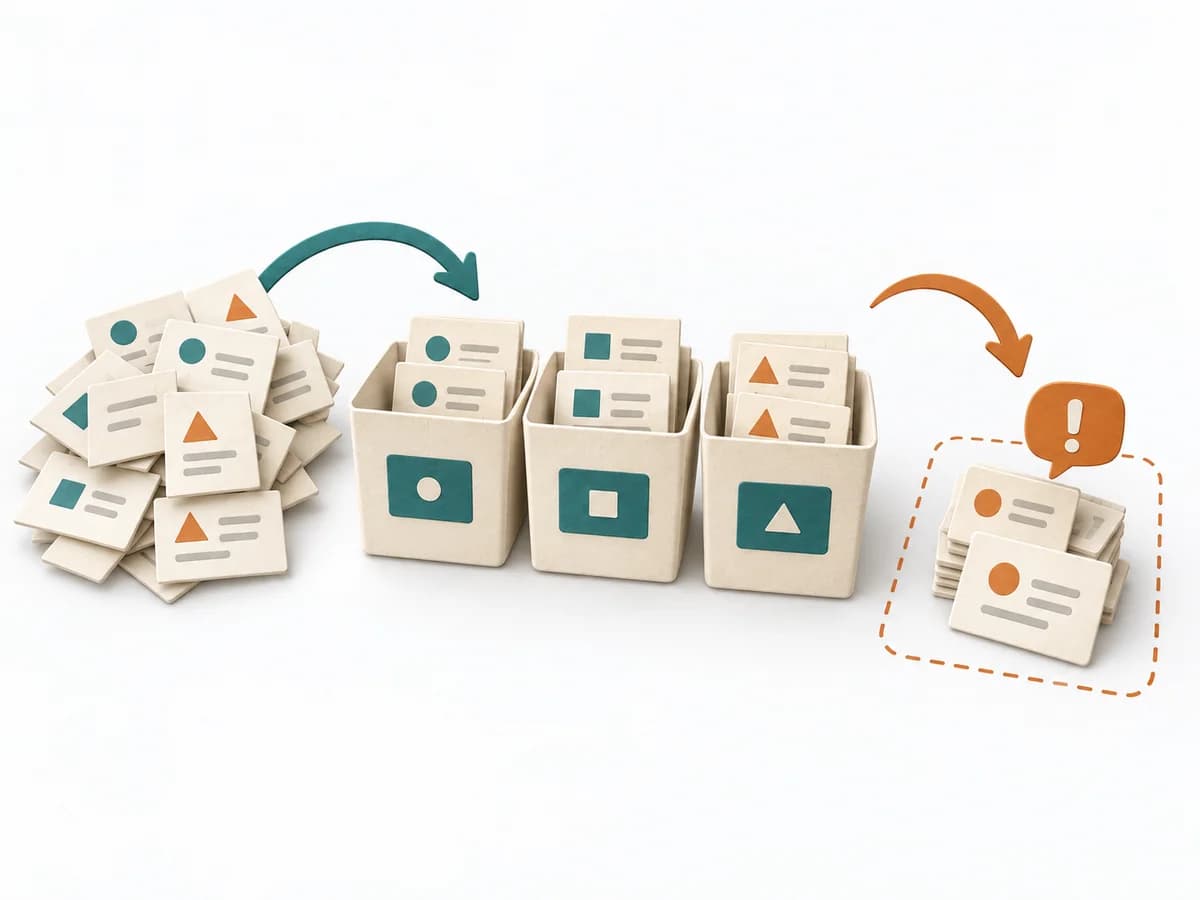 Agile Bucket System | 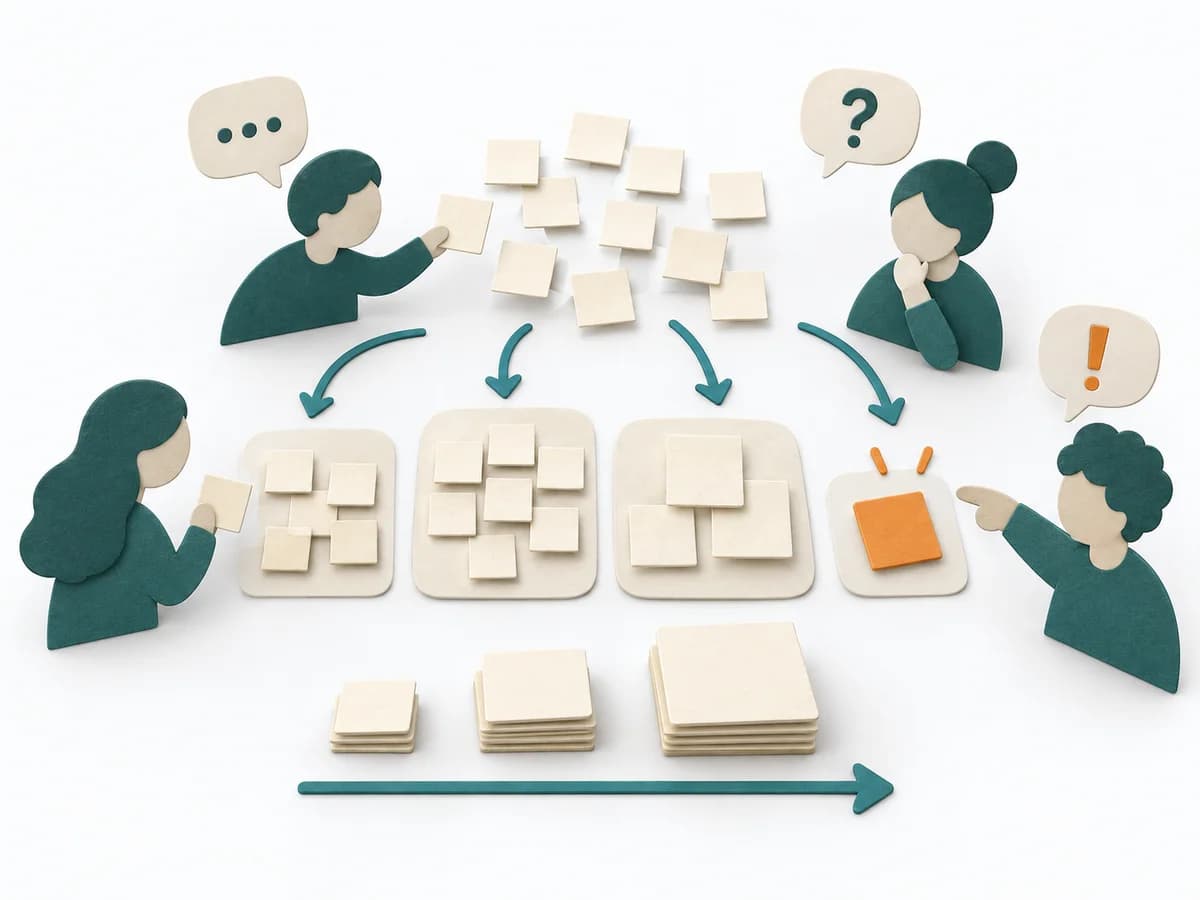 Agile Affinity Estimation |
|---|---|---|---|---|
Purposedifferent | When estimating slows a team down more than it helps, it shifts the focus to flow, small slices, and real lead time. It sorts work by value, risk, and delivery ability. The result is captured as Throughput Data, Flow Forecast, and Slicing Rules. | DIBB helps clarify target groups, value, goals, and priorities by making the logic behind a decision explicit. It captures results as a DIBB document, belief list, bet list, and learning report. | When a large batch of work needs a fast, rough estimate, it sorts items into predefined size buckets. It sorts work by value, risk, and delivery ability. The result is captured as a Bucketed Backlog, Relative Estimates, and Split Candidates. | When many tasks need to be classified quickly, it sorts them by perceived effort and similarity. It reduces the effort of fine-grained estimation for large volumes. |
Complexitydifferent | Medium | Low | Medium | Medium |
Timedifferent | laufend | 1-2 h | 30-90 min | 30-90 min |
Participantsdifferent | 2-12 | 2-8 | 3-12 | 3-12 |
Formatdifferent | Workshop + async | Workshop + async | Workshop | Workshop |
Outputdifferent | Throughput Data, Flow Forecast, Slicing Rules | DIBB document, Belief list, Bet list, Learning report | Bucketed Backlog, Relative Estimates, Split Candidates | Affinity Size Map, Grouped Estimates, Unclear Items |
Tagsno overlap | EstimationForecastingFlow | StrategyDecisionAssumptionsHypothesis | EstimationBacklogRelative sizing | EstimationBacklogRelative sizing |