View methods side by side.
Choose up to four methods. Add them using the search and share the comparison by copying its link.
| Criterion | 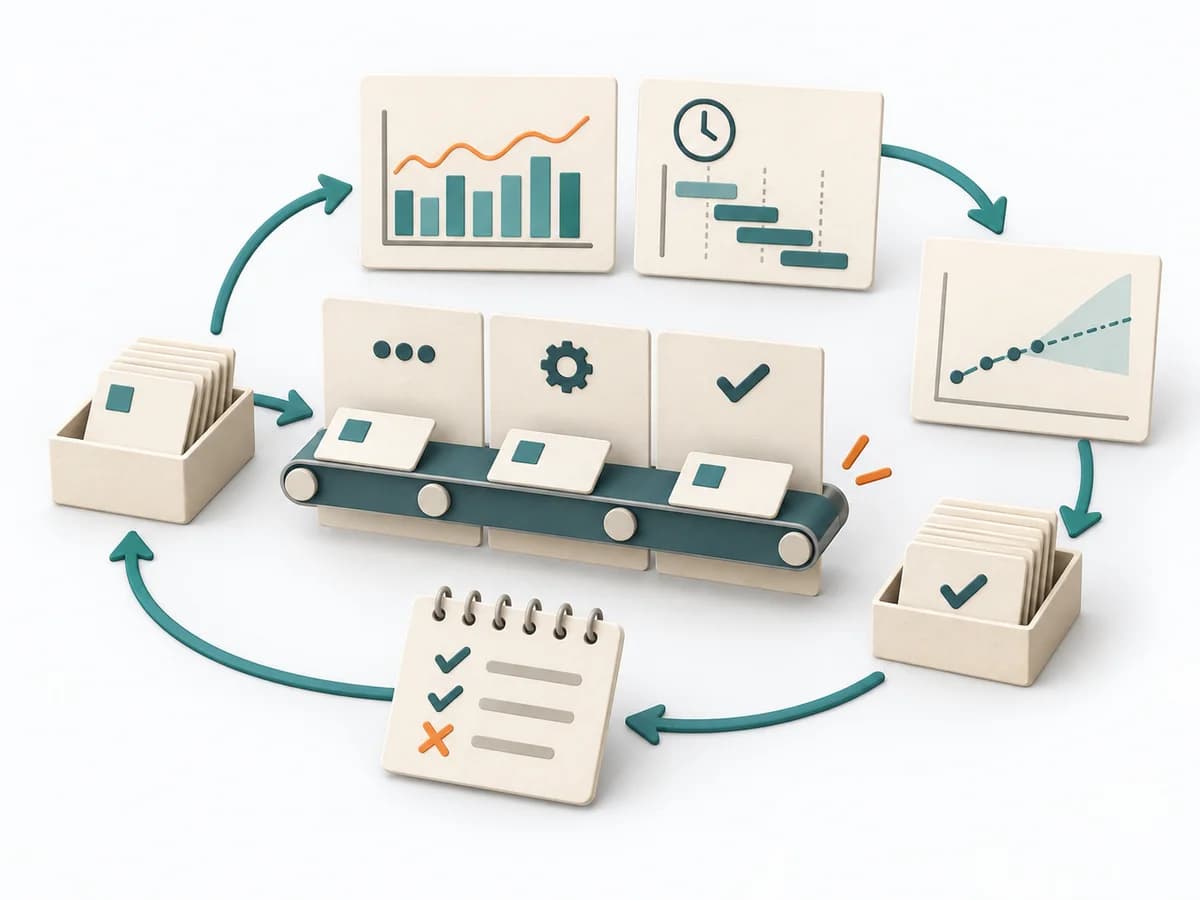 Agile NoEstimates | 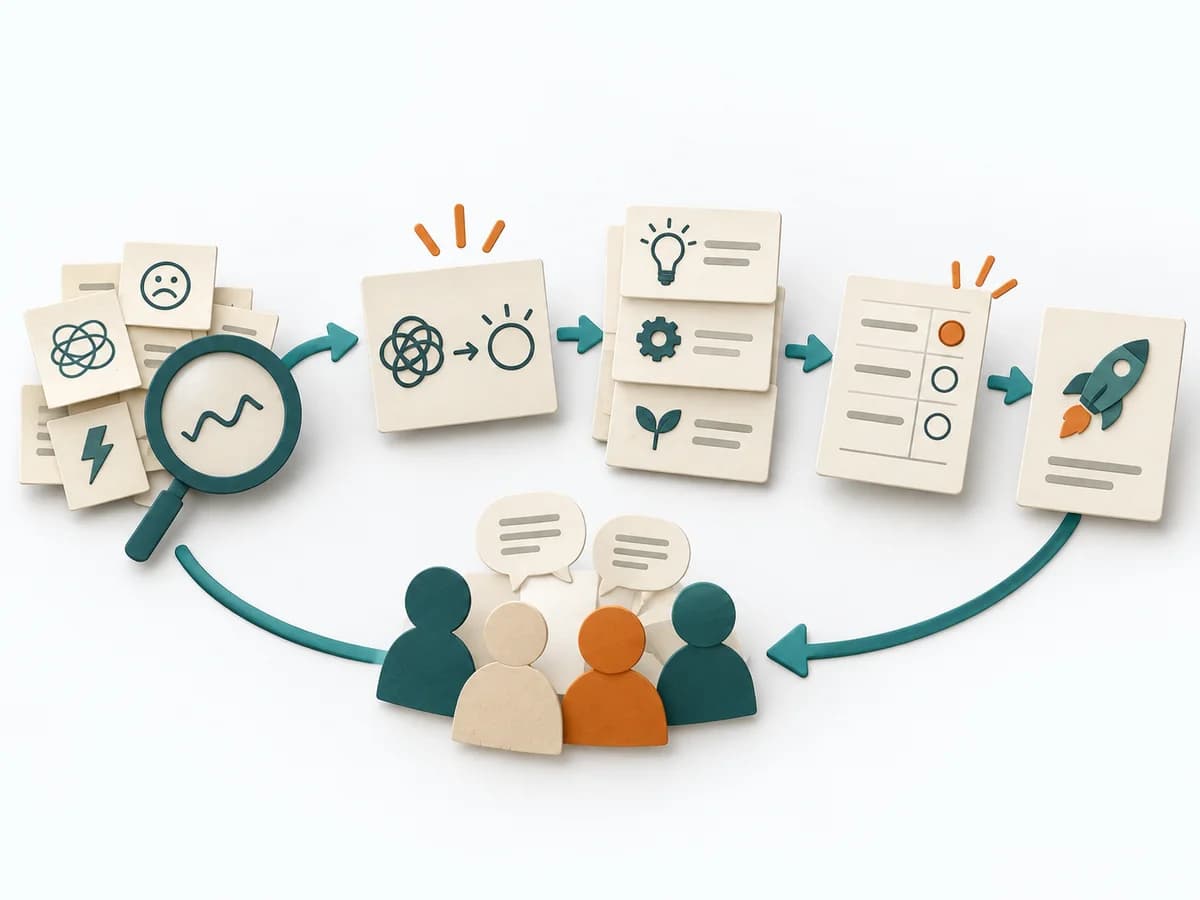 Facilitation Decision Jam |  Product Strategy DIBB |  Facilitation Alignment Mapping |
|---|---|---|---|---|
Purposedifferent | When estimating slows a team down more than it helps, it shifts the focus to flow, small slices, and real lead time. It sorts work by value, risk, and delivery ability. The result is captured as Throughput Data, Flow Forecast, and Slicing Rules. | When a decision is stuck, Decision Jam loosens the knot through structured separation of problem, idea, and selection. The format creates movement without jumping prematurely at the first seemingly elegant answer. | DIBB helps clarify target groups, value, goals, and priorities by making the logic behind a decision explicit. It captures results as a DIBB document, belief list, bet list, and learning report. | When several people work toward one goal but hold different mental maps, Alignment Mapping makes the discrepancies visible. It arranges goals, assumptions, and priorities so shared direction becomes verifiable. |
Complexitydifferent | Medium | Low | Low | Medium |
Timedifferent | laufend | 60-90 min | 1-2 h | 1-2 h |
Participantsdifferent | 2-12 | 4-10 | 2-8 | 4-12 |
Formatdifferent | Workshop + async | Workshop | Workshop + async | Workshop |
Outputdifferent | Throughput Data, Flow Forecast, Slicing Rules | Problem Cluster, Prioritized Challenge, Experiment | DIBB document, Belief list, Bet list, Learning report | Alignment Map, Open Issues, Decision Questions |
Tagsno overlap | EstimationForecastingFlow | FacilitationDecisionProblem solvingWorkshop | StrategyDecisionAssumptionsHypothesis | AlignmentStakeholdersStrategyFacilitation |