View methods side by side.
Choose up to four methods. Add them using the search and share the comparison by copying its link.
| Criterion | 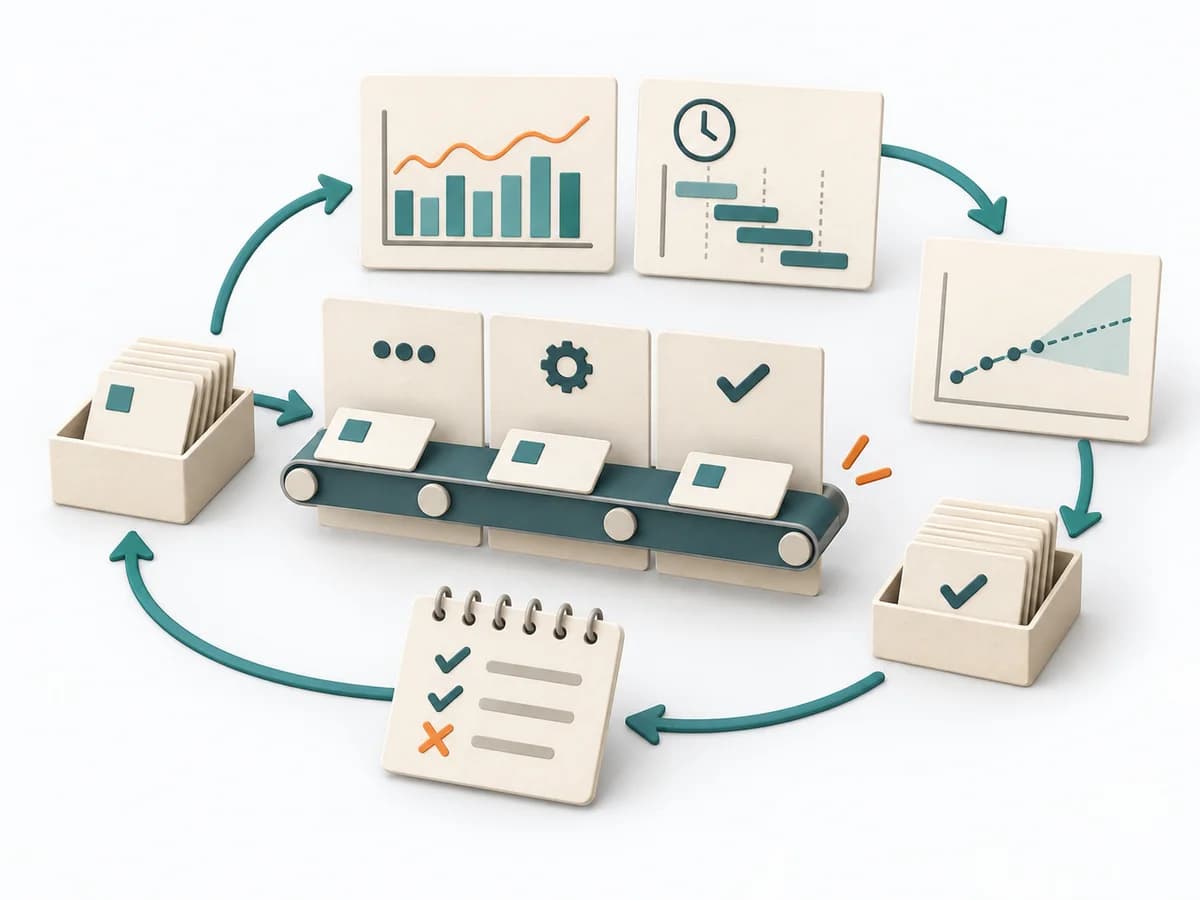 Agile NoEstimates | 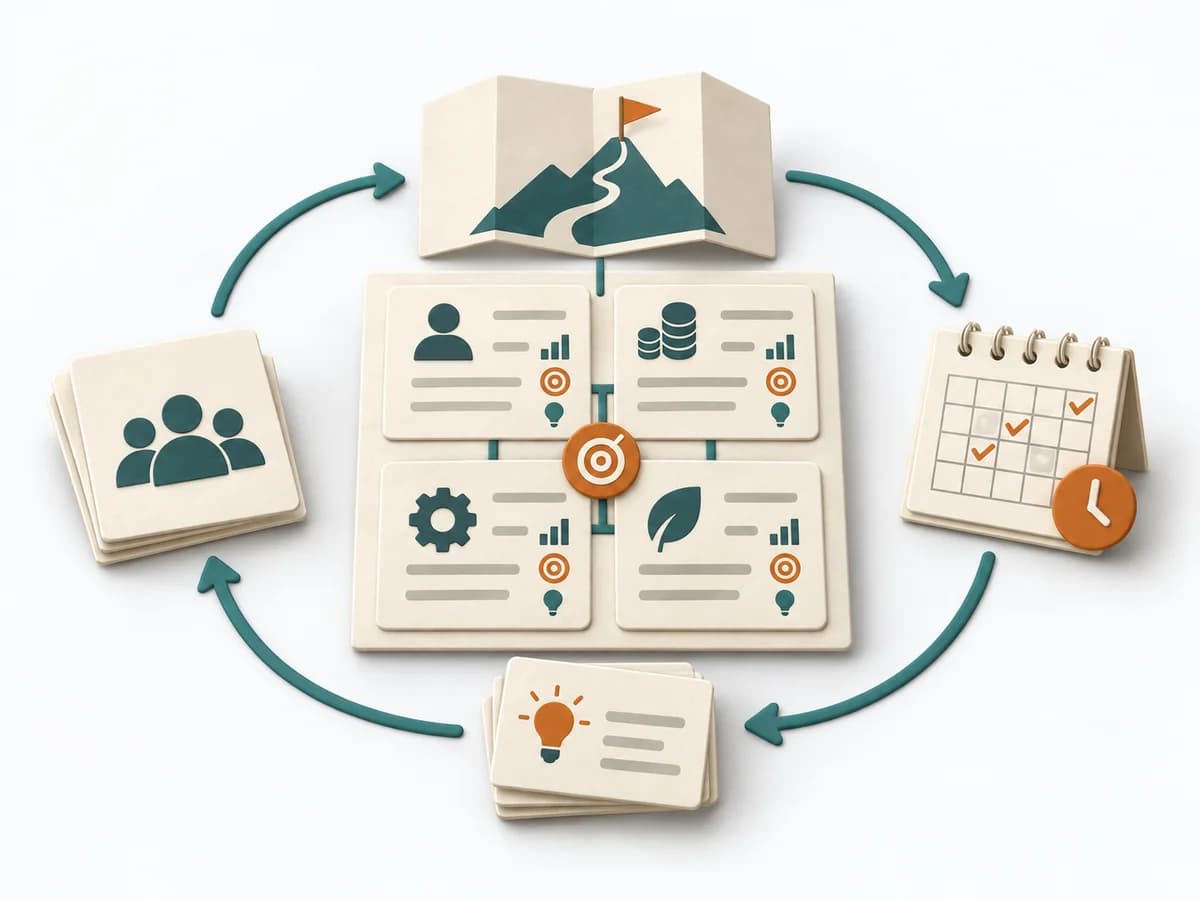 Business Strategy Balanced Scorecard |  Decision Making Force Field Analysis |  Product Strategy DIBB |
|---|---|---|---|---|
Purposedifferent | When estimating slows a team down more than it helps, it shifts the focus to flow, small slices, and real lead time. It sorts work by value, risk, and delivery ability. The result is captured as Throughput Data, Flow Forecast, and Slicing Rules. | Balanced Scorecard translates strategy into a few interconnected perspectives and metrics. It holds impact, steering, and learning together in daily work instead of narrowing strategy down to financial figures. | In change initiatives, supporting and restraining forces sit at the table at the same time. Force Field Analysis makes these tensions explicit and shows where change can be pushed forward by strengthening or relieving. | DIBB helps clarify target groups, value, goals, and priorities by making the logic behind a decision explicit. It captures results as a DIBB document, belief list, bet list, and learning report. |
Complexitydifferent | Medium | High | Low | Low |
Timedifferent | laufend | Halber Tag bis mehrere Wochen | 45-90 min | 1-2 h |
Participantsdifferent | 2-12 | 4-12 | 3-12 | 2-8 |
Formatdifferent | Workshop + async | Workshop + async | Workshop | Workshop + async |
Outputdifferent | Throughput Data, Flow Forecast, Slicing Rules | Balanced Scorecard, Strategic Measures, Initiative Map | Force Field Map, Change Levers, Risk Notes | DIBB document, Belief list, Bet list, Learning report |
Tagsno overlap | EstimationForecastingFlow | StrategyMetricsExecution | ChangeDecisionStrategy | StrategyDecisionAssumptionsHypothesis |