View methods side by side.
Choose up to four methods. Add them using the search and share the comparison by copying its link.
| Criterion |  Delivery MoSCoW |  Architecture Views and Beyond | 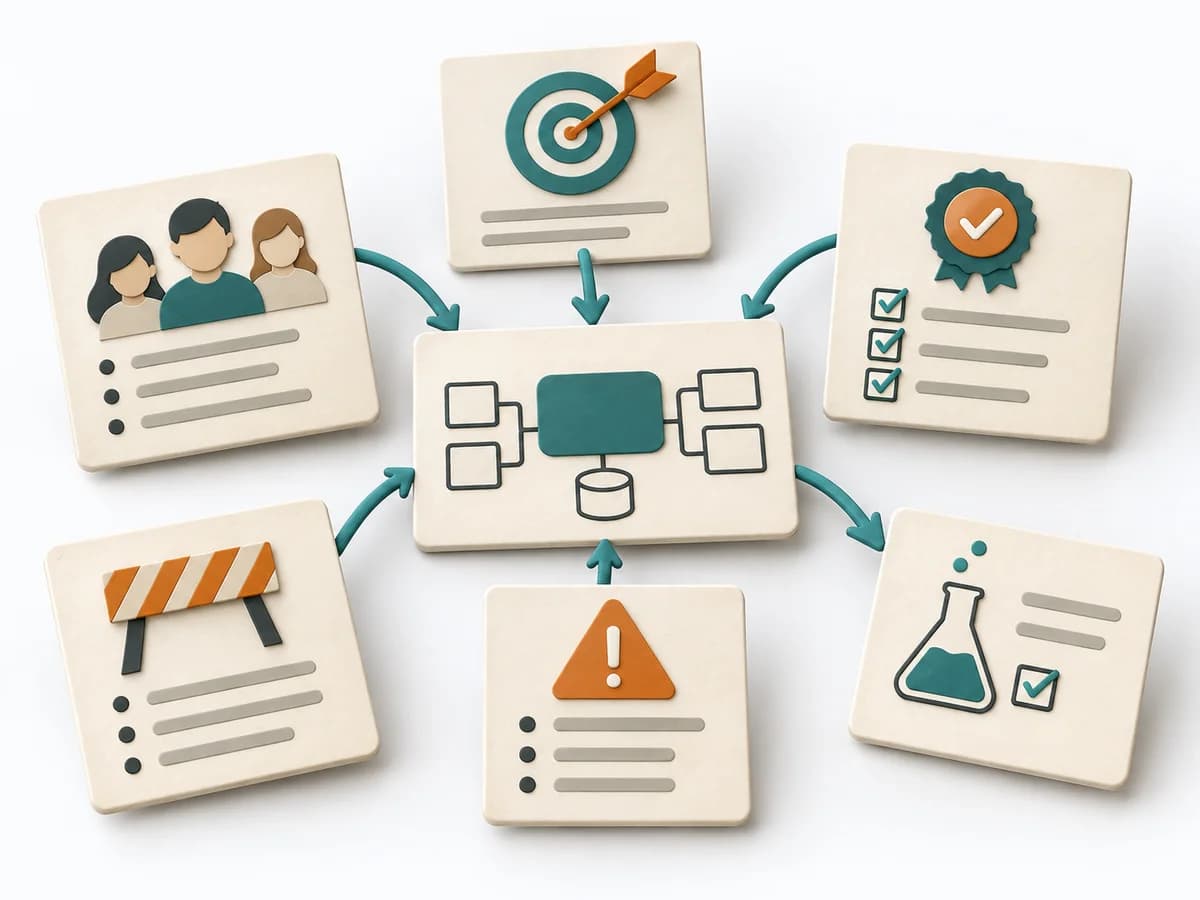 Architecture Architecture Inception Canvas |  Facilitation Alignment Mapping |
|---|---|---|---|---|
Purposedifferent | When a release carries too many demands and priorities are only ever negotiated, MoSCoW creates clear boundaries for the next cut. Must, Should, Could, and Won't make commitment, room for maneuver, and trade-off logic visible to everyone involved. | Views and Beyond organizes architecture into several views so no single diagram has to do everything at once. This makes it possible to choose the representation that fits the stakeholder's question. | The Architecture Inception Canvas bundles the first architecture questions into a compact decision picture. It fits when an initiative is still in motion but still needs clear guardrails. | When several people work toward one goal but hold different mental maps, Alignment Mapping makes the discrepancies visible. It arranges goals, assumptions, and priorities so shared direction becomes verifiable. |
Complexitydifferent | Low | Medium | Low | Medium |
Timedifferent | 30-90 min | 1-3 Tage | 1-2 h | 1-2 h |
Participantsdifferent | 3-12 | 1-4 | 3-8 | 4-12 |
Formatdifferent | Workshop + async | Workshop + async | Workshop | Workshop |
Outputdifferent | Prioritized Backlog, Release Scope, Tradeoff Notes | Architecture Views, Cross-view Notes, Rationale | Inception Canvas, Risks, Goal List, Open Questions | Alignment Map, Open Issues, Decision Questions |
Tagsno overlap | PrioritizationScopeDecision | DocumentationStakeholdersArchitecture | AlignmentArchitectureCanvas | AlignmentStakeholdersStrategyFacilitation |