View methods side by side.
Choose up to four methods. Add them using the search and share the comparison by copying its link.
| Criterion |  Delivery MoSCoW |  Facilitation Stakeholder Mapping | 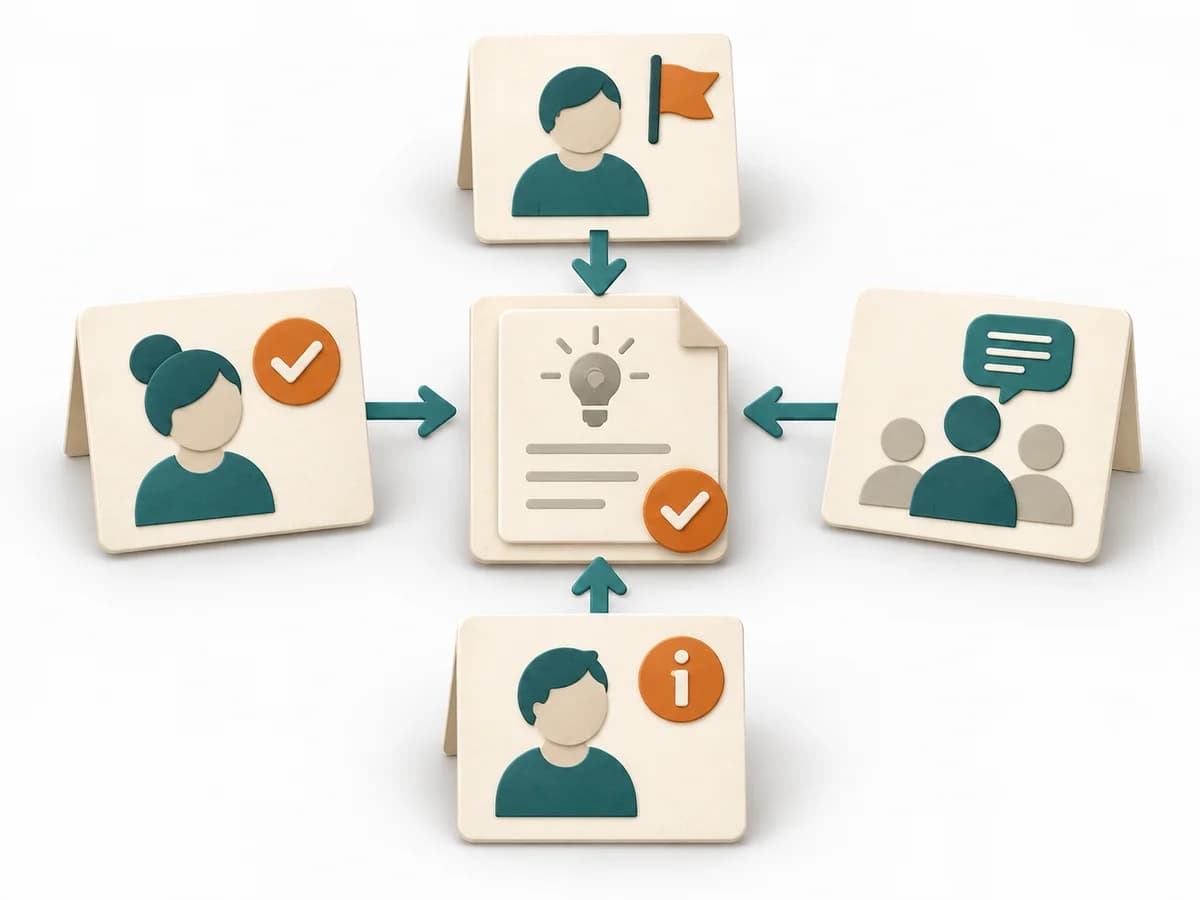 Decision Making DACI |  Facilitation Stakeholder Salience Model |
|---|---|---|---|---|
Purposedifferent | When a release carries too many demands and priorities are only ever negotiated, MoSCoW creates clear boundaries for the next cut. Must, Should, Could, and Won't make commitment, room for maneuver, and trade-off logic visible to everyone involved. | When an initiative depends on many people, interests, and power dynamics, Stakeholder Mapping systematically orders the environment. It shows who influences, who is affected, and where relationship management or safeguarding matters first. | In cross-functional decisions, responsibilities quickly blur between approval, influence, and execution. DACI arranges these roles so decision pressure, contribution, and information stay cleanly separated. | When stakeholders appear to matter very differently, the Stakeholder Salience Model rates their actual priority through power, legitimacy, and urgency. It turns individual contributions into a visible selection. The result is captured as a Salience diagram and a class-based strategy. |
Complexitydifferent | Low | Low | Low | Medium |
Timedifferent | 30-90 min | 60–90 min | 30-60 min | 60-90 min |
Participantsdifferent | 3-12 | 2-8 | 2-10 | 3-6 |
Formatdifferent | Workshop + async | Workshop + async | Workshop + async | Workshop |
Outputdifferent | Prioritized Backlog, Release Scope, Tradeoff Notes | Stakeholder Map, Engagement Plan, Risk Notes | DACI Matrix, Decision Owner, Decision Log | Salience Diagram, Strategy per Class |
Tagsno overlap | PrioritizationScopeDecision | StakeholdersAlignmentFacilitationChange | DecisionRolesGovernanceAlignment | StakeholdersFacilitationAlignmentGovernance |