View methods side by side.
Choose up to four methods. Add them using the search and share the comparison by copying its link.
| Criterion |  Delivery MoSCoW |  DevOps Incident Timeline Analysis | 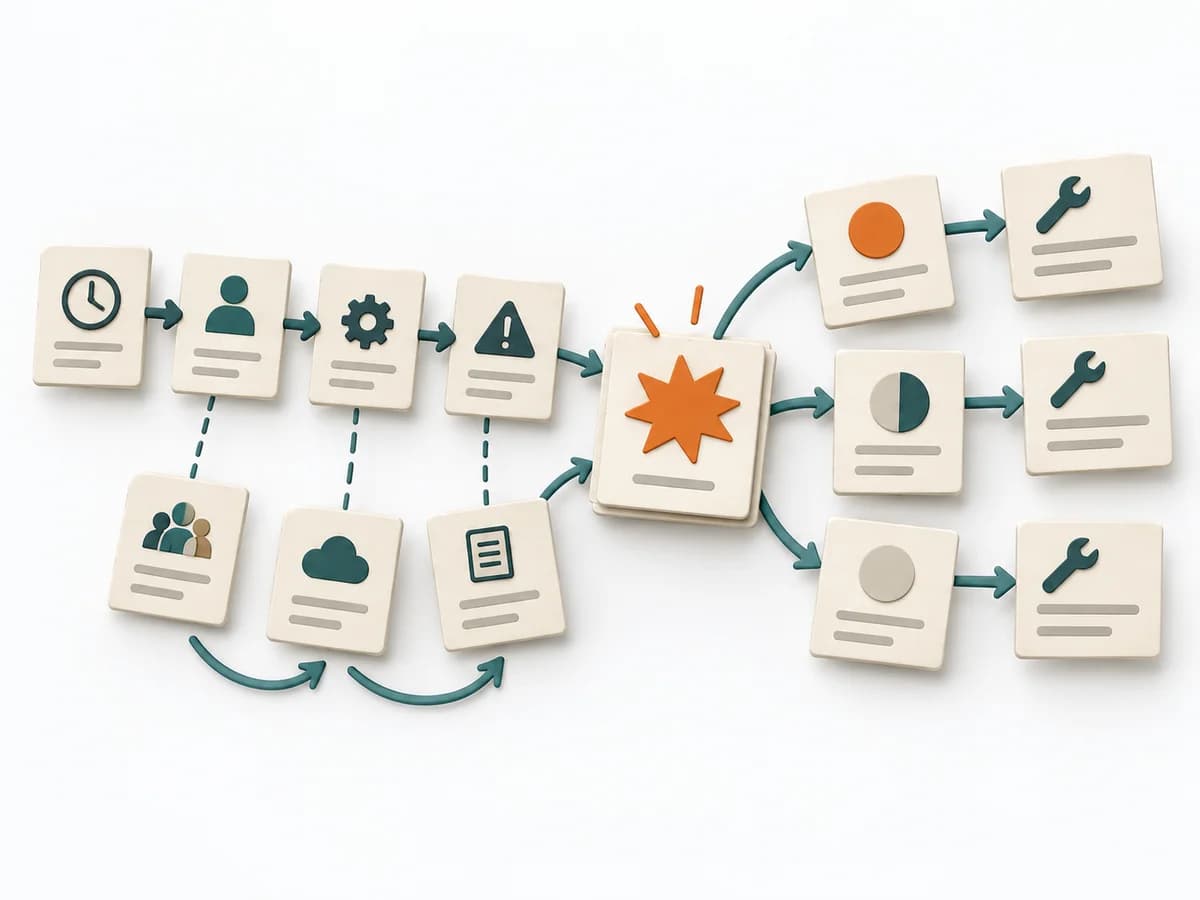 Operations Causal Factor Analysis |  DevOps Blameless Postmortem |
|---|---|---|---|---|
Purposedifferent | When a release carries too many demands and priorities are only ever negotiated, MoSCoW creates clear boundaries for the next cut. Must, Should, Could, and Won't make commitment, room for maneuver, and trade-off logic visible to everyone involved. | For an incident with an unclear sequence, the method makes the timeline precisely visible. It separates perception, reaction, and delay so cause and effect become more clearly readable. | For an event with a complicated course, the method breaks down the contributing factors along the timeline. It shows how conditions, decisions, and reactions together produce a course of events. | After an incident with damage or a near miss, the method creates a sober field for learning without assigning blame. It directs attention to the course of events, conditions, and effective countermeasures. |
Complexitydifferent | Low | Medium | High | Medium |
Timedifferent | 30-90 min | 60-180 min | 2-6 h | 30-90 min |
Participantsdifferent | 3-12 | 3-10 | 3-10 | 3-12 |
Formatsame | Workshop + async | Workshop + async | Workshop + async | Workshop + async |
Outputdifferent | Prioritized Backlog, Release Scope, Tradeoff Notes | Incident Timeline, Evidence Log, Delay Analysis, Improvement Actions | Event Timeline, Causal Factor Chart, Cause List, Corrective Actions | Postmortem Doc, Action Items, Timeline |
Tagsno overlap | PrioritizationScopeDecision | IncidentTimelineSite Reliability Engineering | CausalityIncidentRoot causeTimeline | Site Reliability EngineeringIncidentLearningReliability |