View methods side by side.
Choose up to four methods. Add them using the search and share the comparison by copying its link.
| Criterion |  Delivery MoSCoW |  UX Research First-click Testing | 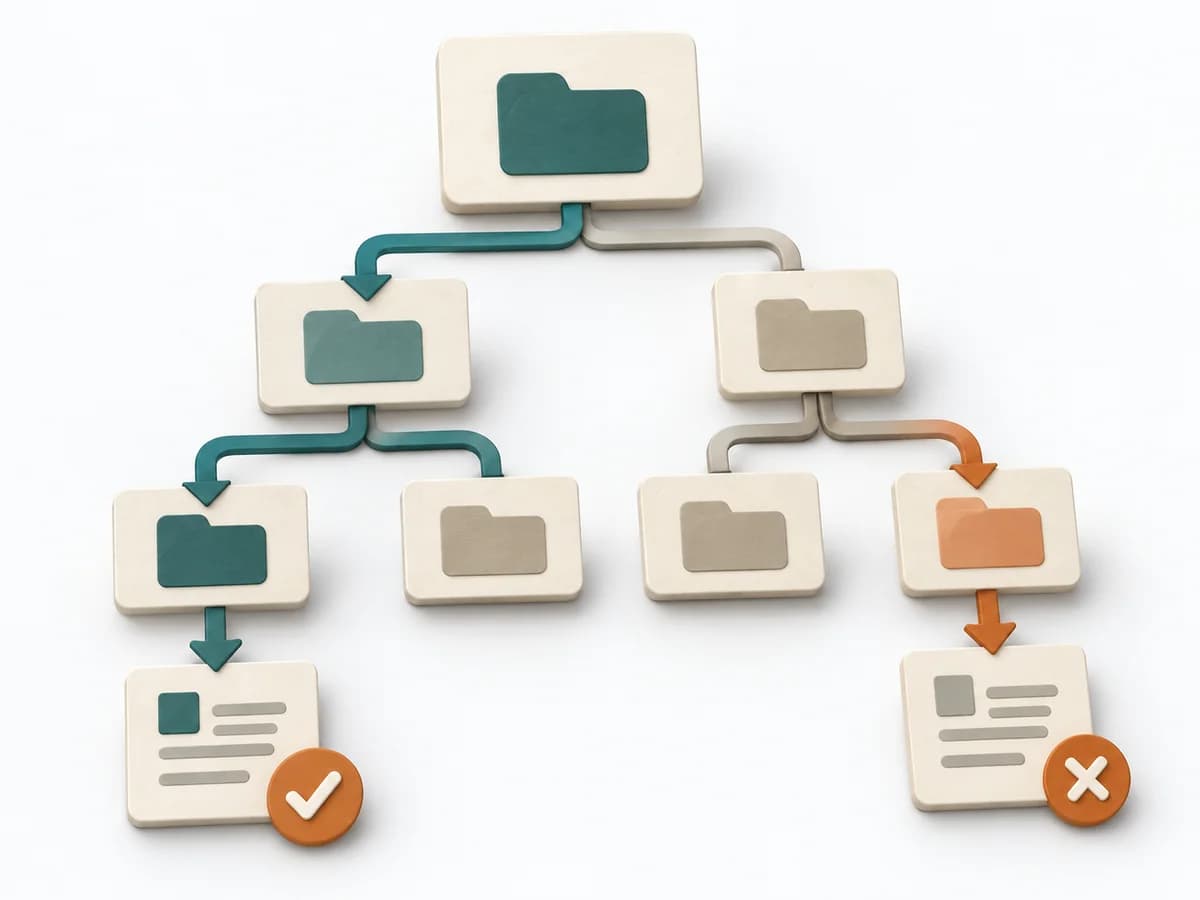 UX Research Tree Testing | 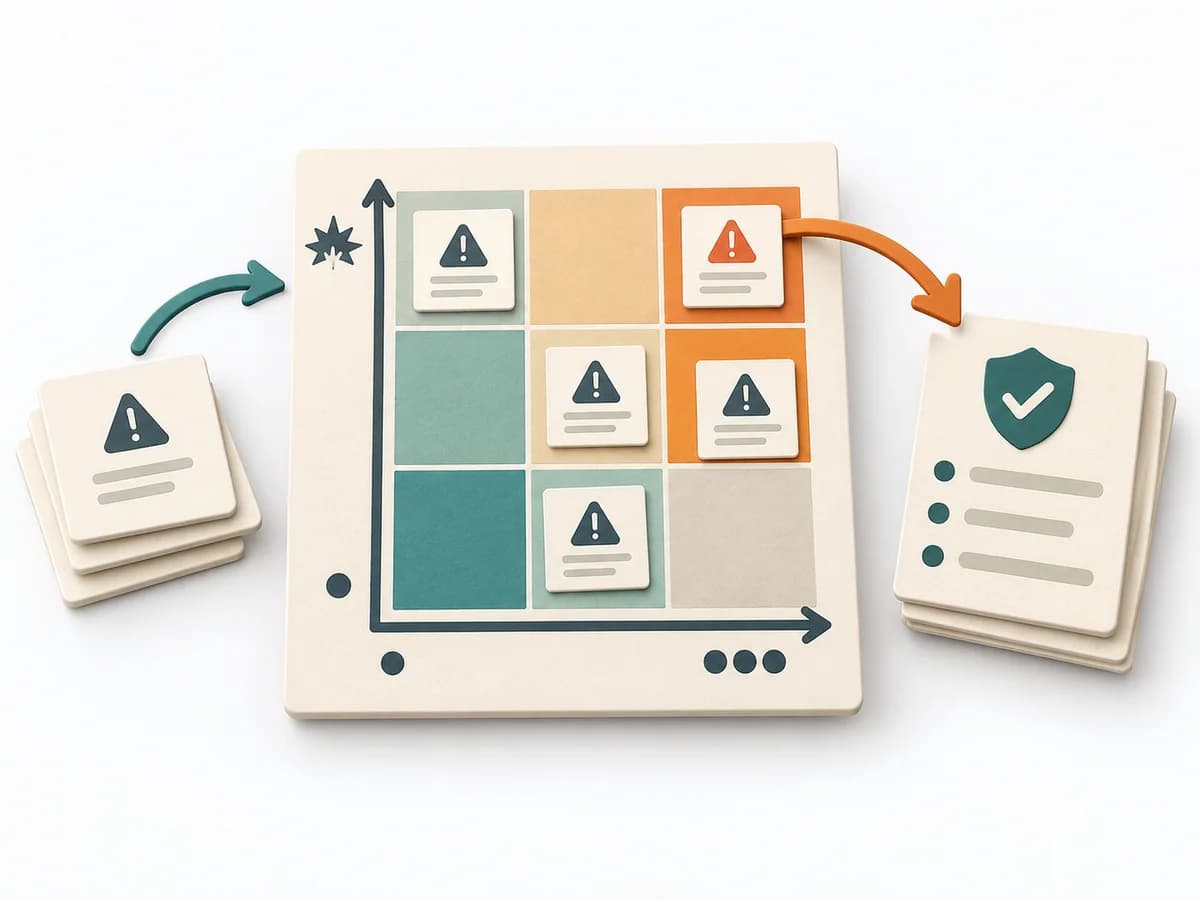 Decision Making Risk Matrix |
|---|---|---|---|---|
Purposedifferent | When a release carries too many demands and priorities are only ever negotiated, MoSCoW creates clear boundaries for the next cut. Must, Should, Could, and Won't make commitment, room for maneuver, and trade-off logic visible to everyone involved. | When users immediately turn the wrong way on a screen or wireframe, first click testing checks initial orientation at high speed. The first click shows early whether expectation, labeling, and wayfinding fit together. | When a navigation exists but search paths still fail, tree testing checks findability without visual distraction. The method shows whether labels, levels, and paths really lead to the intended destination. | When a project faces many possible disruptions, it quickly becomes unclear which risks deserve attention first. It separates options, evaluation criteria, and open risks. The result is captured as a Risk Matrix and a Top Risk List. |
Complexitydifferent | Low | Low | Medium | Low |
Timedifferent | 30-90 min | 1-2 Tage | 1-2 Tage | 30-60 min |
Participantsdifferent | 3-12 | 10-30 | Based on research question | 3-10 |
Formatdifferent | Workshop + async | Async | Async | Workshop + async |
Outputdifferent | Prioritized Backlog, Release Scope, Tradeoff Notes | Click Heatmap, Success Rate, Design Recommendations | Findability Metrics, Path Analysis, Revised IA | Risk Matrix, Top Risk List |
Tagsno overlap | PrioritizationScopeDecision | UXNavigationFindabilityValidation | Information architectureNavigationFindability | RiskDecisionPrioritizationAssessment |