View methods side by side.
Choose up to four methods. Add them using the search and share the comparison by copying its link.
| Criterion |  Delivery MoSCoW | 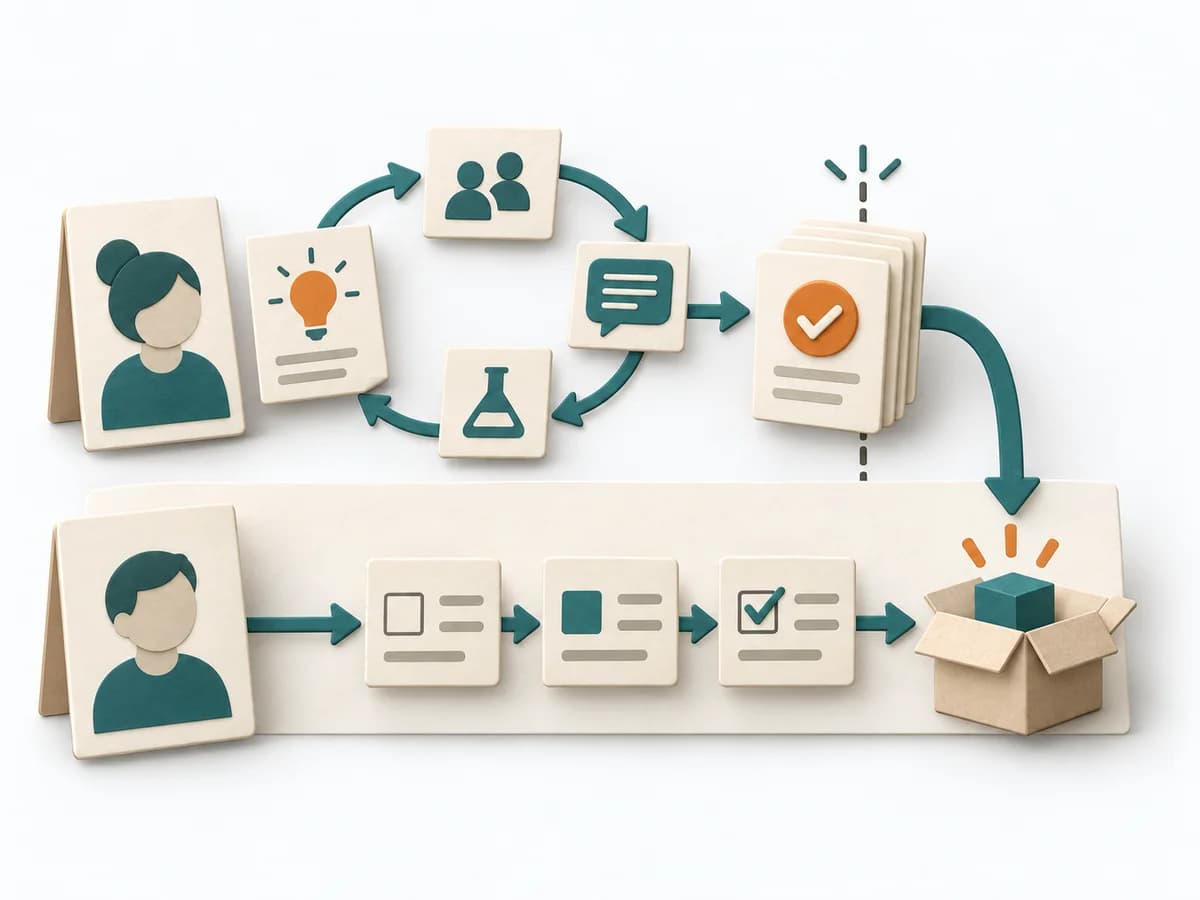 Product Discovery Dual-Track Agile |  Product Discovery Experiment Canvas | 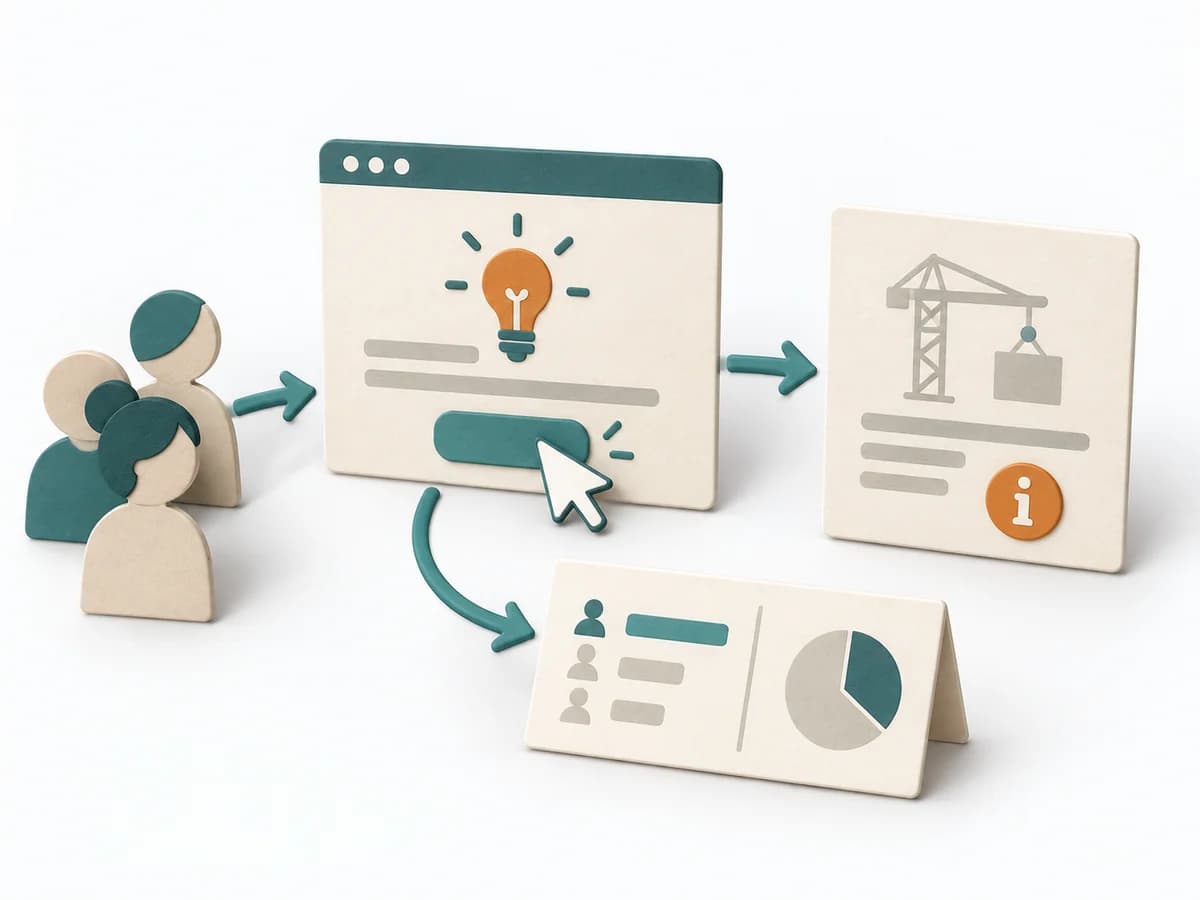 Product Discovery Fake Door Test |
|---|---|---|---|---|
Purposedifferent | When a release carries too many demands and priorities are only ever negotiated, MoSCoW creates clear boundaries for the next cut. Must, Should, Could, and Won't make commitment, room for maneuver, and trade-off logic visible to everyone involved. | When uncertainty and delivery run in parallel, it separates learning work from implementation while keeping both connected. It prevents unvalidated ideas from falling directly into the delivery stream. | When experiments become unreadable after the fact, it arranges hypothesis, signal, and learning goal on a single canvas. It separates problem, assumption, solution, and evidence. The result is captured as a Completed Experiment Canvas and a Success Metric. | When demand is still unclear, it measures interest in a feature before it is built. It separates real behavior from polite agreement and deliberately keeps build effort small. |
Complexitydifferent | Low | Medium | Low | Medium |
Timedifferent | 30-90 min | Laufend, Wochen bis Monate | 30-60 min | 1-5 Tage |
Participantsdifferent | 3-12 | 4-10 | 1-5 | Nutzertraffic |
Formatdifferent | Workshop + async | Workshop + async | Workshop + async | Async |
Outputdifferent | Prioritized Backlog, Release Scope, Tradeoff Notes | Discovery Backlog, Delivery Backlog, Experiment-Ergebnisse, Validierte Stories | Completed Experiment Canvas, Success Metric | Click Data, Interest Signal, Learning Decision |
Tagsno overlap | PrioritizationScopeDecision | AgileDiscoveryDelivery | ExperimentsValidationDiscoveryHypothesis | ValidationExperimentsDemandDiscovery |