View methods side by side.
Choose up to four methods. Add them using the search and share the comparison by copying its link.
| Criterion |  Delivery MoSCoW |  Facilitation Dot Voting |  Architecture Architecture Inception Canvas | 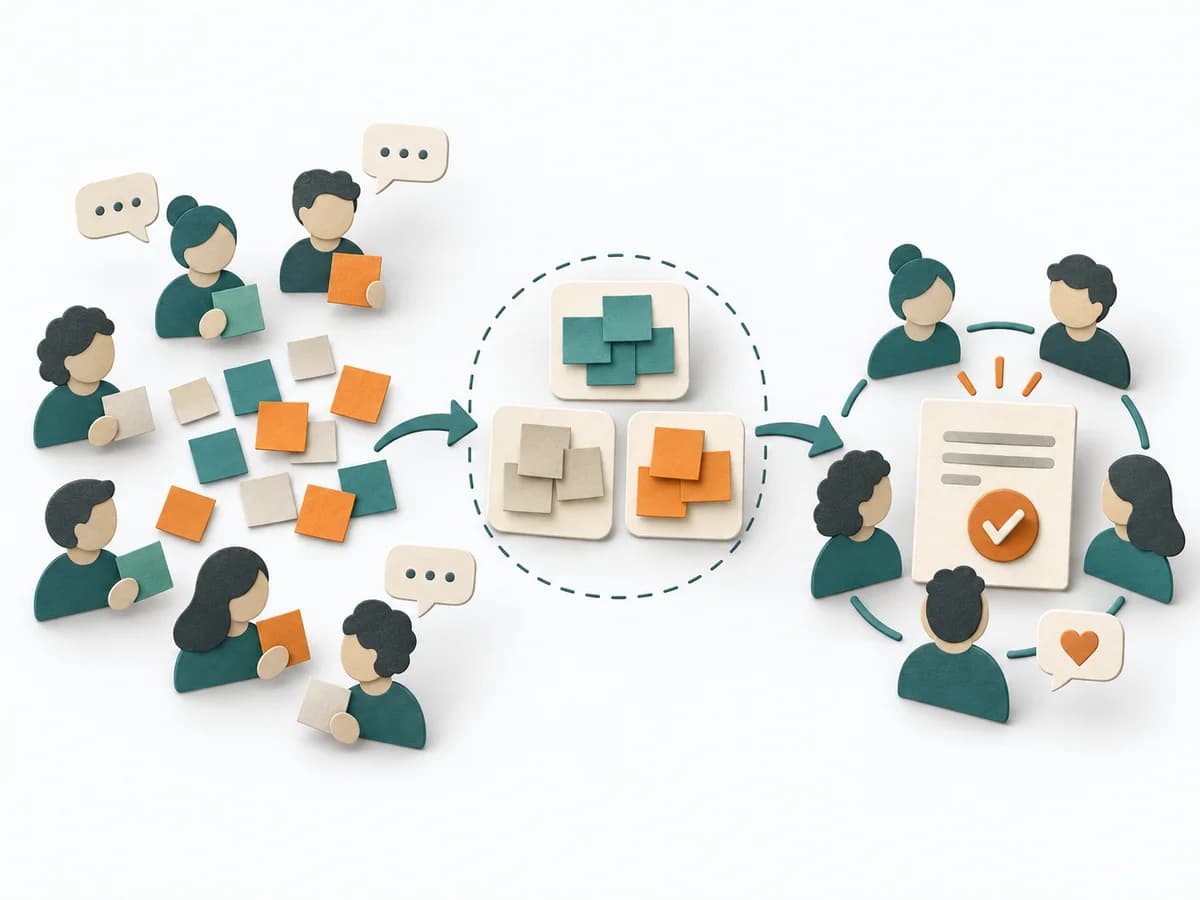 Facilitation Consensus Workshop |
|---|---|---|---|---|
Purposedifferent | When a release carries too many demands and priorities are only ever negotiated, MoSCoW creates clear boundaries for the next cut. Must, Should, Could, and Won't make commitment, room for maneuver, and trade-off logic visible to everyone involved. | When a workshop has produced too many options and the group needs to condense quickly, dot voting makes preferences visible in a short time. It bundles individual votes into a solid signal for the next selection. | The Architecture Inception Canvas bundles the first architecture questions into a compact decision picture. It fits when an initiative is still in motion but still needs clear guardrails. | When a group needs a solid decision without outvoting individual factions, a Consensus Workshop creates a negotiable common ground. It makes agreement, reservations, and open tensions discussable at the same time. |
Complexitydifferent | Low | Low | Low | Medium |
Timedifferent | 30-90 min | 5-15 min | 1-2 h | 1-3 h |
Participantsdifferent | 3-12 | 3-20 | 3-8 | 5-30 |
Formatdifferent | Workshop + async | Workshop | Workshop | Workshop |
Outputdifferent | Prioritized Backlog, Release Scope, Tradeoff Notes | Ranked list, Consensus signal, Shortlist | Inception Canvas, Risks, Goal List, Open Questions | Consensus Clusters, Theme Titles, Priority Areas |
Tagsno overlap | PrioritizationScopeDecision | FacilitationVotingConsensusPrioritization | AlignmentArchitectureCanvas | FacilitationConsensusWorkshopAlignment |