View methods side by side.
Choose up to four methods. Add them using the search and share the comparison by copying its link.
| Criterion |  Delivery MoSCoW |  Delivery Cost of Delay |  Decision Making Red Teaming | 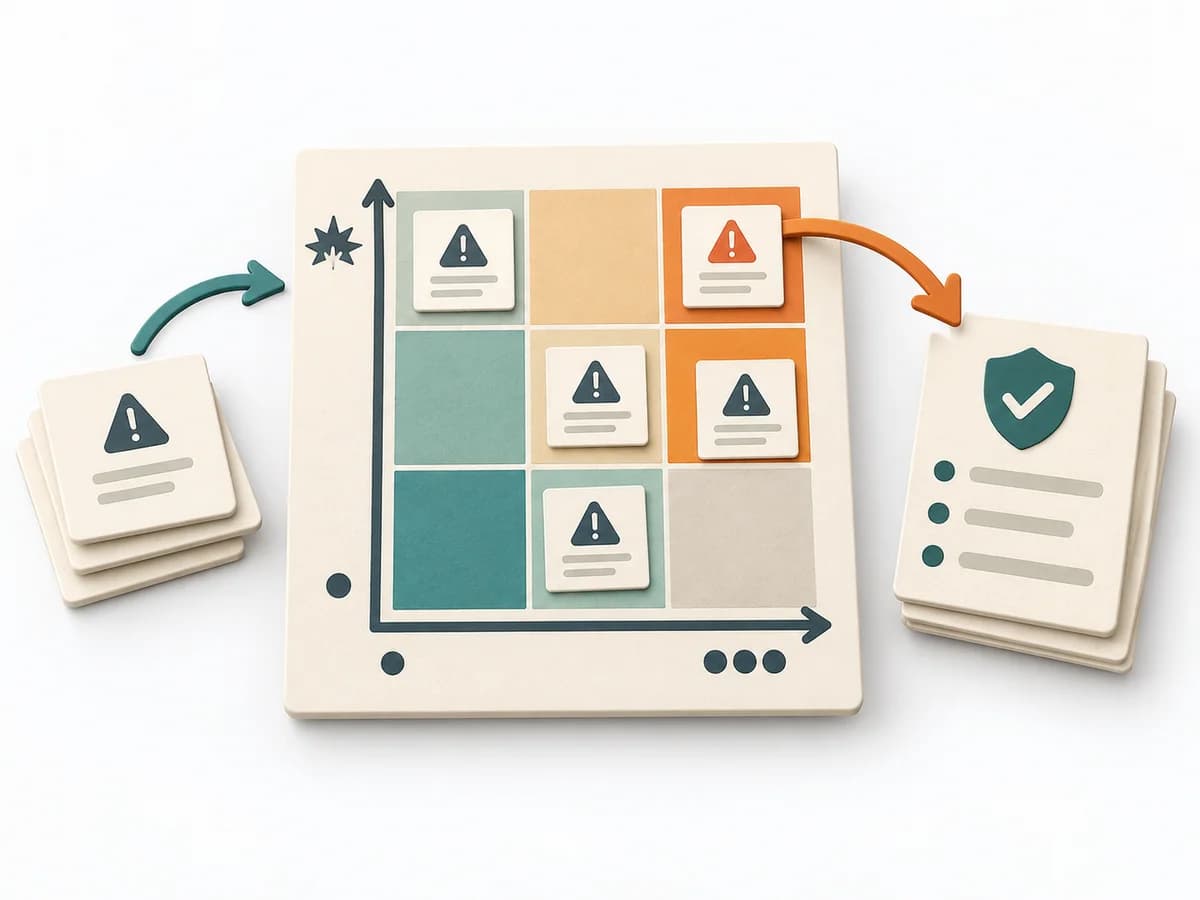 Decision Making Risk Matrix |
|---|---|---|---|---|
Purposedifferent | When a release carries too many demands and priorities are only ever negotiated, MoSCoW creates clear boundaries for the next cut. Must, Should, Could, and Won't make commitment, room for maneuver, and trade-off logic visible to everyone involved. | Helps clarify scope, order, and delivery flow in concrete terms. It makes work, constraints, and sequence manageable. The result is captured as a Cost of Delay table and prioritization sequence. | For strategic decisions with high reach, agreement and gut feeling are often not enough. Red teaming brings deliberate opposition into the situation and tests where a plan breaks under real counterarguments. | When a project faces many possible disruptions, it quickly becomes unclear which risks deserve attention first. It separates options, evaluation criteria, and open risks. The result is captured as a Risk Matrix and a Top Risk List. |
Complexitydifferent | Low | High | High | Low |
Timedifferent | 30-90 min | 90-180 min | 1-4 h | 30-60 min |
Participantsdifferent | 3-12 | 3-8 | 3-8 | 3-10 |
Formatdifferent | Workshop + async | Workshop | Workshop | Workshop + async |
Outputdifferent | Prioritized Backlog, Release Scope, Tradeoff Notes | CoD Table, Prioritization Sequence | Challenge Findings, Risk Register, Mitigation Plan | Risk Matrix, Top Risk List |
Tags1 shared | PrioritizationScopeDecision | PrioritizationDeliveryEconomicsDecision | RiskDecisionSensemaking | RiskDecisionPrioritizationAssessment |