View methods side by side.
Choose up to four methods. Add them using the search and share the comparison by copying its link.
| Criterion |  Delivery MoSCoW |  Decision Making Constraint Analysis |  Systems Thinking Current Reality Tree | 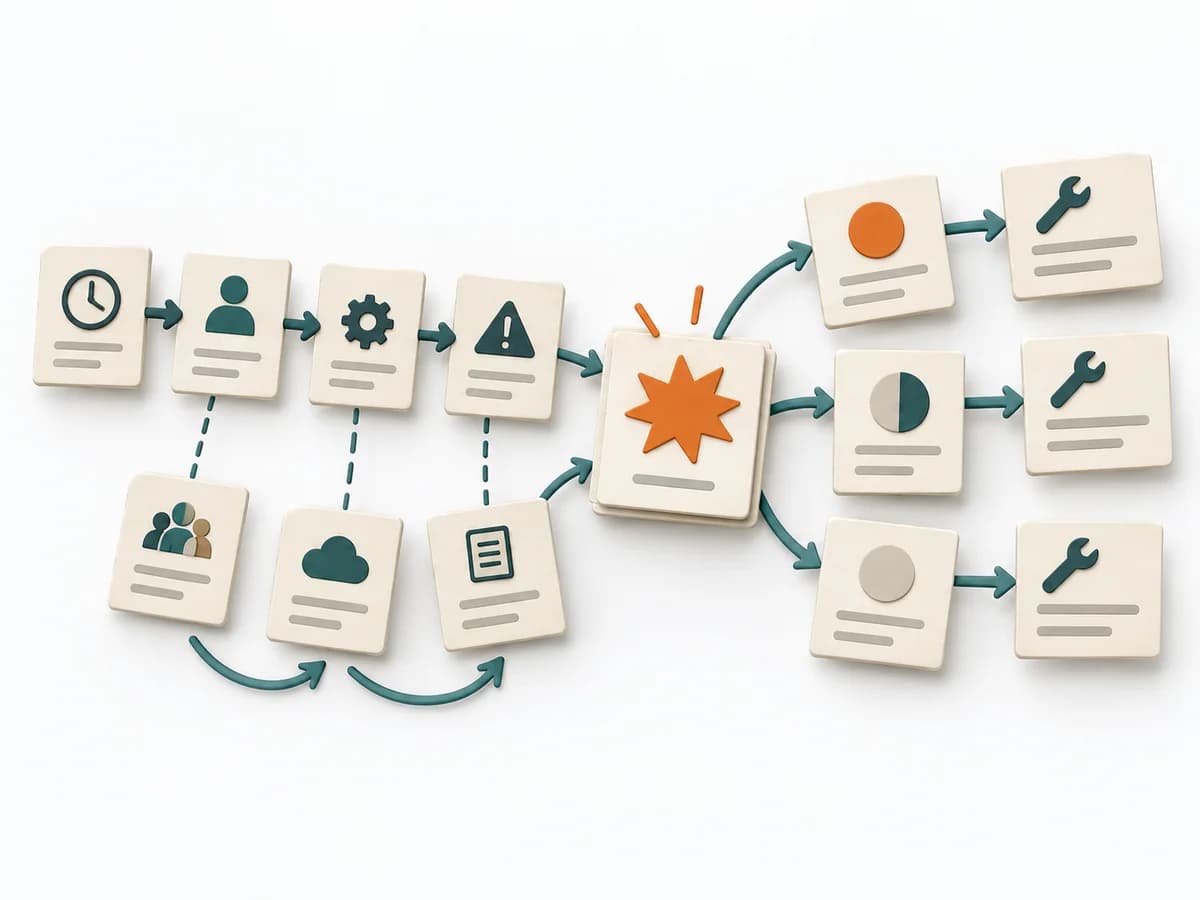 Operations Causal Factor Analysis |
|---|---|---|---|---|
Purposedifferent | When a release carries too many demands and priorities are only ever negotiated, MoSCoW creates clear boundaries for the next cut. Must, Should, Could, and Won't make commitment, room for maneuver, and trade-off logic visible to everyone involved. | When an initiative stalls, the limit often lies not in the idea but in hard or soft boundary conditions. Constraint Analysis separates these limits and shows which of them can actually be shaped. | A Current Reality Tree condenses many symptoms into a few causal chains. The method makes visible which core problems drive several negative effects at once. | For an event with a complicated course, the method breaks down the contributing factors along the timeline. It shows how conditions, decisions, and reactions together produce a course of events. |
Complexitydifferent | Low | Low | High | High |
Timedifferent | 30-90 min | 30-90 min | 2-6 h | 2-6 h |
Participantsdifferent | 3-12 | 2-8 | 3-8 | 3-10 |
Formatdifferent | Workshop + async | Workshop + async | Workshop | Workshop + async |
Outputdifferent | Prioritized Backlog, Release Scope, Tradeoff Notes | Constraint List, Hard/Soft Classification, Option Impact Notes, Decision Boundaries | Current Reality Tree, Core Problems, Intervention Ideas | Event Timeline, Causal Factor Chart, Cause List, Corrective Actions |
Tagsno overlap | PrioritizationScopeDecision | ConstraintsDecisionPlanningOptions | Systems thinkingRoot causeConstraintsCausality | CausalityIncidentRoot causeTimeline |