View methods side by side.
Choose up to four methods. Add them using the search and share the comparison by copying its link.
| Criterion | 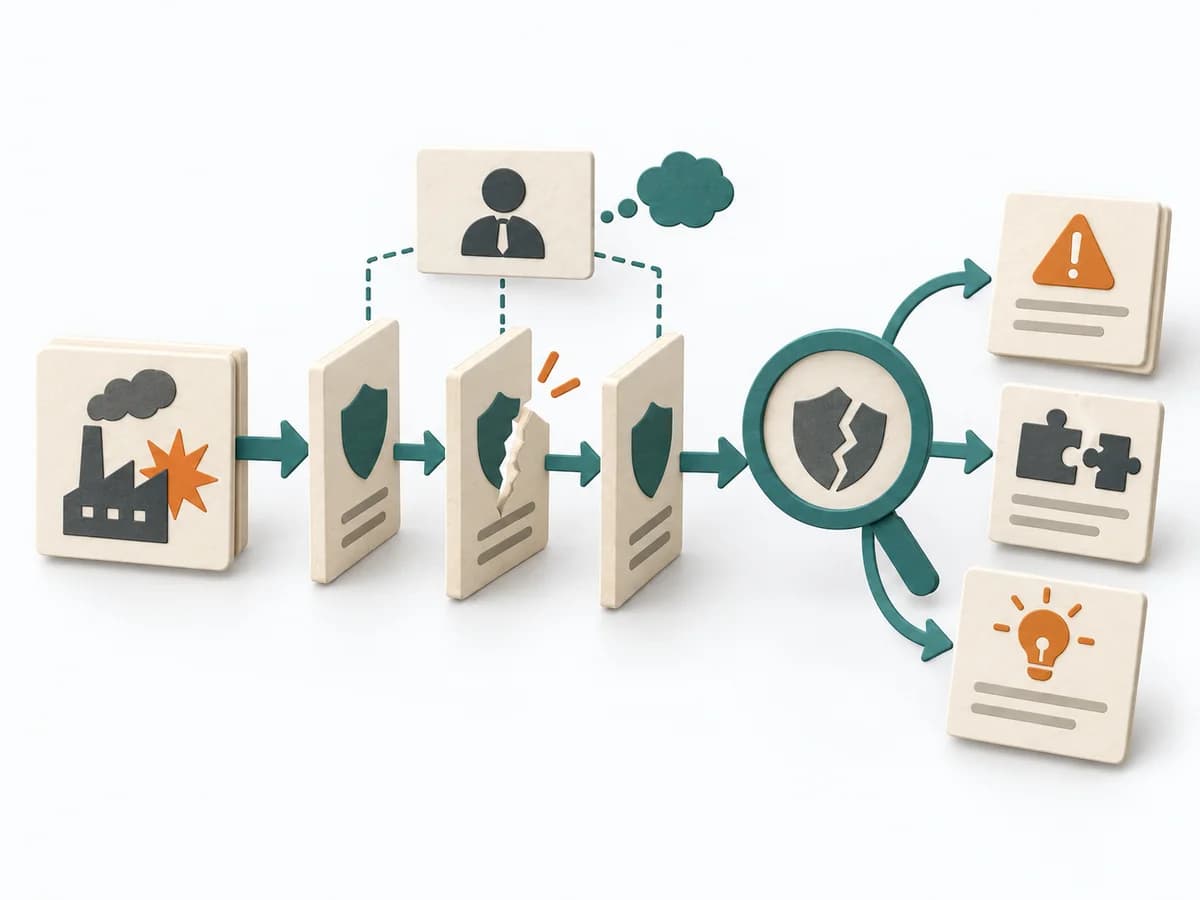 Operations MORT Analysis |  Operations Fault Tree Analysis |  Facilitation Power Interest Grid |  Operations Family Tree Analysis |
|---|---|---|---|---|
Purposedifferent | For a safety-relevant event or a system with high protection requirements, the method examines where controls failed. It exposes both technical and organizational gaps. | For a critical top event with several possible triggers, the method logically models failure paths. It makes visible which combinations of conditions can lead to damage. | When many stakeholders compete for attention at once, the Power Interest Grid sorts them by influence and stake. It turns individual contributions into a visible selection. The result is captured as a Power Interest Grid and a stakeholder-specific strategy. | For a series of incidents with a similar pattern, the method arranges individual events as branches of a common origin. It makes visible which conditions keep recurring. |
Complexitydifferent | High | High | Low | Medium |
Timedifferent | Mehrere Tage bis Wochen | 2-6 h | 30-60 min | 2-4 h |
Participantsdifferent | 2-6 | 3-8 | 2-8 | 2-6 |
Formatdifferent | Workshop + async | Workshop + async | Workshop | Workshop + async |
Outputdifferent | MORT Worksheets, Findings per Branch, Corrective Actions, Systemic Recommendations | Fault Tree, Critical Paths, Cause Hypotheses, Control Actions | Power Interest Grid, Strategy per Stakeholder | Family Tree Diagram, Pattern Notes, Systemic Measures |
Tagsno overlap | Root causeSafetySystemicIncident | RiskRoot causeSafety | StakeholdersFacilitationAlignmentPlanning | Root causePatternsIncidentSystemic |