View methods side by side.
Choose up to four methods. Add them using the search and share the comparison by copying its link.
| Criterion |  Facilitation Mind Mapping | 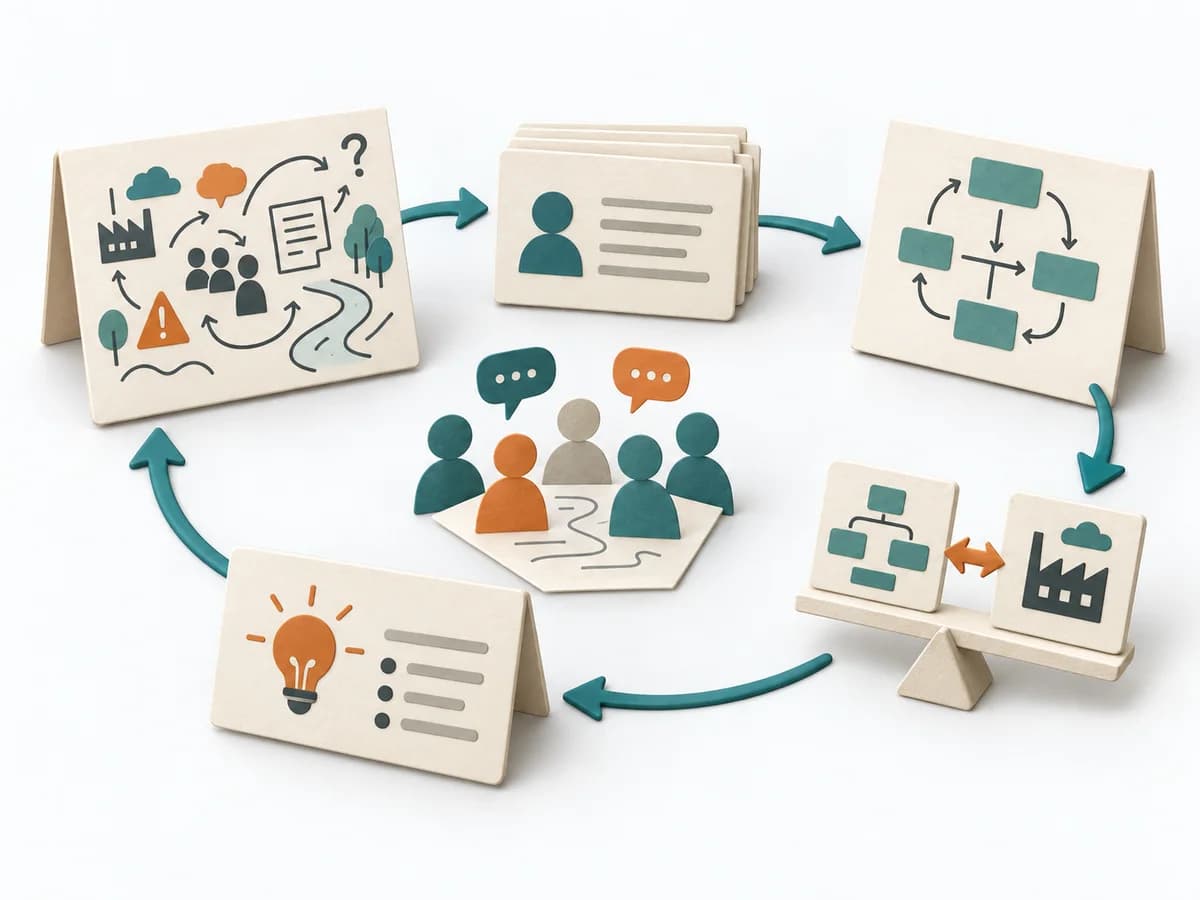 Systems Thinking Soft Systems Methodology |  Decision Making Argument Mapping |  Innovation Brainwriting |
|---|---|---|---|---|
Purposedifferent | When a topic is still unclear and too many thoughts surface at once, Mind Mapping creates an open surface for ordering them. It makes connections, subtopics, and starting points visible without fixing them too early. | Soft Systems Methodology helps explore unclear or politically charged problems systematically. Instead of forcing a quick answer, the method builds a shared understanding of perspectives and room for action. | When statements, evidence, and counterarguments get mixed up, a debate quickly loses its structure. Argument Mapping breaks a thesis down into its reasoning and makes visible what it really rests on. | When loud voices or hierarchy distort the idea search, the method creates a quiet entry into joint development. It gives everyone thinking space and gathers contributions without social brakes, making diversity more visible and easier to build on. |
Complexitydifferent | Low | High | Medium | Low |
Timedifferent | 15-45 min | 0.5-3 Tage | 1-3 h | 15-30 min |
Participantsdifferent | 1-10 | 5-15 | 1-8 | 3-12 |
Formatdifferent | Workshop + async | Workshop | Workshop + async | Workshop + async |
Outputdifferent | Mind Map, Topic Clusters, Open Questions | Rich Picture, Root Definitions, Conceptual Models, Change Agenda | Argument Map, Evidence Gaps, Decision Rationale | Idea sheets, Expanded concepts, Prioritized list |
Tagsno overlap | BrainstormingIdeasMappingStructureFacilitation | Soft systemsComplexitySensemakingSystems thinking | SensemakingDecisionRationale | BrainstormingCollaborationInclusionIdeas |