View methods side by side.
Choose up to four methods. Add them using the search and share the comparison by copying its link.
| Criterion |  Facilitation Mind Mapping | 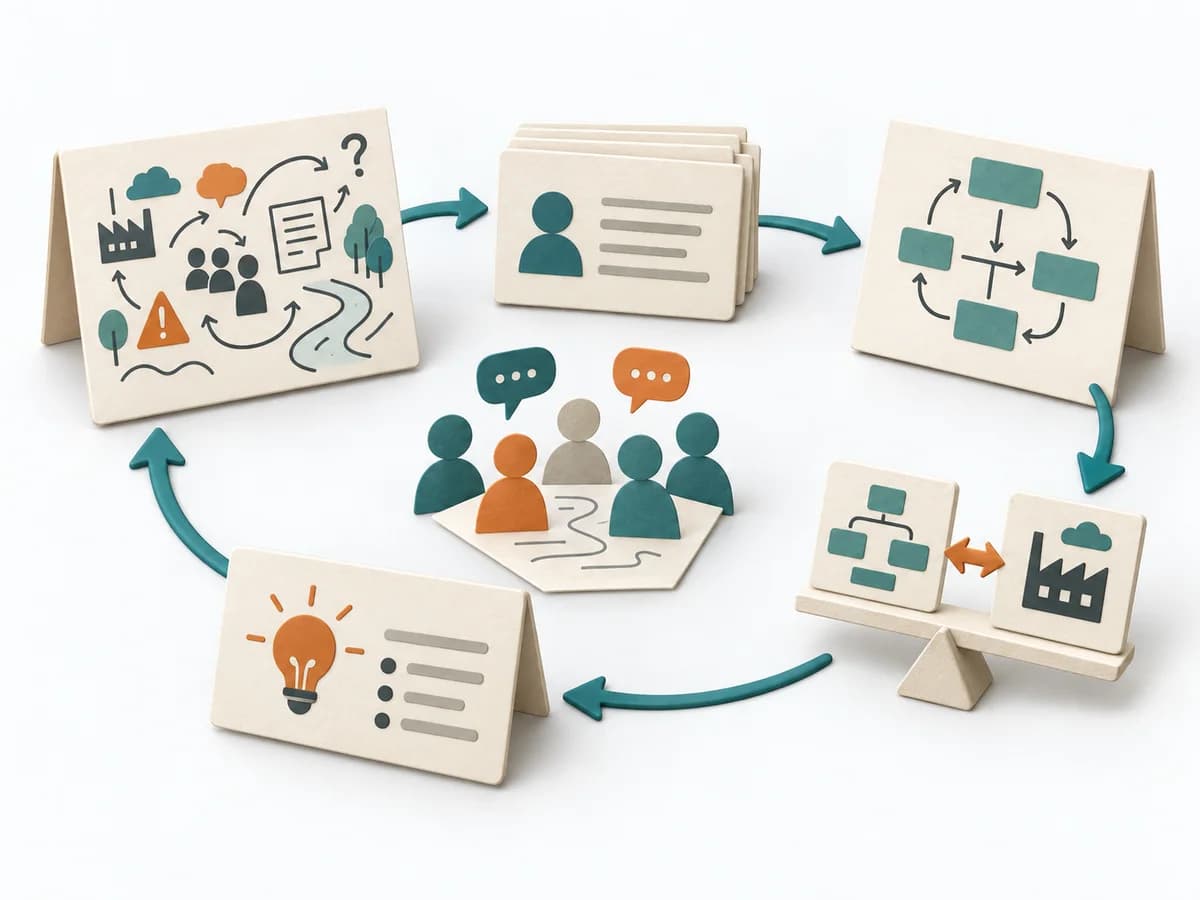 Systems Thinking Soft Systems Methodology |  Facilitation Alignment Mapping |  Facilitation Stakeholder Salience Model |
|---|---|---|---|---|
Purposedifferent | When a topic is still unclear and too many thoughts surface at once, Mind Mapping creates an open surface for ordering them. It makes connections, subtopics, and starting points visible without fixing them too early. | Soft Systems Methodology helps explore unclear or politically charged problems systematically. Instead of forcing a quick answer, the method builds a shared understanding of perspectives and room for action. | When several people work toward one goal but hold different mental maps, Alignment Mapping makes the discrepancies visible. It arranges goals, assumptions, and priorities so shared direction becomes verifiable. | When stakeholders appear to matter very differently, the Stakeholder Salience Model rates their actual priority through power, legitimacy, and urgency. It turns individual contributions into a visible selection. The result is captured as a Salience diagram and a class-based strategy. |
Complexitydifferent | Low | High | Medium | Medium |
Timedifferent | 15-45 min | 0.5-3 Tage | 1-2 h | 60-90 min |
Participantsdifferent | 1-10 | 5-15 | 4-12 | 3-6 |
Formatdifferent | Workshop + async | Workshop | Workshop | Workshop |
Outputdifferent | Mind Map, Topic Clusters, Open Questions | Rich Picture, Root Definitions, Conceptual Models, Change Agenda | Alignment Map, Open Issues, Decision Questions | Salience Diagram, Strategy per Class |
Tagsno overlap | BrainstormingIdeasMappingStructureFacilitation | Soft systemsComplexitySensemakingSystems thinking | AlignmentStakeholdersStrategyFacilitation | StakeholdersFacilitationAlignmentGovernance |